


 English (English)
 Deutsch (German)
 Čeština (Czech)
 Italiano (Italian)
 Hrvatski (Croatian)
 Română (Romanian)
 български език (Bulgarian)
 Magyar (Hungarian)
 Español (Spanish)
 Français (French)
 Nederlands (Dutch)
 Polski (Polish)
 Slovenčina (Slovak)
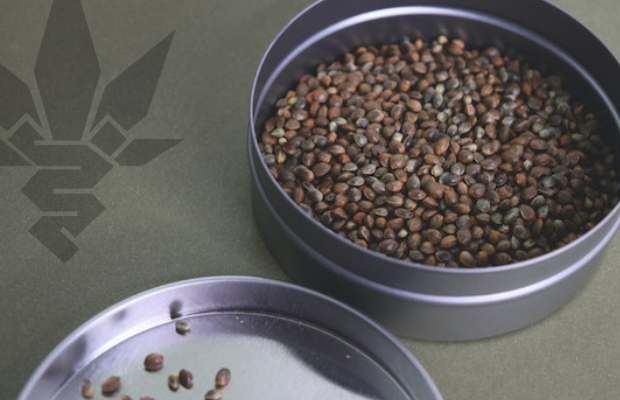



Collector cannabis seeds represent a precious genetic heritage that deserves to be preserved under the best possible conditions. These seeds consist of a kernel containing the plant embryo, protected by a relatively resistant outer shell. Although this natural casing offers protection against mechanical damage, it cannot defend the genetic material against excessive moisture, mold or bacterial attacks. Fortunately, with appropriate storage conditions, it is possible to preserve these collector seeds for several years while keeping their genetic potential intact.
Factors that harm the preservation of collector seeds
The protective shell of cannabis seeds, while effective against physical shocks, has vulnerabilities to certain environmental factors. Seeds whose casing is cracked or damaged are not suitable for long-term storage and should be removed from your collection.
Under optimal conditions, collector seeds can retain their genetic viability for 5 years or more. However, three main factors pose a threat to the preservation of these valuable genetics:
- Excessive humidity - the leading cause of deterioration
- Significant temperature fluctuations - disrupt biological processes
- Exposure to direct light - prematurely activates internal mechanisms
It is essential to understand that seeds are living organisms in dormancy. Exposure to temperature changes or light can trigger internal metabolic processes, thereby depleting the nutritional reserves needed for the subsequent development of the genetics. Moisture remains the main enemy, encouraging the appearance of fungi and bacteria that permanently compromise the viability of the seeds.
Optimal methods for preserving collector seeds
Effective preservation of collector seeds rests on three fundamental pillars: darkness, coolness and dryness. These conditions keep the seeds in a dormant state until the moment one wishes to study their genetic potential.
The original packaging is generally the best storage solution, particularly if it is airtight. Failing that, choose a sterilized, airtight container that is easy to reseal. These precautions prevent contamination and maintain a stable environment.
Refrigerator storage: an effective solution
The refrigerator represents one of the best options for the long-term preservation of collector seeds. This method perfectly meets the requirements of stable temperature and darkness needed for genetic preservation. Modern refrigerators maintain a controlled humidity level thanks to their ventilation system, eliminating the risk of mold.
The refrigerated environment prevents the activation of internal biological processes, thereby preserving the seeds' nutritional reserves. For short-term storage, a dry, dark drawer in a room with a constant temperature is more than sufficient.
Techniques for revitalizing old seeds
Even with optimal storage, collector seeds kept for a long time may need gentle stimulation to regain their full genetic potential. If after several days no sign of biological activity appears, several techniques can be used:
Revitalizing soak in a nutrient solution
This method acts as an energy "booster" for seeds tired from long storage. The solution usually consists of pure water and hydrogen peroxide at a low concentration. The peroxide can also be replaced with natural stimulants or gibberellic acid.
The concentration must remain moderate to avoid any damage to the delicate tissues. The seeds are soaked for 12 hours in a dark environment at room temperature, allowing for gradual rehydration and gentle stimulation of the internal mechanisms.
Delicate scarification of the shell
Some genetics develop particularly resistant shells that can hinder natural processes. In these situations, very light sanding or a microscopic incision can facilitate further study of the genetics. This technique requires great precision to avoid damaging the plant embryo.
The excessive hardness of certain shells does not necessarily reflect the quality of the underlying genetics. It is often simply a varietal characteristic that requires minimal mechanical assistance.
Important note: This article presents botanical information for purely educational purposes. Cannabis seeds are intended exclusively for collection and genetic study purposes. In your country, only the possession of collector seeds may be permitted, while any other use remains strictly prohibited under applicable legislation.