


 English (English)
 Deutsch (German)
 Čeština (Czech)
 Italiano (Italian)
 Hrvatski (Croatian)
 Română (Romanian)
 български език (Bulgarian)
 Magyar (Hungarian)
 Español (Spanish)
 Français (French)
 Nederlands (Dutch)
 Polski (Polish)
 Slovenčina (Slovak)
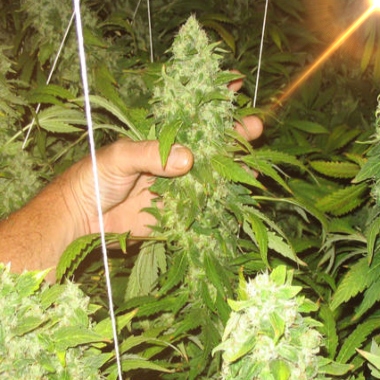



Magnum autoflower genetics: an exceptional botanical heritage
Among the collector seeds most sought after by cannabis genetics enthusiasts, Buddha Seeds' Magnum autoflower holds a special place. This genetic line is a fascinating example of the modern evolution of autoflowering varieties, combining robustness with aromatic complexity.
This genetic was created through careful selection and crossbreeding work, incorporating hereditary traits from carefully chosen indica and sativa lines. The inclusion of Cannabis ruderalis gives this genetic its characteristic autoflowering properties, allowing a natural transition to the flowering phase independent of light cycles.
This collector variety stands out for its remarkable genetic stability, the result of several generations of rigorous selection. Collectors particularly value the consistency of its hereditary traits and the predictability of its phenotypic expression.
Aromatic profile and chemical composition of the Magnum
Analysis of the Magnum genetic's terpene profile reveals a complex, balanced composition. The dominant terpenes include myrcene, responsible for earthy, musky notes, along with limonene, which brings fresh citrus nuances. This combination creates a distinctive aromatic bouquet appreciated by connoisseurs.
The significant presence of caryophyllene enriches the profile with spicy, peppery notes, while pinene adds touches of resinous freshness reminiscent of coniferous forests. This terpene diversity contributes to the entourage effect characteristic of this genetic line.
In terms of cannabinoids, this genetic naturally shows variable concentrations of THC and CBD depending on phenotypic expression. Laboratory analyses also reveal the presence of minor cannabinoids such as CBG and CBN, adding to the complexity of the overall chemical profile.
Botanical characteristics and development
Morphologically, the Magnum autoflower has a compact, robust structure typical of indica-dominant hybrids. The plant generally develops a solid main stem with short internodes, favouring a dense, productive architecture.
The development cycle spans about 75 to 85 days from germination, a period during which the genetic fully expresses its potential. Collectors particularly note the early formation of pre-flowers and the smooth transition to the reproductive phase.
Genetic interest and theoretical therapeutic potential
This autoflowering genetic is of considerable scientific interest for studying the potential therapeutic properties of cannabis. Botanical research suggests that varieties with this type of chemical profile could theoretically have relaxing and calming properties.
The balance between the various cannabinoids and terpenes present in this genetic makes it a preferred subject of study for understanding the complex mechanisms of action of cannabis' active compounds. Scientists are particularly interested in the synergistic interaction between these molecules.
It should be noted that these observations remain in the realm of theoretical research and botanical characterisation, as collector seeds are intended solely for the preservation of genetic heritage and for scientific study.
Genetic conservation and preservation
The Magnum autoflower is a remarkable example of preserving cannabis genetic diversity. Every seed is a unique reservoir of genetic information, preserving for future generations the specific characteristics developed by breeders.
This conservation approach is part of a broader scientific effort to maintain the biodiversity of cannabis varieties and preserve rare or exceptional genetic lines. Collectors thus play an important role in safeguarding this botanical heritage.
Appreciation by collectors and experts
The collector community unanimously recognises the exceptional quality of this genetic. Feedback from growers highlights the consistency of its hereditary characteristics and the fidelity of its genetic expression across different generations.
Cannabis genetics experts particularly value the stability of this line and its ability to pass on its characteristic traits in a predictable way. This genetic reliability makes it a valued reference for comparative studies and botanical research.
The intensity of its aromatic profile and the richness of its chemical composition place this variety among the most prized collector seeds on the European market. Its status as a premium genetic reflects the quality of the breeding work carried out by Buddha Seeds.
In conclusion, the Magnum autoflower is a perfect example of the evolution of modern cannabis genetics, combining scientific innovation with respect for traditional botanical heritage. This genetic continues to fascinate collectors and researchers alike with the richness of its characteristics and its potential for scientific study.