


 English (English)
 Deutsch (German)
 Čeština (Czech)
 Italiano (Italian)
 Hrvatski (Croatian)
 Română (Romanian)
 български език (Bulgarian)
 Magyar (Hungarian)
 Español (Spanish)
 Français (French)
 Nederlands (Dutch)
 Polski (Polish)
 Slovenčina (Slovak)
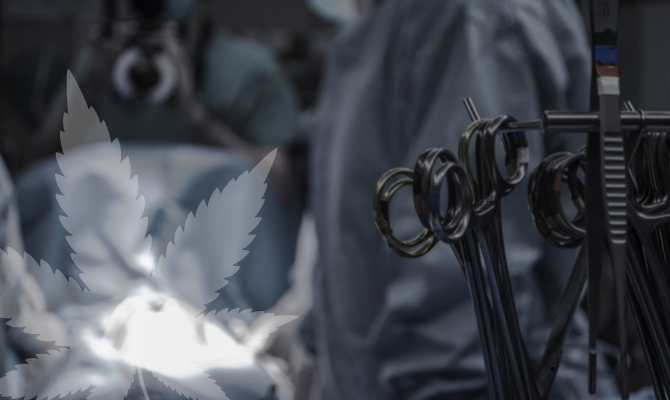



Cannabis and Surgery: A Complex Relationship Between Risks and Benefits
The medical world is showing growing interest in the therapeutic properties of cannabis, particularly because of the well-known anti-inflammatory and pain-relieving properties of certain cannabinoids. However, for patients undergoing surgery, an important question arises: is it safe to use cannabis before and after a surgical procedure? The answer turns out to be more nuanced than many think.
Physicians emphasize that not all cannabis genetics are the same. The chemical composition, particularly the ratio between the various cannabinoids and terpenes, largely determines how the body reacts and what interactions are possible with anesthesia and other medical procedures.
THC-Rich Genetics: Possible Complications with Anesthesia
Cannabis genetics with higher THC concentrations can pose significant challenges during surgical procedures. Regular use of THC-rich strains can affect the action of anesthetics, forcing anesthesiologists to adjust their approach.
Current medical research points to some concrete concerns. A 2018 study showed that regular consumers of THC-rich cannabis may require more anesthetics than expected. In addition, complications related to the airways were observed during the procedure.
The interaction between THC and anesthesia is complex, since both affect the cardiovascular system. Cannabis is known for its blood pressure-lowering effect - a property that can be useful in certain therapeutic contexts, but which can be problematic during surgery, where precise control of vital signs is crucial.
Airway Considerations
Another important point concerns the airways. A 2017 study suggested that inhaling cannabis vapor may trigger inflammatory reactions in the airways. For patients undergoing surgery, particularly procedures involving intubation, this can create additional complications.
CBD-Dominant Strains: A Safer Alternative?
Unlike THC-rich genetics, CBD-dominant strains offer an interesting profile for patients preparing for surgery. CBD (cannabidiol) is non-psychoactive and has a different drug interaction profile.
CBD's anxiolytic properties can be particularly valuable in the preoperative phase. Many patients experience natural tension and worry before surgery, and CBD's ability to modulate the serotonergic system can help manage these feelings without the complications associated with THC.
Nevertheless, caution is warranted. Although CBD is generally considered safer, it can still interact with certain medications used during or after surgery. Open communication with the medical team remains essential, regardless of what type of cannabis product is being considered.
Postoperative Pain Management: Exploring New Possibilities
After surgery, the focus shifts to recovery and pain management. Here, certain cannabis genetics show promising properties that can complement traditional pain management methods.
The endocannabinoid system plays a crucial role in pain perception and inflammatory responses. Strains with certain terpene profiles, such as myrcene and linalool, are associated with relaxing and anti-inflammatory properties that could theoretically support the recovery process.
An Alternative to Opioids?
A particularly interesting area of research concerns the potential of cannabis as an alternative to opioid-based painkillers. A study published in JAMA Internal Medicine suggested that broader access to cannabis may correlate with reduced opioid dependence and associated mortality.
This can be particularly relevant for postoperative patients, since long-term opioid use carries risks such as tolerance development and dependence. Cannabis genetics with balanced cannabinoid profiles could potentially offer a gentler approach to pain management during recovery.
Practical Recommendations for Patients
For collectors and cannabis genetics enthusiasts facing surgery, there are a few practical considerations:
- Full transparency: Always inform your surgeon and anesthesiologist about any cannabis use, including the type of genetics, frequency of use, and time of last use
- Consider timing: Many physicians recommend abstaining from cannabis for at least 24-48 hours before surgery, particularly THC-rich strains
- Keep records: Keep a log of which genetics you use and how your body reacts - this information can be valuable for your medical team
- Explore alternative methods: Consider non-inhalation methods if you use cannabis for medical purposes
The Future of Cannabis in Perioperative Care
As understanding of cannabinoids and terpenes grows, more specialized protocols are expected to emerge for patients who use cannabis. The unique chemical profiles of different genetics mean that a one-size-fits-all approach is not sufficient.
Research into the specific interactions of cannabinoids and terpenes with anesthetics and other medications will be crucial for developing safer guidelines. For now, open communication with medical professionals remains the best strategy for patients who value cannabis while wanting safe medical care.
The genetic diversity of cannabis offers a fascinating field of research for future medical applications, but also requires careful consideration of individual circumstances and medical needs.