


 English (English)
 Deutsch (German)
 Čeština (Czech)
 Italiano (Italian)
 Hrvatski (Croatian)
 Română (Romanian)
 български език (Bulgarian)
 Magyar (Hungarian)
 Español (Spanish)
 Français (French)
 Nederlands (Dutch)
 Polski (Polish)
 Slovenčina (Slovak)
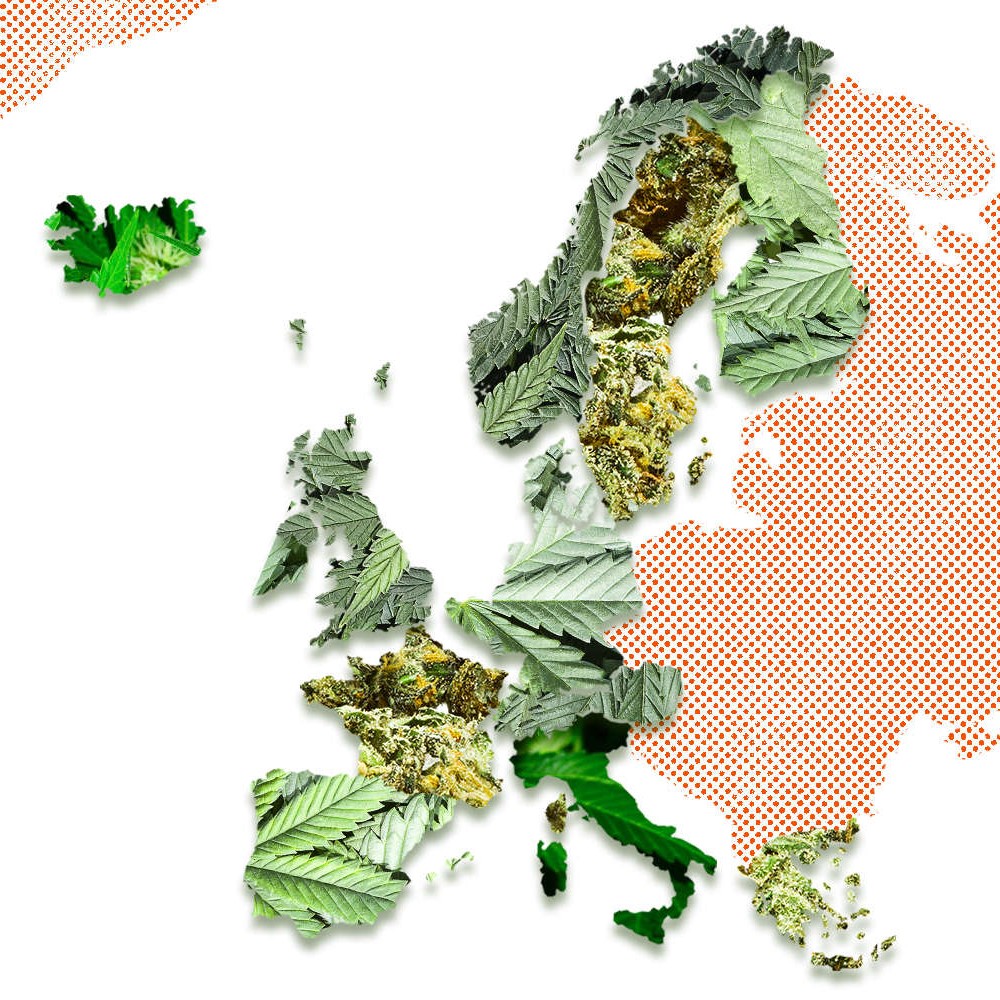



Legal status of cannabis in the European Union (as of 25 September 2026)
- The EU has no single cannabis law: it sets a common framework for hemp farming, trade and drug trafficking, while recreational use is regulated by each Member State.
- CBD lawfully produced in one Member State may in principle be sold in another; a national ban is allowed only if it is suitable to protect public health and does not go beyond what is necessary. The Court held that such CBD is not a narcotic drug under the 1961 Single Convention (Articles 34 and 36 TFEU, Case C-663/18 Kanavape, paras 76 and 96).
- Industrial hemp qualifies for CAP direct payments only if the THC content of the variety does not exceed 0.3 % (Art. 4(4) Regulation (EU) 2021/2115); THC control methods are set by the Commission (Art. 60(4)(a) Regulation (EU) 2021/2116).
- Member States may restrict how hemp is grown, for example ban indoor hydroponic cultivation, if the restriction is suitable and proportionate for protecting public health (Case C-793/22 Biohemp Concept, 4 October 2024).
- Member States must make intentional unlawful cultivation of cannabis plants and drug trafficking a criminal offence (Art. 2(1)(b) Framework Decision 2004/757/JHA, as quoted in Case C-271/23).
- Rules on recreational cannabis differ widely: Germany allows adults to possess up to 25 g in public, 50 g at home and three plants (§ 3 and § 9 KCanG), while in Czechia personal use becomes a criminal offence only above 5 plants, 200 g at home or 50 g elsewhere, and plants with up to 1 % THC are excluded (§ 285 Czech Criminal Code).
“Články 34 a 36 SFEU musí být vykládány v tom smyslu, že brání vnitrostátní právní úpravě, která zakazuje uvádět na trh CBD, který je legálně vyprodukován v jiném členském státě, v případě, že je extrahován z celé rostliny cannabis sativa, a nikoli pouze z jejích vláken a semen, ledaže je tato právní úprava s to zaručit naplnění cíle ochrany veřejného zdraví a nepřekračuje meze toho, co je k dosažení tohoto cíle nezbytné.”
[Translation: “Articles 34 and 36 TFEU must be interpreted as precluding national legislation which prohibits the marketing of CBD lawfully produced in another Member State when it is extracted from the Cannabis sativa plant in its entirety and not solely from its fibre and seeds, unless that legislation is appropriate for securing the attainment of the objective of protecting public health and does not go beyond what is necessary for that purpose.”]
This overview is based on legislation and case law in the legal database Europaius. It is not legal advice.
The legal landscape of cannabis in Europe presents a complex and fascinating mosaic of regulations that vary significantly from country to country. While more than ten states in the United States have fully legalized cannabis, Europe maintains a more conservative but progressively more permissive approach toward this ancestral plant native to Asia.
For collectors of cannabis genetic material, understanding these legal differences is essential for navigating the European market of collector seeds and derived products correctly.
Distinguishing Between Medicinal and Recreational Cannabis in Europe
European legislation draws a clear distinction between different types of cannabis based on their chemical composition and intended use. Medicinal cannabis refers to varieties prescribed by authorized medical professionals in countries where this practice is legal. These genetics typically contain complete cannabinoid profiles, including THC (tetrahydrocannabinol) at therapeutic concentrations.
Recreational cannabis, on the other hand, encompasses all genetics used outside the official medical sphere. Although the term "recreational" might suggest occasional use, it actually defines any consumption that is not medically supervised. Many recreational users report therapeutic benefits from certain genetics, even though these effects are not officially recognized.
A special category is made up of CBD-rich varieties with a THC content below 0.3% (0.2% in some countries). These genetics have gained wide legal acceptance due to their unique aromatic profiles and the absence of significant psychoactive effects. Cannabidiol (CBD), present in high concentrations in these varieties, offers distinctive organoleptic properties that are of great interest to collectors.
The Legal Framework for Cannabis Across European Countries
Statistics indicate that cannabis accounts for 57% of controlled substances in Europe, with the highest prevalence among young adults aged 15-34. Studies from 2017 reveal that approximately 1 in 8 young Europeans had contact with cannabis during the previous year.
2018 marked a turning point for the European cannabis industry, attracting investments close to 500 million euros. The medicinal sector experienced a 40% monthly growth in the number of patients. Currently, 22 European states have legalized medicinal cannabis, while 12 additional countries have decriminalized possession for personal use.
Czech Republic: A Pioneer in Regulation
The Czech Republic set an important milestone on April 1, 2013, by legalizing medicinal cannabis with a THC content above 0.3%. The State Agency for Medicinal Cannabis (SAKL) oversees licensed cultivation, procurement and distribution.
Authorized doctors can prescribe up to 30 grams per month via electronic prescription, with the possibility of increasing this to 180 grams following approval from a reviewing physician. Since October 2019, patients have paid only 10% of the cost, with health insurance covering the rest.
Regarding CBD varieties and collector seeds, these are completely legal in Czech territory. Collectors may maintain cultivation areas of up to 100 m² without official notification; larger areas require registration with the competent authorities. It is worth noting that sellers may not encourage consumption, with the focus remaining on the appreciation of aromatic profiles and genetic characteristics.
The Netherlands: Reality vs Perception
Contrary to popular perception, the Netherlands has not fully legalized cannabis. Possession is limited to 5 grams per person, with confiscation but no penalty when this limit is exceeded. This policy of tolerance has created a unique ecosystem for studying cannabis genetics.
Coffee shops operate under specific licenses, offering a controlled environment for observing different terpene profiles and the effects associated with different genetics. For collectors, this system provides access to valuable information about the organoleptic characteristics of traditional Dutch varieties.
Technical Aspects for Genetics Collectors
Collecting cannabis seeds in Europe requires a deep understanding of the chemical profiles that define each variety. Modern genetics exhibit complex terpene spectra, with aromatic compounds such as myrcene, limonene, pinene and linalool determining distinctive organoleptic characteristics.
Lesser-known cannabinoids such as CBG (cannabigerol), CBN (cannabinol) and CBC (cannabichromene) are gaining relevance in the collecting world for their unique profiles and research potential. These molecules interact synergistically in what experts call the "entourage effect," creating specific aromatic profiles and properties for each genetic line.
Autoflowering seeds represent a special category within collecting, combining Cannabis ruderalis genetics with photoperiod-dependent varieties to create genetic lines with development cycles independent of the photoperiod.
Conservation and Storage of Genetic Material
Proper preservation of cannabis genetic material requires specific conditions of temperature, humidity and light exposure. Collector seeds retain viability for years when stored in controlled environments, typically between 4-8°C with a relative humidity of 5-10%.
European seed banks have developed sophisticated cryogenic conservation techniques to preserve rare genetic lines and native varieties. This conservation work is essential to maintaining cannabis genetic diversity and facilitating future scientific studies on cannabinoid and terpene profiles.
The future of cannabis collecting in Europe points toward greater legal standardization and recognition of the scientific value of preserving genetic diversity. Collectors play a crucial role in this conservation effort, keeping alive genetics that could otherwise be lost without organized preservation efforts.