


 English (English)
 Deutsch (German)
 Čeština (Czech)
 Italiano (Italian)
 Hrvatski (Croatian)
 Română (Romanian)
 български език (Bulgarian)
 Magyar (Hungarian)
 Español (Spanish)
 Français (French)
 Nederlands (Dutch)
 Polski (Polish)
 Slovenčina (Slovak)
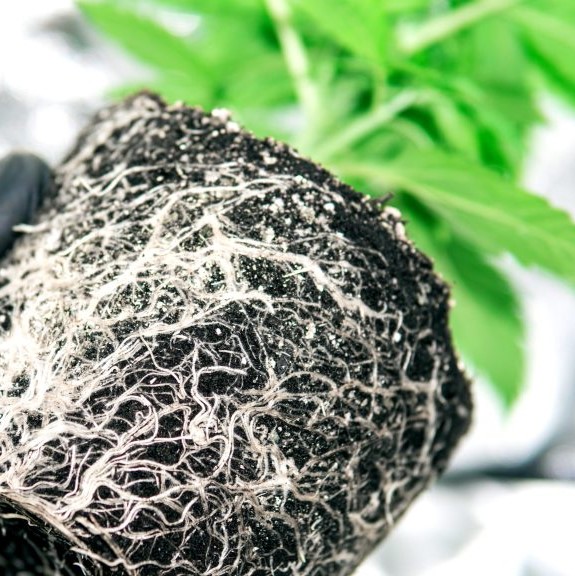



Hemp is far more than its well-known flowers and characteristic leaves. For thousands of years this remarkable plant has been used in its entirety, with every part playing a specific role. Today we turn to an often overlooked aspect: hemp roots and their fascinating therapeutic heritage. These underground structures hold a unique chemical composition that deserves our attention from both a botanical and a historical point of view.
Anatomy and Function of Roots in Hemp Genetics
The roots form the basic anchoring system of the hemp plant. They develop a complex architecture built around a strong taproot from which numerous lateral branches emerge. This structure allows for optimal uptake of the nutrients and water the genetics need for their development.
The various collector strains develop different root systems:
- Indica genetics: Typically develop a more compact, denser root system, suited to their bushier growth
- Sativa genetics: Form more extensive, deeper roots, in keeping with their more pronounced vertical growth
- Hybrids: Combine the root characteristics of both parent lines
From a chemical point of view, the roots contain a remarkable concentration of bioactive compounds, including triterpenes, alkaloids and various phytosterols. These molecules give the roots their distinctive aromatic properties and their characteristic chemical profile.
The Historical Heritage of Hemp Roots
The use of hemp roots is part of a thousands-of-years-old tradition running through numerous civilisations. The earliest documented mentions go back to antiquity, where physicians and herbalists already recognised the therapeutic potential of this part of the plant.
Timeline of historical uses:
- Greco-Roman antiquity: Pliny the Elder documented the use of root decoctions for various ailments
- Traditional Chinese medicine: The roots were incorporated into complex preparations under the name "Ma Fen"
- Medieval Europe: Monasteries grew hemp and used all its parts, including the roots
- Renaissance: Treatises on medicinal herbs regularly mentioned the properties of the roots
Traditional uses mainly concerned inflammatory conditions, joint problems and various skin complaints. These inherited practices testify to a solid, empirical understanding of the chemical properties of the roots.
Chemical Composition and Aroma Profile
Modern analysis shows that hemp roots have a complex and unique chemical profile. Unlike the flowers, which mainly concentrate cannabinoids, the roots develop a different, yet equally fascinating, molecular spectrum.
Key compounds identified in the roots:
- Triterpenes: Including epifriedelinol and friedelin, responsible for certain aromatic properties
- Alkaloids: In particular cannabisativine, a compound specific to the roots
- Plant sterols: Contribute to cell structure and to the physico-chemical properties
- Phenolic compounds: Provide natural antioxidant properties
- Choline: A nitrogen-containing compound present in remarkable concentrations
This unique composition gives the roots an earthy, slightly bitter aroma profile, clearly different from the more complex notes of the flowers and leaves.
Traditional Preparation Methods
Historically, several techniques made it possible to extract and concentrate the active compounds from hemp roots. These methods, handed down through generations, reflect a sophisticated understanding of their chemical properties.
Documented preparation techniques:
- Aqueous decoction: Dried roots were boiled to obtain a concentrated extract
- Alcoholic maceration: Using alcohol to extract fat-soluble compounds
- Topical preparations: Mixtures with fats for external use
- Powder: Dried, finely ground roots used for various applications
These time-honoured techniques show a remarkable mastery of active-compound extraction, long before the development of modern chemical analysis methods.
The Modern Perspective and Botanical Research
Today, scientific interest in hemp roots is experiencing a revival. Modern analytical technology allows for a better understanding of the molecular composition and the mechanisms of action of these age-old compounds.
Current research is focused on:
- Chemical characterisation: Precise identification of the active molecules
- Mechanisms of action: Understanding the molecular interactions involved
- Therapeutic potential: Assessing the properties in a modern context
- Industrial applications: Putting the compounds to use in various fields
This modern scientific approach makes it possible to confirm or disprove traditional uses, while at the same time opening up new perspectives for the future.
Preserving the Genetic Heritage
Research into the roots is also part of a wider effort to preserve the genetic heritage of hemp. Collector seeds make it possible to preserve the diversity of traditional strains and to safeguard the full range of their characteristics, including the roots.
This genetic preservation is of crucial importance for future botanical research. Each strain develops its own root characteristics, contributing to the richness of hemp's biodiversity.
In short, hemp roots represent a remarkable botanical and cultural heritage. Studying them reminds us that the hemp plant must be considered as a whole, with every part contributing to the richness of this extraordinary genetics. This traditional heritage, combined with modern scientific approaches, opens up exciting perspectives for understanding this versatile plant.