


 English (English)
 Deutsch (German)
 Čeština (Czech)
 Italiano (Italian)
 Hrvatski (Croatian)
 Română (Romanian)
 български език (Bulgarian)
 Magyar (Hungarian)
 Español (Spanish)
 Français (French)
 Nederlands (Dutch)
 Polski (Polish)
 Slovenčina (Slovak)

The World of Cannabinoids: A Scientific Exploration
Cannabis contains an impressive spectrum of more than 100 different cannabinoids, each with unique molecular structures and properties. In addition to the well-known compounds such as CBD (cannabidiol) and CBG (cannabigerol), scientists are constantly discovering more fascinating components. One of the most interesting is THCV (tetrahydrocannabivarin), a cannabinoid that has recently attracted the attention of researchers worldwide.
The endocannabinoid system in our body consists of CB1 and CB2 receptors located in the central nervous system. These receptors interact with both endogenous cannabinoids (which our body produces itself) and plant cannabinoids. The discovery of anandamide in 1992 opened the door to understanding this complex system, which influences the limbic system and the mesolimbic pathways of our brain.
THCV: Biosynthesis and Molecular Characteristics
Cannabis plants originally produce cannabinoid acids rather than the active cannabinoids themselves. The process begins with CBGVA (cannabigerovarinic acid), which is converted into THCVA (tetrahydrocannabivarinic acid) by specific enzymes. Through decarboxylation, usually by the application of heat, the active THCV is finally formed.
The biosynthetic pathway of cannabinoids is a fascinating example of plant biochemistry. The most important acid forms found in cannabis include, among others:
- CBGA - The mother of all cannabinoids
- THCA and CBDA - The most common acids
- THCVA and CBDVA - Varin variants with unique properties
- CBGVA - The precursor of THCV
These natural compounds often show antibiotic properties, suggesting that they act as defense mechanisms of the plant against pathogens and pests.
Scientific Research on THCV
Modern cannabis genetics has led to the development of strains with elevated THCV concentrations. Historically, this cannabinoid occurred only in very low concentrations, but targeted selection has changed this. Scientific research has brought various interesting aspects of THCV to light.
Neurological Research and Findings
Studies from 2011 have shown that THCV may possess antioxidant properties that could be relevant for neurodegenerative diseases. Parkinson's research has delivered promising results, with the compound showing potential neuroprotective effects.
Epilepsy research from 2015 pointed to anticonvulsant properties of this cannabinoid. The study documented a reduced frequency and intensity of seizures in laboratory models, opening new perspectives for future therapeutic research.
Metabolism and Receptor Interaction
THCV shows a unique interaction profile with cannabinoid receptors. A study from 2007 suggested that this compound has an influence on CB2 receptors in the bone marrow, which could have potential implications for bone health and calcium metabolism.
Anti-inflammatory studies from 2010 have documented the anti-inflammatory properties of THCV, a characteristic shared by many cannabinoids, but with specific mechanisms that are unique to this compound.
Genetics and Modern Cannabis Development
The development of THCV-rich genetics represents a significant breakthrough in cannabis research. These strains are the result of years of selective breeding programs aimed at increasing specific cannabinoid profiles.
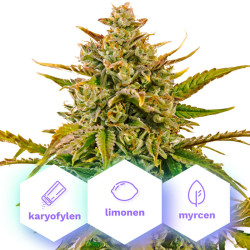
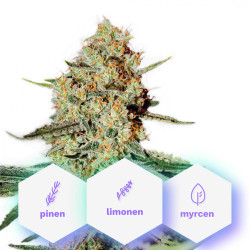
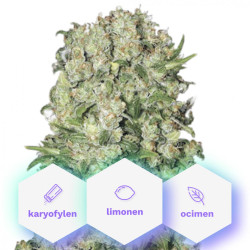
The terpene profile of THCV-rich strains often shows complex aroma combinations. Myrcene with its characteristic earthy undertones is frequently found alongside other terpenes such as limonene and pinene, which contributes to the unique aroma profile of this genetics.
Modern cannabinoid analysis uses advanced chromatographic techniques to determine precise profiles. These technologies have made it possible to identify and develop strains with specific ratios of active compounds.
Future Perspectives and Research Directions
The field of cannabinoid research is developing rapidly, with new discoveries regularly published in peer-reviewed journals. THCV research is still in its infancy compared to CBD and other cannabinoids, but the initial results are encouraging.
The development of standardized extraction methods and analytical protocols will be crucial for future research. Reproducible results require consistent starting material and precise quantification methods.
Cannabis genetics continues to evolve, with breeders working to optimize cannabinoid ratios and improve the stability of desired traits. These developments promise a future in which specific cannabinoid profiles can be tailored for research purposes.