


 English (English)
 Deutsch (German)
 Čeština (Czech)
 Italiano (Italian)
 Hrvatski (Croatian)
 Română (Romanian)
 български език (Bulgarian)
 Magyar (Hungarian)
 Español (Spanish)
 Français (French)
 Nederlands (Dutch)
 Polski (Polish)
 Slovenčina (Slovak)
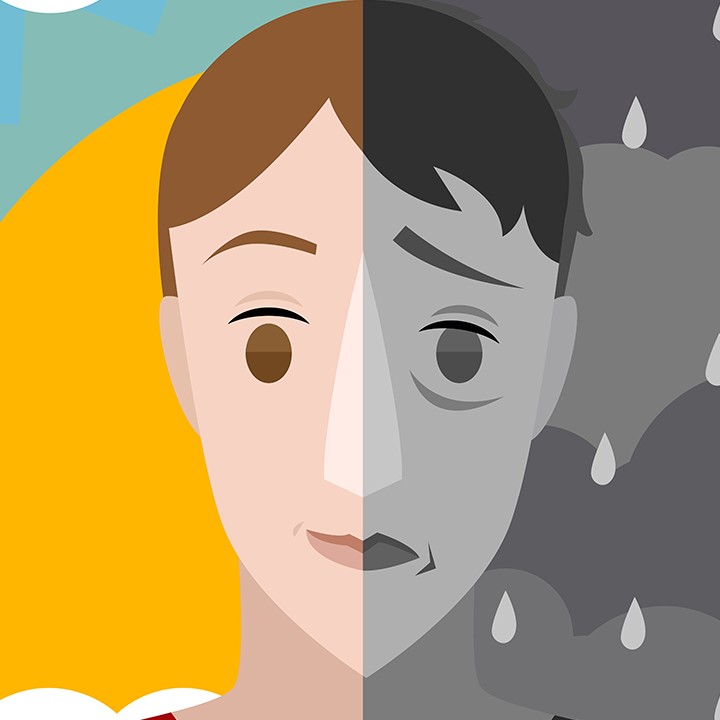



Bipolar Disorder: A Complex Neurochemical Challenge
Mental illness often remains underexposed in today's society, and people with psychological problems are sometimes viewed as unwelcome. This makes it all the more important to pay attention to this issue. Bipolar affective disorder (BAD) is one of the most dangerous psychiatric conditions, given that around half of all patients with this diagnosis make at least one suicide attempt during their lifetime.
Traditional treatment methods have their limitations and side effects, which is why both doctors and patients are looking for additional therapeutic options. Cannabidiol (CBD) is known for its complex genetic composition and its interaction with various physiological systems - but could these properties also be relevant to the neurochemical processes involved in bipolar disorders?
Characteristics of Bipolar Affective Disorder
Bipolar affective disorder, formerly known as manic-depressive psychosis, is characterized by alternating periods of mania and depression. Patients experience extreme mood swings that can last for days, weeks or even months. In rare cases, ultra-rapid cycling occurs, in which manic and depressive episodes can alternate several times a day.
Depressive Episodes and Their Manifestations
The highest risk of suicidal thoughts occurs during depressive phases, because the person loses all zest for life. Symptoms include classic depressive features such as sadness, fatigue, loss of self-confidence, crying spells, sleep disturbances, negativism, eating problems (overeating or loss of appetite), hopelessness, loss of energy and the inability to experience any joy.
Manic Episodes and Their Challenges
Manic episodes can be seen as the opposite of depressive phases, but likewise in extreme forms. Patients show excessively high self-confidence, a tendency to exaggerate, euphoric mood, accelerated thinking and reacting, and reduced need for food and sleep. For some, this also means an increased risk of substance abuse, which is often associated with BAD. During manic periods, patients may spend money excessively, gamble, take out senseless loans or repeatedly enter into new relationships. These manifestations can escalate into delusions, hallucinations or perceptual disturbances.
Neurochemical Background and Conventional Treatment
The condition is linked to an imbalance in neurotransmitter activity in the patient's brain - fluctuating levels of dopamine, serotonin, GABA, glutamate and other substances make normal mood regulation impossible. The exact causes remain unclear, but it is likely a combination of genetic predisposition, environmental factors and reactions to them, possibly related to traumatic experiences such as psychological abuse. A decisive factor is often prolonged exposure to stress.
Traditional Pharmacological Approaches
Conventional treatment methods consist of the use of antidepressants, antipsychotics, mood stabilizers and anticonvulsants. Because this is a complex mental disorder, treatment often proceeds on a 'trial and error' basis, with doctors trying out different medications. This carries significant side effects, including loss of libido, nausea, dizziness, weight gain, blurred vision, tremor, reduced brain volume, fatigue and diabetes. These treatment protocols are controversial, since medications that help with depression can trigger manic states, and vice versa.
CBD's Genetic Profile and Neurochemical Properties
Lithium has been used as a basic treatment for mood stabilization since the 1960s. Side effects of lithium-based preparations include tremor, kidney damage and diarrhea - unpleasant enough that around half of patients discontinue treatment. The neurological properties of cannabidiol have received significant scientific attention in recent years. Through its interaction with the endocannabinoid system, it is directly involved in processes such as reproduction, mood, sleep quality and appetite.
CBD is known for its anti-inflammatory, antioxidant, neuroprotective and immunomodulatory properties, which are being studied in the context of various conditions, including Parkinson's disease, epilepsy, multiple sclerosis, Alzheimer's disease and Crohn's disease.
Scientific Research into CBD and Bipolar Genetics
The number of studies conducted in this area remains limited. Research from 2010 focused on cannabis users with BAD showed that all 133 participants demonstrated improvement in neurocognitive functions, including better attention, verbal fluency, concentration, memory and logical reasoning. In addition to patients with bipolar disorder, patients with schizophrenia also participated, in whom the effect was negative.
These findings suggest that the genetic composition of different cannabinoids can have different interactions with specific neurochemical profiles. This underscores the importance of further research into how various terpenes and cannabinoids in collector's seeds can contribute to our understanding of complex neurological processes.
Important: This information is intended solely for educational purposes regarding the genetic properties of collector's seeds. Always consult a qualified medical professional for any health-related matters.