


 English (English)
 Deutsch (German)
 Čeština (Czech)
 Italiano (Italian)
 Hrvatski (Croatian)
 Română (Romanian)
 български език (Bulgarian)
 Magyar (Hungarian)
 Español (Spanish)
 Français (French)
 Nederlands (Dutch)
 Polski (Polish)
 Slovenčina (Slovak)



CBD as a natural support for asthma: What does science say?
Asthma is a complex respiratory disease that affects millions of people worldwide. This chronic inflammatory disease of the airways causes a narrowing of the bronchi, leading to typical symptoms such as shortness of breath, coughing, wheezing, and a feeling of tightness in the chest. Cannabidiol (CBD), a non-psychoactive compound found in cannabis plants, shows interesting properties that may be relevant for people seeking natural support for asthma-related issues.
The genetics of cannabis plants contain various cannabinoids, among which CBD stands out due to its anti-inflammatory profile. This property makes it a fascinating compound for collectors interested in the therapeutic profiles of different cannabis plants.
Development and causes of asthma: a complex interplay
Asthma develops from a combination of genetic predisposition and environmental factors. The airways of asthma patients are hypersensitive to various stimuli, leading to an inflammatory response that impairs normal breathing. This process is characterized by swelling of the mucous membrane, contraction of the smooth muscles around the airways, and overproduction of mucus.
Different categories of asthma triggers
Scientists distinguish between different types of triggers that can cause asthma attacks:
- Allergic triggers: Dust mites, pollen from grasses and trees, animal dander, mold, certain foods, and chemical substances from the environment
- Non-allergic factors: Emotional stress, intense physical exertion, weather changes, air pollution, cigarette smoke, and viral infections
- Occupational exposure: Chemical vapors, dust from certain materials, paint fumes, and other industrial substances
Recent research also suggests that the "hygiene hypothesis" plays a role: children who grow up in overly sterile environments may develop a less robust immune system that overreacts to normally harmless substances.
How CBD genetics may offer support for respiratory issues
Cannabidiol acts through the endocannabinoid system (ECS), a complex network of receptors and neurotransmitters involved in regulating various physiological processes, including inflammatory responses and muscle tension. Cannabis plants rich in CBD contain terpenes and cannabinoids that work together synergistically, known as the "entourage effect."
Bronchodilation: widening of the airways
A 2012 study published by Alessandro Pini showed that cannabinoids such as CBD interact with CB1 receptors located in bronchial tissue. This interaction can lead to relaxation of the smooth muscles around the airways, potentially contributing to easier breathing. The study concludes that activation of these receptors may have bronchodilating effects, helping to relieve airway constriction.
This property makes certain CBD-rich genetics particularly interesting for collectors interested in cannabis strains with specific therapeutic profiles. Strains known for their high CBD content and anti-inflammatory terpene profiles are increasingly valued among collector communities.
Anti-inflammatory properties of CBD genetics
An important characteristic of CBD is its ability to modulate inflammatory processes. A study from São Paulo (2015) examined the effect of CBD on inflammatory markers in laboratory animals with airway inflammation. A significant reduction in pro-inflammatory cytokines, which are signaling proteins that play a crucial role in inflammatory responses, was observed after just two days of treatment.
The researchers concluded that CBD shows promise as a potential natural agent for modulating inflammatory responses. This finding is relevant for collectors interested in plant genetics with pronounced anti-inflammatory properties.
Pain relief and muscle relaxation
Approximately 76% of asthma patients experience chest pain during attacks. CBD-rich cannabis strains are known for their analgesic properties, which historically was one of the first therapeutic properties discovered in cannabis. CBD's ability to reduce muscle tension is particularly relevant since asthma is characterized by abnormal tension in the airway muscles.
CBD influences cannabinoid receptors along muscle tissue, which can contribute to muscle relaxation and reduced cramping. This property makes CBD-dominant genetics attractive to collectors seeking strains with specific physiological profiles.
Secondary symptoms and the broad spectrum of CBD effects
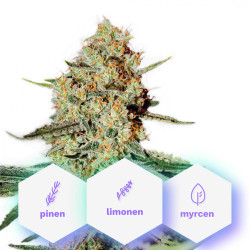
Asthma is often accompanied by related issues such as anxiety, sleep disturbances, and emotional stress. CBD-rich cannabis plants often contain complementary terpenes such as myrcene, linalool, and limonene, each with their own aromatic and potential therapeutic profiles.
Anxiety and stress management
Research from 2011 showed that CBD has significant effects on social anxiety, cognitive function, and general discomfort. For asthma patients who often experience anxiety during attacks, CBD-rich strains could be of interest due to their calming genetic profile.
Sleep quality and relaxation
Many asthma patients experience disrupted sleep patterns due to nighttime symptoms. Certain CBD-rich cannabis strains, especially those with elevated myrcene levels, are known for their relaxing properties. This terpene contributes to the sedative profile of certain genetics, making them interesting for collectors interested in strains with calming properties.
Terpenes and the entourage effect in asthma-related properties
In addition to CBD, cannabis strains contain various terpenes that contribute to the overall therapeutic profile. Pinene, for example, is known for its bronchodilating properties, while beta-caryophyllene exhibits anti-inflammatory characteristics through interaction with CB2 receptors.
For plant genetics collectors, it is interesting to understand how different terpene profiles work together with cannabinoids to create unique aromatic and potential therapeutic properties. Strains rich in both CBD and complementary terpenes are increasingly valued for their complex genetic composition.
Understanding these natural compounds and their synergistic effects makes collecting plant genetics a fascinating hobby for people interested in the botanical and chemical diversity of this remarkable plant family.