


 English (English)
 Deutsch (German)
 Čeština (Czech)
 Italiano (Italian)
 Hrvatski (Croatian)
 Română (Romanian)
 български език (Bulgarian)
 Magyar (Hungarian)
 Español (Spanish)
 Français (French)
 Nederlands (Dutch)
 Polski (Polish)
 Slovenčina (Slovak)
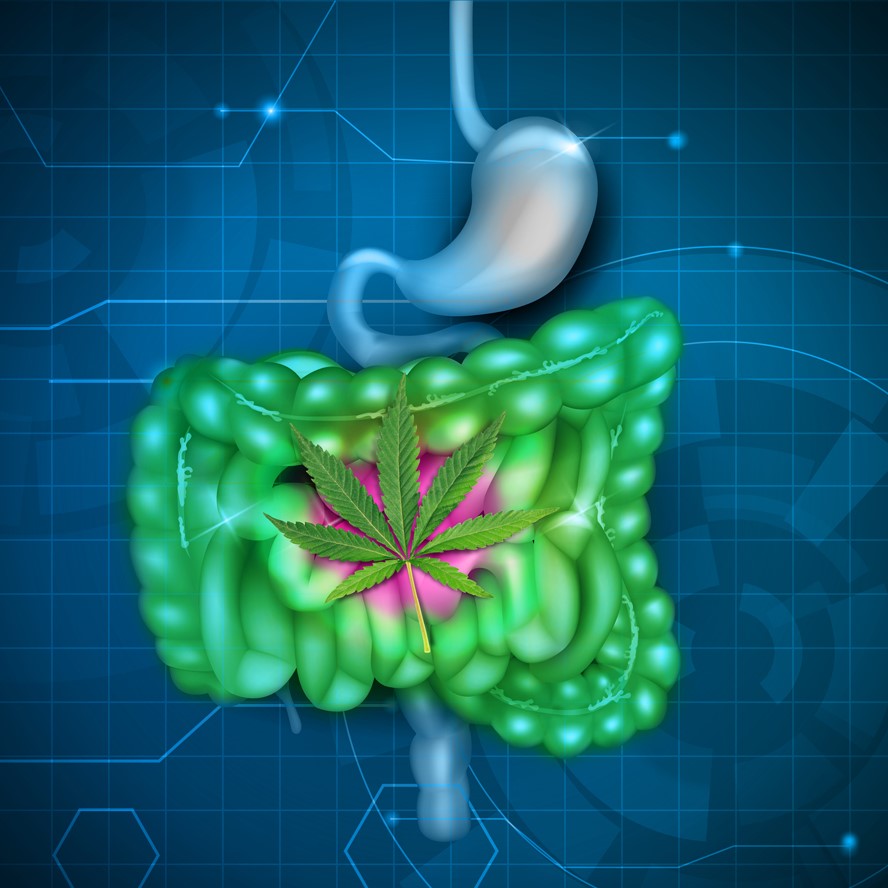


Chronic inflammatory bowel diseases (IBD) rank among the biggest challenges of modern gastroenterology. Among these conditions, ulcerative colitis and Crohn's disease stand out due to their complexity and the significant impact they have on patients' quality of life. While conventional medicine focuses on symptomatic treatment, cannabidiol (CBD) is emerging as a promising alternative with natural anti-inflammatory properties.
Understanding chronic inflammatory bowel diseases
The human digestive system functions like a complex network in which any disruption can trigger cascading effects. IBD mainly includes ulcerative colitis and Crohn's disease, and while each of these conditions has its own distinct features, they share similar inflammatory mechanisms.
Ulcerative colitis: specific characteristics
This condition is characterized by chronic inflammation of the colon, which typically begins in the rectum and spreads continuously toward the colon. The inflammation is limited to the superficial mucosa and causes characteristic ulcers that impair normal nutrient absorption.
Patients frequently develop intestinal dysbiosis, an imbalance between beneficial microorganisms and pathogens that sustains the inflammatory process. This vicious cycle produces metabolic byproducts that continuously damage the intestinal wall.
Key symptoms include:
- Abdominal pain of varying intensity
- Cramping in the intestinal area
- General fatigue
- Urgent need to defecate
- Rectal bleeding
- Loss of appetite
- Persistent nausea
- Recurring diarrhea
Crohn's disease: disease profile
Unlike colitis, Crohn's disease can manifest in any section of the digestive tract, though it shows a preference for the terminal ileum. The inflammation is transmural, affecting all layers of the intestinal wall, which intensifies the symptoms and complicates therapeutic management.
This condition shows a pattern of discontinuous inflammation, in which healthy sections alternate with affected areas. The depth of the inflammatory process can lead to complications such as strictures, fistulas and abscesses.
The endocannabinoid system and intestinal function
The endocannabinoid system (ECS) plays a fundamental role in intestinal homeostasis. This system includes CB1 and CB2 receptors, endogenous ligands, and metabolizing enzymes that regulate numerous digestive processes.
Cannabinoid receptors in the gut
CB1 receptors are widely distributed throughout the enteric nervous system and modulate intestinal motility, secretion and pain perception. CB2 receptors predominate in the intestinal immune cells, where they regulate inflammatory responses and maintain the integrity of the mucosal barrier.
CBD interacts indirectly with these receptors and modulates endocannabinoid signaling without triggering psychoactive effects. This interaction can have a positive effect on inflammatory processes and help restore homeostatic balance in the gut.
Anti-inflammatory mechanisms of CBD
Scientific research has identified several pathways through which CBD can exert anti-inflammatory effects in the digestive tract. These mechanisms include the inhibition of pro-inflammatory cytokines, modulation of the adaptive immune response, and protection of the intestinal barrier.
Cannabidiol also affects the gut microbiota, promoting the growth of beneficial species while inhibiting pathogens. This microbial modulation can significantly contribute to reducing chronic inflammation.
Scientific evidence and clinical studies
Research into CBD for chronic inflammatory bowel diseases has produced promising results in preclinical studies and initial clinical investigations. Numerous studies have examined the efficacy of cannabidiol in experimental colitis models, showing a marked reduction in inflammatory markers.
Studies in experimental models
Research on mouse models with DSS-induced colitis showed that CBD significantly reduced colonic inflammation and improved the integrity of the epithelial barrier. These studies documented a decrease in inflammatory infiltrates and a normalization of intestinal architecture.
Other studies have shown that CBD modulates nitric oxide production and reduces oxidative stress in inflamed intestinal tissue. These effects contribute to cell protection and promote tissue repair.
Clinical studies in humans
Clinical studies in IBD patients have shown mixed but predominantly positive results. One prospective study observed significant improvements in disease activity indices and quality of life among patients treated with CBD.
Further research has documented a reduction in gastrointestinal symptoms, including abdominal pain, stool frequency and rectal bleeding. These benefits were associated with a favorable safety profile and minimal side effects.
Therapeutic considerations and dosing
The therapeutic use of CBD in IBD requires specific consideration of dosage, method of administration and clinical monitoring. Individual variability in treatment response calls for a personalized approach.
Administration protocols
The optimal CBD dose for chronic inflammatory bowel diseases varies considerably between patients. Factors such as disease severity, body weight, individual metabolism and concomitant medications influence the therapeutic response.
Typical protocols begin with low doses (10-25 mg daily) and are gradually increased depending on tolerability and effectiveness. Regular monitoring allows for precise adjustments and optimization of the therapeutic benefit.
Interactions and contraindications
Although CBD has a favorable safety profile, interactions can occur with conventional medications used in IBD. It is important to take these aspects into account and maintain close contact with medical professionals.
The endocannabinoid system represents a promising therapeutic target for the treatment of chronic inflammatory bowel diseases. As scientific research continues to advance, CBD offers hope for patients seeking complementary therapeutic alternatives for managing these complex conditions.