


 English (English)
 Deutsch (German)
 Čeština (Czech)
 Italiano (Italian)
 Hrvatski (Croatian)
 Română (Romanian)
 български език (Bulgarian)
 Magyar (Hungarian)
 Español (Spanish)
 Français (French)
 Nederlands (Dutch)
 Polski (Polish)
 Slovenčina (Slovak)
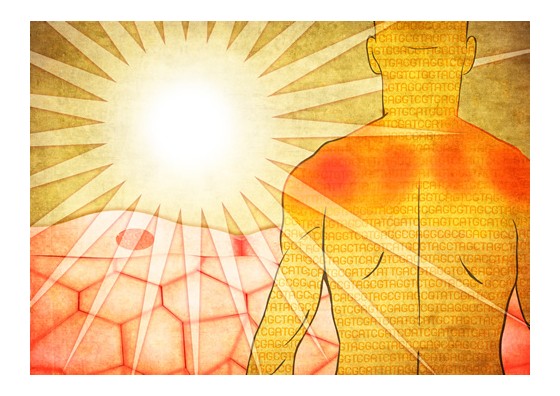



The arrival of summer brings moments of relaxation in the sun, but also the risk of sunburn. When skin is exposed too long to UV rays without adequate protection, skin damage can occur ranging from simple redness to more severe burns. In recent years, scientific research has begun exploring the potential beneficial properties of CBD (cannabidiol) for treating sunburn.
CBD is one of the main cannabinoids found in cannabis, characterised by a molecular profile free of psychoactive effects. This natural compound stands out for its interesting anti-inflammatory, antioxidant and analgesic properties, which could prove useful in the healing process of damaged skin.
The Mechanism of Sunburn and Skin Damage
Sunburn, technically defined as solar erythema, represents an acute inflammatory response of the skin to excessive exposure to ultraviolet radiation (UV-A and UV-B). When these rays penetrate the layers of the skin, they trigger a cascade of cellular reactions that lead to the characteristic symptoms.
UV-A rays penetrate deeper into the skin and are responsible for premature ageing and long-term damage, while UV-B rays mainly affect the surface layers, causing immediate erythema. Both types of radiation can cause alterations to cellular DNA and oxidative stress.
The most common symptoms of sunburn include:
- Erythema and skin redness
- A burning and painful sensation
- Blister formation in more severe cases
- Skin peeling in the following days
- Possible fever and general malaise
The severity of sunburn is classified into different degrees, from first degree (simple erythema) to fourth degree (charring), although sunburn rarely exceeds second degree.
Properties of CBD in Treating Sunburn
Cannabidiol has a particularly interesting pharmacological profile for the topical treatment of sunburn. Scientific research has identified several mechanisms of action that could contribute to the skin-healing process.
Anti-inflammatory activity: CBD interacts with the endocannabinoid system present in the skin, modulating the local inflammatory response. This compound is able to reduce the production of pro-inflammatory cytokines, thereby decreasing the erythema and swelling typical of sunburn.
Antioxidant properties: Damage caused by UV rays is often amplified by oxidative stress. CBD acts as a powerful antioxidant, neutralising free radicals and protecting skin cells from further damage. This action proves particularly important in preventing premature skin ageing.
Analgesic effects: The presence of specific terpenes, such as linalool, gives CBD natural analgesic properties. These aromatic compounds help reduce the pain and burning sensation associated with sunburn, providing immediate relief.
Antibacterial activity: Sunburned skin is more vulnerable to bacterial infections. CBD has shown antibacterial properties that could help prevent infectious complications during the healing process.
The Endocannabinoid System and Skin Repair
To fully understand CBD's potential in treating sunburn, it is essential to know the role of the endocannabinoid system (ECS) in the skin. This complex cell-signalling system is present in all tissues of the body, including the skin.
The cutaneous endocannabinoid system includes CB1 and CB2 receptors, natural endocannabinoids such as anandamide and 2-AG, and the enzymes responsible for their synthesis and breakdown. When CBD is applied topically, it can interact with this system, influencing various cellular processes.
CB1 receptors are particularly abundant in hair follicles and sebaceous glands, where they regulate sebum production and influence tissue repair processes. CB2 receptors, on the other hand, are predominantly expressed in the skin's immune cells and play a crucial role in regulating inflammation.
During the sunburn healing process, controlled activation of these receptors can promote cell regeneration, collagen synthesis and restoration of the skin barrier. This natural self-regulating mechanism represents one of the most promising aspects of using CBD in dermatology.
Application Methods and Practical Considerations
Topical use of CBD for sunburn requires some specific considerations to optimise treatment effectiveness. The most common form is topical CBD oils, which allow gradual and prolonged penetration of the active ingredient.
Topical application: CBD oil should be applied gently to clean skin, avoiding vigorous rubbing that could further irritate damaged tissue. It is advisable to start with small amounts to assess skin tolerance and gradually increase as needed.
Application timing: For optimal results, application should be repeated 2-3 times a day, preferably after cooling the skin with cold compresses. Consistency in treatment is essential to allow CBD to carry out its regenerative action.
Product quality: It is essential to use high-quality CBD oils, obtained from selected genetics and subjected to rigorous purity controls. The presence of complementary terpenes can enhance the therapeutic effect through the so-called "entourage effect".
Integrating CBD into sunburn skincare represents an innovative approach that harnesses the natural properties of this cannabinoid. However, it is important to stress that in the case of severe sunburn, it is always advisable to consult a dermatologist for a professional assessment.
Scientific research continues to explore CBD's potential in dermatology, opening new prospects for natural and effective treatments. The use of this compound for sunburn is just one aspect of a constantly evolving field of study, which promises interesting developments for the future of skincare.