


 English (English)
 Deutsch (German)
 Čeština (Czech)
 Italiano (Italian)
 Hrvatski (Croatian)
 Română (Romanian)
 български език (Bulgarian)
 Magyar (Hungarian)
 Español (Spanish)
 Français (French)
 Nederlands (Dutch)
 Polski (Polish)
 Slovenčina (Slovak)



Legal status of cannabis in the European Union (as of 25 September 2026)
- The EU has no single cannabis law: it sets a common framework for hemp farming, trade and drug trafficking, while recreational use is regulated by each Member State.
- CBD lawfully produced in one Member State may in principle be sold in another; a national ban is allowed only if it is suitable to protect public health and does not go beyond what is necessary. The Court held that such CBD is not a narcotic drug under the 1961 Single Convention (Articles 34 and 36 TFEU, Case C-663/18 Kanavape, paras 76 and 96).
- Industrial hemp qualifies for CAP direct payments only if the THC content of the variety does not exceed 0.3 % (Art. 4(4) Regulation (EU) 2021/2115); THC control methods are set by the Commission (Art. 60(4)(a) Regulation (EU) 2021/2116).
- Member States may restrict how hemp is grown, for example ban indoor hydroponic cultivation, if the restriction is suitable and proportionate for protecting public health (Case C-793/22 Biohemp Concept, 4 October 2024).
- Member States must make intentional unlawful cultivation of cannabis plants and drug trafficking a criminal offence (Art. 2(1)(b) Framework Decision 2004/757/JHA, as quoted in Case C-271/23).
- Rules on recreational cannabis differ widely: Germany allows adults to possess up to 25 g in public, 50 g at home and three plants (§ 3 and § 9 KCanG), while in Czechia personal use becomes a criminal offence only above 5 plants, 200 g at home or 50 g elsewhere, and plants with up to 1 % THC are excluded (§ 285 Czech Criminal Code).
“Články 34 a 36 SFEU musí být vykládány v tom smyslu, že brání vnitrostátní právní úpravě, která zakazuje uvádět na trh CBD, který je legálně vyprodukován v jiném členském státě, v případě, že je extrahován z celé rostliny cannabis sativa, a nikoli pouze z jejích vláken a semen, ledaže je tato právní úprava s to zaručit naplnění cíle ochrany veřejného zdraví a nepřekračuje meze toho, co je k dosažení tohoto cíle nezbytné.”
[Translation: “Articles 34 and 36 TFEU must be interpreted as precluding national legislation which prohibits the marketing of CBD lawfully produced in another Member State when it is extracted from the Cannabis sativa plant in its entirety and not solely from its fibre and seeds, unless that legislation is appropriate for securing the attainment of the objective of protecting public health and does not go beyond what is necessary for that purpose.”]
This overview is based on legislation and case law in the legal database Europaius. It is not legal advice.
- Coconut oil itself offers a number of benefits and healing effects
- If we enrich it with prescription medical cannabis, we will increase its therapeutic effect
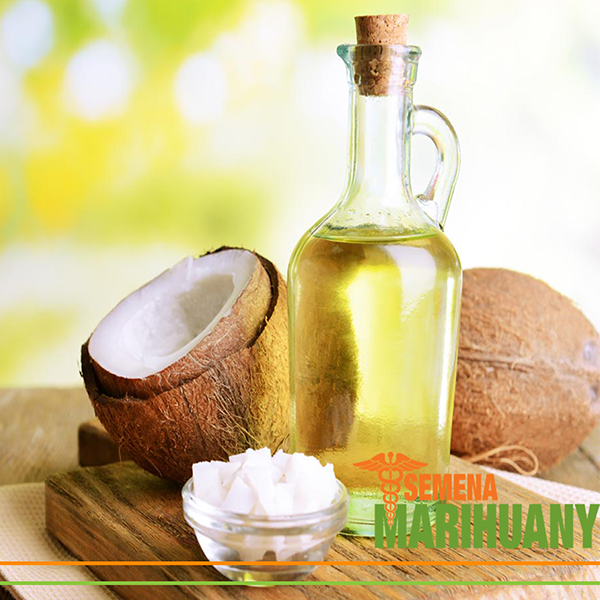
What does the whole line of cannabis body care products, such as hemp, cocoa and oil THC spray, all have in common? In addition to being one of the most sought after cannabis products from the entire industry, they also share one essential ingredient - coconut oil.
Why coconutoil?
Coconut oil has already "rubbed" into almost the entire cannabis industry and into most of the most sought after products, including cannabis and ointments. But why is it a popular choice?
First of all, coconutoil is one of the raw materials that have the highest content of saturated fatty acids. This means that in conjunction with cannabis, there is a problem-free and mainly lossless attachment of all cannabinoids. Compared to, for example, olive oil, whose content of saturated fatty acids is about 20%, coconut oil contains up to 80% - thus, its ability to bind cannabinoids much, much higher, is reflected in the resulting, therapeutic efficacy. Thus, coconut oil is almost perfect medium for hemp.
In addition, coconutoil contains other rows of human beneficial acids. A great example is lauric acid, which sin our digestive tract it turns into monoglycerides and as a result it acts antimicrobially. Coconut oil contains a number of other beneficial substances, making it a strong competitor for a more classic base such as butter or rapeseed oil.
Kanab Extractioninoids using coconut oil
Another of the many benefits of using coconut oil stands out in the extraction of cannabinoids - the resulting product remains solid at room temperature. The versatility of hemp coconut oil and its ability to remain at room temperature is also a huge advantage in the manufacture of medicinal ointments. Furthermore, a solid state of coconut oil is also suitable for the production of gelatin, medical capsules, which can be used to completely inject the required amount of cannabinoids into the body. The production of such capsules is very simple and almost all ingredients, including prescription medical cannabis (which will be problematic in the current situation), can be found in pharmacies or online.
How to make hemp coconut oil
One of the most overlooked uses of coconut oil is its implementation into the production of edible foods enriched with cannabinoids. In addition to obtaining coconut oil virtually anywhere at a relatively low price, it isit is also extremely easy to carry out the decarboxylation process and incorporate the required amount of cannabis phytocannabinoids into it.
PrFor those who have no experience with cannabis consumables, it is good to mention a few differences from the classic application of inhalation:
- INThe resulting effect lasts much longer, begins gradually, and the physical body also hits more than inhalation
- The resulting metabolic effect is very different as cannabis comes into direct contact with your digestive tract
- For some of the patients who have developed tolerance, the digestive tract is much more beneficial
Recipe For Hemp Coconut Oil
Ingredients
- 28 grams of dried cannabis flower
- 500 ml of coconut oil (or oil of your choice, eg olive oil)
Utilities
- Strainer
- Grinder (Grinder, blender, food processor, etc.)
- Double pot, milk maker, casserole, etc.
Procedure
1. Rub all the hemp you want to use finely. You can use the whole plant, flowers, leaves or mix of your choice. Of course, the stems only have trace amounts of the substances we require. However, when using a complete plant, we will also get healthy fiber, which is certainly no harm, and some of the more experienced cannabis cooks are not supposed to give this methodher. Remember, however, that the more cannabinoid-poor material you use, the stronger the taste of cannabis in the end product, with the potency remaining almost the same.
2. Mix the oil of your choice with crushed hemp and place in a double pot. Heat the mixture carefully, preferably for several hours. Slow heating will allow us to establish and activate as many active substances as possible without burning some of them. Heat the mixture for at least 6 hours, mix occasionally. If you want to really care, warm up and mix for a few days.
3. Activated front oilwe drain and remove all cannabis particles. Pour the oil into the container of your choice and keep it. The durability of such a product will be at least 2 months. However, you can extend the shelf life considerably by storing it in the fridge.
About coconutOil and its use for cannabinoid-enriched products will certainly be heard on the cannabis market of the future. However, until such products reach the market and us, you can experiment with your own prescription raw materials and hemp.
* All suggestionsand the recipes in this article are purely indicative. Always take your own discretion and legislation in your country.