


 English (English)
 Deutsch (German)
 Čeština (Czech)
 Italiano (Italian)
 Hrvatski (Croatian)
 Română (Romanian)
 български език (Bulgarian)
 Magyar (Hungarian)
 Español (Spanish)
 Français (French)
 Nederlands (Dutch)
 Polski (Polish)
 Slovenčina (Slovak)
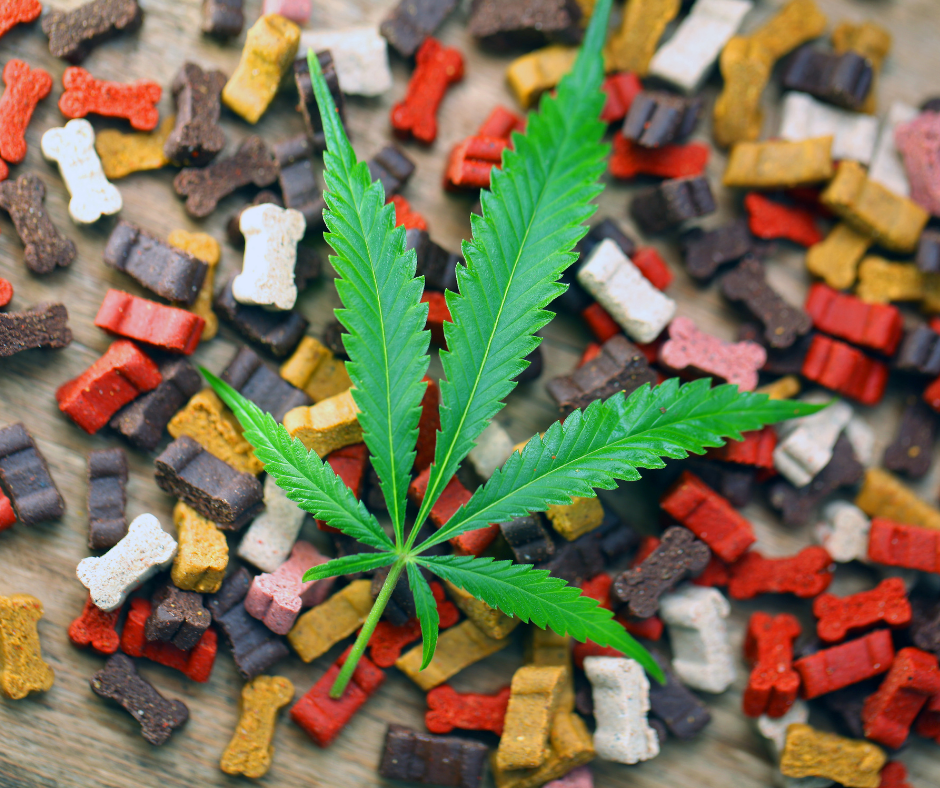



- In today's article we will look at the effects of THC and CBD on our furry friends, and also at what to do if they find your stash full of medicinal brownies
Today we already have the results of a whole range of studies demonstrating the benefits of CBD (a non-psychoactive cannabinoid contained in cannabis) for several common animal diseases. In some states where medical cannabis is already fully legal, dog treats enriched with CBD are even commonly sold in dispensaries.
Yes, CBD can be both beneficial and completely safe for your pets. With THC, however, things are different. Giving your furry loved ones anything containing THC is not beneficial, not safe and certainly not funny. In extreme cases, such behaviour could even end in death.
Animals and medical cannabis
It is not for nothing that many modern vets warn their clients to hide their supplies of cannabis edibles carefully from their pets' curious noses. If our furry friends get to them, they will certainly not be thinking about which dose suits them best. Moreover, what is a normal dose for a human is a massive dose for their cute little bodies. Furthermore, their endocannabinoid system simply cannot process THC in the same way as ours.
So if you own a pet that would enjoy the taste of cannabis products (which is quite likely), take extra care when storing or making anything that contains THC.
The harmfulness of THC for dogs and other pets
First of all, it is important to realise that THC can have a radically different physical and psychological effect on our pets than on us. Whether Rex gets into your bag full of medicinal buds, a plate full of brownies or THC-laden jelly, he will certainly not be feeling great afterwards. Of course, it also depends on the size and weight of the dog and the amount consumed.
"Even just a few grams of consumed dried cannabis buds can have an adverse effect on your dog."
The same applies to cats, although accidental consumption of cannabis buds or edibles is not as common with them. Ultimately, cats react to THC similarly to dogs, but in most cases the resulting dose is even stronger for them because of their weight and size.

THC poisoning in cats and dogs
Even though our pets share a similar endocannabinoid system with us, their bodies ultimately react to THC in a considerably different way. Stories from vets, for example in the US state of Colorado, where the number of intoxicated dogs has understandably risen considerably since legalisation, describe the dogs' reactions as very similar to the symptoms of poisoning.
One theory, however, is that the symptoms of poisoning are caused mainly by the other ingredients from which cannabis edibles are made. A good dose of butter and chocolate will mildly poison most dogs on its own, so it can be assumed that a few gobbled brownies will cause them the same, if not a worse, reaction.
What to do if your dog or cat is poisoned?
Let us say you have forgotten a few buds or cannabis biscuits on a table that your pet can reach. All you see is the reproachful look of a dog or cat licking its lips over the floor it has conquered. What now? Above all, do not panic, and first of all establish how much and what your furry companion has actually eaten.
1. Determine the type and potency
Here is a list of the possible forms of cannabis ingested, from the least to the most dangerous:
- Dried cannabis bud (buds) - the least harmful, as decarboxylation has not taken place in the buds (THCA has not been converted into active THC)
- Cannabis remains after vaporisation - here the situation is somewhat worse, as bud remains after vaporisation may already contain activated THC molecules
- Cannabis edibles without chocolate - the resulting danger may vary depending on the potency and the ingredients used
- Cannabis butter - again, it depends mainly on the potency and the amount of butter ingested
- Concentrates - inherently very potent; even a small piece of concentrate can have an acute effect on a pet, especially if it is of smaller size and weight
- Chocolate cannabis edibles - again, it depends on the amount ingested and the potency; chocolate itself has a toxic effect on dogs and cats, so this is the most dangerous combination
The potency of the ingested cannabis product will ultimately be the most important factor to establish immediately. The difference between a biscuit containing 10mg THC and a brownie with 100mg THC is huge, especially for a 20-kilo dog.
2. Assess and observe the symptoms
Once you are sure of the dose your pet has ingested, you can decide what the next step will be. If you know that it has ingested only a minimal dose, you can remain calm and let the symptoms subside.
Observe whether your animal shows any of the following symptoms:
- Mild toxicity ultimately manifests itself as excessive drooling, lethargy, tiredness and staggering.
- More extreme cases manifest themselves as complete loss of control over the locomotor system, urine leakage, low blood pressure, slow heart rate, seizures, twitching or even death (choking on its own vomit).
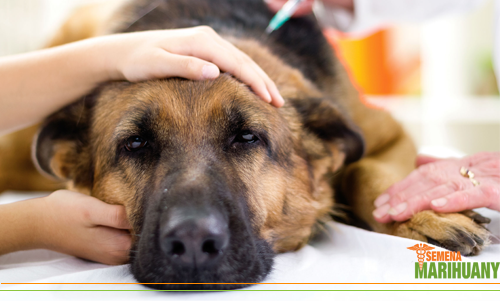
3. How to absorb toxins from the dog's/cat's digestive system
If you are a pet owner, you will most certainly have activated charcoal, which is commonly available at any pharmacy. Activated charcoal will help you "soak up" all harmful substances from your dear furry friend's stomach and thus prevent further absorption of harmful substances.
Note: Do not use activated charcoal if you have already tried to induce vomiting.
4. Induce vomiting
If step 3 has not helped, try to make your pet vomit. Hydrogen peroxide is commonly used, at a dose of roughly one teaspoon per 4.5 kilos of live weight every 15 minutes, with a maximum of three administrations in total.
Watch your animal's reactions closely - peroxide can induce really intense vomiting or even bloody stools. Definitely do not overdo it with hydrogen peroxide, and if this step also fails, seek professional help.
5. Seek professional help
If all the previous steps fail, and especially if you know that your pet has ingested a really considerable amount of THC, seeking professional help will be a literally vital step. When you arrive, speak to the vet clearly and, above all, honestly. In the end it will be found out what the dog has ingested anyway, so honesty will only speed up the whole process.
Give the vet as much detailed information as possible - what product the pet ingested, what it was made from, what the overall potency was, etc. For example, if the ingested product contained chocolate, further damage could occur - so it is necessary to mention all the ingredients you are aware of.
Can cannabis really kill your dog/cat?
Technically speaking, yes, but the condition is that your pet ingests a really considerable amount of THC. A 1983 study found that a dose of 130mg THC per kilo of live weight killed 50% of the dogs tested. In this study, however, the THC was administered intravenously. Russ Belville of Alternet.org explains:
"For the situation to result in death, your dog would have to eat at least half a kilo of very potent cannabis edibles, it would have to be a small dog, and you would have to completely ignore its symptoms. That was the case with a Chihuahua from New Zealand, which ultimately died of hypothermia, because the same reaction that causes red eyes in humans activates the loss of body heat in dogs."
Fortunately, the vast majority of cases of dogs and cats mildly poisoned by cannabis edibles therefore end well, provided the pets are properly looked after.
Translation: Filip Maral
Images: barny sickchirpse rd.com