


 English (English)
 Deutsch (German)
 Čeština (Czech)
 Italiano (Italian)
 Hrvatski (Croatian)
 Română (Romanian)
 български език (Bulgarian)
 Magyar (Hungarian)
 Español (Spanish)
 Français (French)
 Nederlands (Dutch)
 Polski (Polish)
 Slovenčina (Slovak)
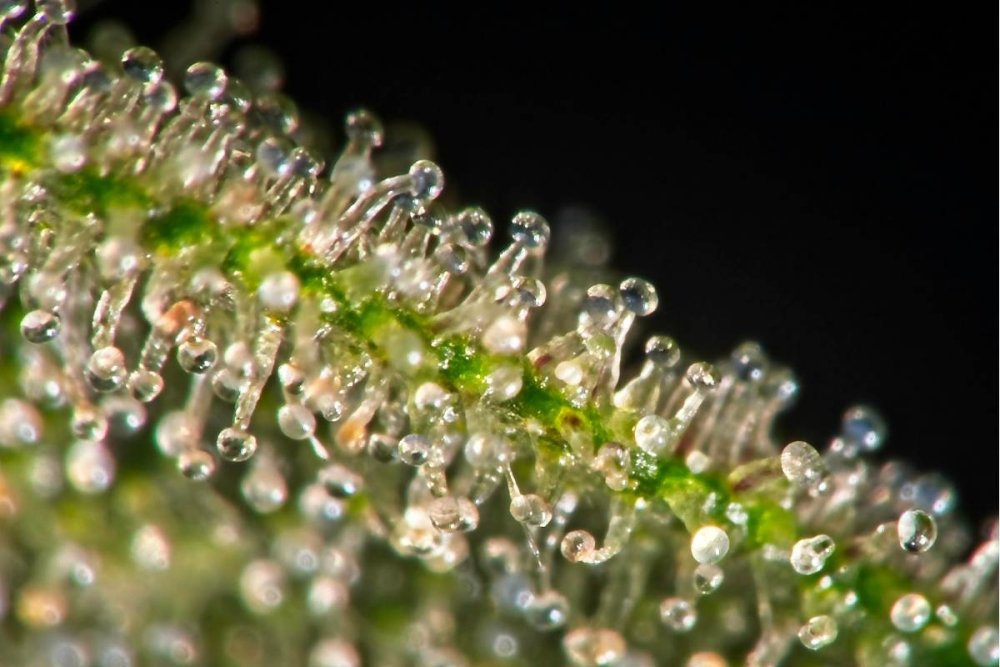



Trichomes are among the most fascinating features of cannabis genetics and are responsible for producing the chemical compounds that determine the aromatic profiles and unique characteristics of the different strains. For passionate cannabis seed collectors, understanding these microscopic structures offers valuable insight into the genetic complexity of the biological material they study.
Anatomy and Structure of Cannabis Trichomes
The term "trichome" comes from the Greek word "tríchōma", meaning "hair growth". These microscopic structures function like real biological factories, producing hundreds of known cannabinoids, terpenes and flavonoids that give cannabis genetics their distinctive profiles. Trichomes are responsible for the crystallised, almost frosted appearance that characterises cannabis flowers of high genetic quality.
Structurally, trichomes are extremely small, varying between 50 and 100 micrometres in width (for comparison, a millimetre contains 1000 micrometres). Their characteristic shape resembles miniature mushrooms, with a stalk bearing a spherical capsule. This capsule contains the chemical material responsible for the complex aromatic profiles.
Typology of Trichomes in Cannabis Genetics
Cannabis genetics specialists have identified four main categories of trichomes, each with its own morphological characteristics and biochemical functions:
- Bulbous trichomes are the smallest, measuring between 10 and 15 micrometres. They cover the entire surface of the plant but are hard to see with the naked eye. Despite their small size, they contribute to the production of cannabinoids and terpenes.
- Sessile trichomes are moderate in size and have both a capsule and a rudimentary stalk. They're more numerous than bulbous trichomes and actively participate in the synthesis of aromatic compounds.
- Stalked trichomes are the most impressive category, with widths of 50 to 100 micrometres and heights of 200 to 300 micrometres. They're visible to the naked eye and contain the highest concentrations of cannabinoids and terpenes. Their complex structure includes a stalk made of epidermal and subepidermal cells bearing a large glandular capsule.
- Simple unicellular trichomes are non-glandular and mainly serve as a physical defence mechanism for the genetic material, protecting it against environmental stress factors.
Biological and Adaptive Functions of Trichomes
In the wild, trichomes perform essential protective functions for cannabis genetics. When female plants begin developing flower structures, they become vulnerable to various biological and environmental threats. Trichomes act as a multifunctional shield.
Protection against UV radiation is one of the primary functions of trichomes. These chemical compounds absorb and reflect harmful ultraviolet radiation, protecting the sensitive genetic material inside the plant. This adaptation is crucial for preserving genetic integrity under intense light exposure.
Trichomes also act as a natural deterrent against herbivores. The bitter taste and intense aroma they produce make the flowers less appealing to animals that might feed on them. This evolutionary strategy allows the plants to complete their reproductive cycle undisturbed.
Chemical Composition and Molecular Profiles
Stalked trichomes contain the most complex cannabinoid and terpene profiles. Inside the glandular capsule, specialised cells synthesise a wide range of bioactive compounds. The exact composition of these molecules is determined by the genetics of the original cannabis seeds and the environmental conditions under which the biological material develops.
Terpenes are responsible for the distinctive aromatic profiles of the different genetics. These volatile compounds not only give unique aromas but can also influence how other molecules interact with one another – a phenomenon known as the "entourage effect".
Cannabinoids such as CBD and THC are synthesised in variable concentrations, depending on the genetic heritage of the seeds. The ratio and concentration of these compounds define the distinctive chemical profiles of the different collector's strains.
Development Cycle and Ripening of Trichomes
Over the course of the cannabis genetic's development cycle, trichomes undergo significant visual changes. Initially, they appear as transparent, crystalline structures. As the genetic material matures, the trichomes go through different stages of colour change.
The clear stage marks young trichomes, in which the production of bioactive compounds is still underway. In the milky stage, trichomes reach optimal cannabinoid and terpene concentrations. The amber stage indicates advanced maturity, when some compounds begin to break down or convert into other metabolites.
For seed collectors, understanding these stages offers valuable information about the genetic potential of the biological material they're studying. Observing trichome development can reveal the distinctive genetic characteristics of different collector's strains.
The Importance of Trichomes for Genetics Collectors
For enthusiasts who collect cannabis seeds as genetic material, trichomes are important indicators of the quality and authenticity of the genetics. The density, structure and development of trichomes can reveal information about the genetic purity and aromatic potential of a given genetic line.
Studying trichomes allows collectors to appreciate the biochemical complexity of the different genetics and gain a better understanding of the extraordinary diversity of the species Cannabis sativa. This knowledge enriches the collecting experience and helps preserve the genetic heritage of this fascinating plant.