


 English (English)
 Deutsch (German)
 Čeština (Czech)
 Italiano (Italian)
 Hrvatski (Croatian)
 Română (Romanian)
 български език (Bulgarian)
 Magyar (Hungarian)
 Español (Spanish)
 Français (French)
 Nederlands (Dutch)
 Polski (Polish)
 Slovenčina (Slovak)
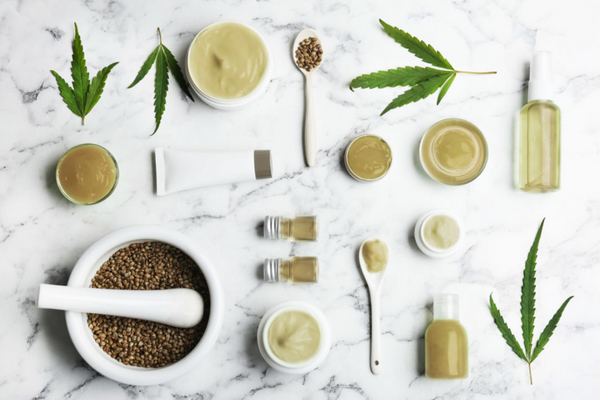



Externally applied preparations made from hemp genetics represent a fascinating universe for collectors and botany enthusiasts. These formulations, which include ointments, balms and gels, continue to spark great interest within the community of connoisseurs. How do you develop innovative recipes starting from the genetic material of hemp? The possibilities are endless, and each formulation has its own characteristic features.
In this guide we take a closer look at the various methods and, above all, the ingredients that make the difference. We also share a basic recipe for making innovative hemp preparations, which can be enriched with additional botanical elements, medicinal herbs and other natural ingredients. Let's begin this exploration ...
Characteristic features of the preparations and additional ingredients
Recipes for making hemp preparations are countless. In this sea of different methods and ingredients, it can be difficult to choose the formulation best suited to your own research purposes.
When comparing different recipes, it is crucial to first focus on the base ingredients used. The composition of the preparation is decisive for its final properties. Even though two different formulations may contain similar amounts of an active substance such as CBD, their overall composition can differ considerably. It is precisely the ingredients that determine how effectively the active substances are absorbed and how quickly they develop their characteristic properties.
Naturally, dried flowers from CBD genetics form the basis, but they can only unfold their potential in combination with certain carrier substances. Hemp preparations are usually formulated with pharmaceutical petroleum jelly, shea butter, coconut oil or beeswax, or other natural fats:
- Pharmaceutical petroleum jelly - is relatively inexpensive and has a very long shelf life. The preparation can remain effective for several months. It is particularly well suited for formulations intended for the study of joints or muscles. Petroleum jelly primarily serves as a carrier substance to facilitate contact of the active substances with the skin. Although it hydrates the surface of the skin, beyond its moderate moisturising properties petroleum jelly offers no further particular benefits. If the preparations are intended for the study of dry, atopic or irritated skin, using natural bases such as shea butter or coconut oil is preferable.
- Coconut oil, shea butter - both natural substances have high moisturising properties, excellent absorption, and at the same time contain active substances that support the health and elasticity of the skin.
- Beeswax - is an excellent ingredient for all botanical preparations. Beeswax contains numerous vitamins and supports regeneration processes. Preparations containing beeswax can therefore also be used to study irritated skin with minor lesions. For example in the study of eczema or acne.
Complementary ingredients for hemp preparations
Now that we know how to choose the right base for the preparation, it's important to know that the ingredients mentioned above can also be combined in order to make use of all their properties at once. Equally significant are further components in the form of botanical extracts, tinctures, therapeutic terpenes or dried herbs. The hemp preparation can be enriched with:
- Aromatic terpenes - give the preparation not only a pleasant aroma, but also some properties that are interesting from a research perspective. For example antimicrobial, antiseptic or anti-inflammatory properties. It depends on the choice of terpene, but essential oils from fruits or herbs such as menthol, mint, ginger, sage, rosemary, lavender, tea tree and others are commonly added.
- Tinctures and botanical extracts - here too it depends on preferences and research needs. Hemp preparations intended for the study of joints or muscles are often supplemented with calendula extract, which can support regeneration and has anti-inflammatory potential. Practically any tincture or plant extract with the potential to address the question being studied can be added. Of course, the preparation can be enriched with even more CBD by using CBD drops or CBD isolate.
Hemp preparation for muscles and joints
Now we finally come to the actual production of the hemp preparation. Making your own hemp preparation with active CBD and other cannabinoids is not as difficult as one might think.
The following recipe represents a basic foundation for a hemp balm. It can be enriched with the herbs, terpenes, vitamins or tinctures already mentioned, depending on your research and study needs.
Composition of the hemp preparation:
- 7-10 g flowers from CBD genetics (dried and crushed)
- 1½ cups coconut oil
- 1/3 cup beeswax
- 1 baking tray
- 1 pot
- 1 glass container
- 1 cloth for straining the mixture
Preparation steps:
The dried and crushed flowers of the CBD genetics are worked into the heated coconut oil. Keep the temperature low and continue stirring the hemp-oil mixture for 20-25 minutes. After 25 minutes, remove it from the heat and strain the mixture through the cloth into a glass container. At this point you will have obtained a base oil containing all the active substances of the hemp flowers - CBD, CBG, CBN, CBC as well as the naturally occurring terpenes.
In the same pot, add the beeswax and heat it until it is completely melted. As soon as the wax begins to melt, gradually add the previously prepared oil, stirring constantly until a homogeneous consistency is achieved. This method makes it possible to preserve the integrity of the delicate botanical compounds while creating a stable, long-lasting formulation.
Optimisation and customisation of the recipes
The beauty of these botanical preparations lies in their versatility and the possibilities for customisation. Every collector can adapt the basic recipe to their own research and study needs. Adding certain extracts or changing the ratios between the base ingredients can lead to surprisingly different results.
For those dedicated to exploring aromatic properties, incorporating selected terpenes can completely change the scent profile of the preparation. Terpenes not only impart characteristic scents, but also contribute to the so-called "entourage effect", a phenomenon describing how various botanical compounds work together synergistically.
The proper storage of these preparations is crucial to preserving their integrity over time. Dark glass containers, kept in cool and dry places, can preserve the properties of the genetic material for months. This shelf life makes them particularly interesting for collectors who want to study the development of the compounds over time.