


 English (English)
 Deutsch (German)
 Čeština (Czech)
 Italiano (Italian)
 Hrvatski (Croatian)
 Română (Romanian)
 български език (Bulgarian)
 Magyar (Hungarian)
 Español (Spanish)
 Français (French)
 Nederlands (Dutch)
 Polski (Polish)
 Slovenčina (Slovak)
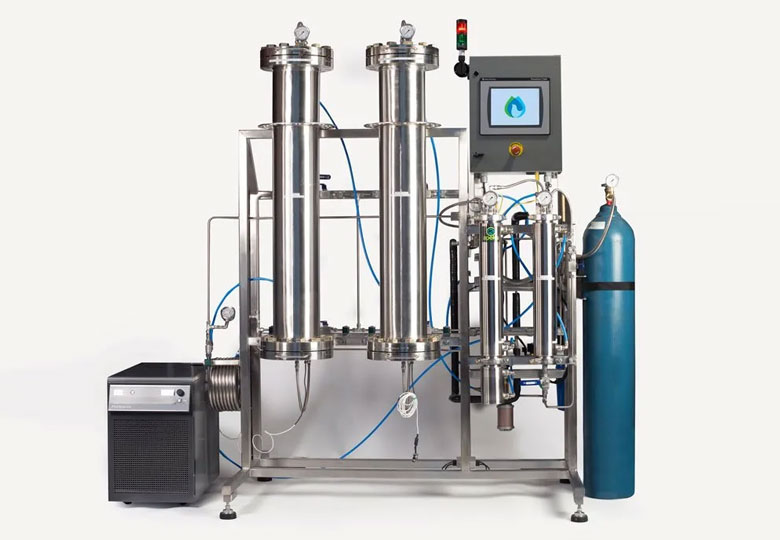



CO2 Extraction – A Revolutionary Method for Hemp Extracts
In the world of the modern hemp industry, carbon dioxide (CO2) extraction represents the gold standard for producing high-quality hemp oils and concentrates. This advanced technology makes it possible to obtain clean, safe extracts that retain the full complexity of the terpene profiles and cannabinoid compounds found in hemp genetic material.
Unlike traditional methods that rely on chemical solvents such as alcohol or acetone, CO2 extraction offers a completely natural approach. Carbon dioxide is a gas that surrounds us in nature - it is a natural component of the air we breathe and is produced naturally by our own bodies. This makes CO2 an ideal candidate for extracting valuable compounds from collectible hemp seed genetics.
The Technological Superiority of CO2 Extraction Over Other Methods
Professional producers of hemp extracts are increasingly choosing CO2 technology for a number of reasons. Safety is the primary advantage - unlike flammable solvents such as butane, carbon dioxide is completely non-flammable and poses no risk of explosion or fire.
When CO2 is subjected to controlled conditions of low temperature and high pressure, it behaves as a powerful solvent that selectively draws out organic compounds from plant material. This process allows for the precise extraction of terpenes, cannabinoid compounds, and other valuable components that determine the aromatic profile and characteristics of individual genetic lines.
The greatest advantage of CO2 extraction lies in the purity of the final product. Once the extraction process is complete, the carbon dioxide simply evaporates back into the atmosphere, leaving no solvent residue in the extract. The result is a completely natural, clean oil that retains the authentic characteristics of the original genetics.
The Supercritical CO2 Extraction Process
The technology works through a precisely controlled process in which CO2 gas from pressurized cylinders is directed into low-pressure chambers containing the plant material. Under these conditions, CO2 enters a supercritical fluid state - combining the properties of a gas and a liquid, which allows it to efficiently penetrate the plant material and dissolve the target compounds.
During this process, CO2 acts as a selective solvent that draws the resin out of the trichomes - microscopic structures on the surface of the plant that contain the highest concentrations of active compounds. At the same time, the process makes it possible to extract the complex terpene profiles that define the aromatic characteristics of different genetic lines.
Industrial Production and Professional Applications
Industrial-scale CO2 extraction systems are impressive pieces of technology. Extraction columns can reach lengths of 2-3 meters and process over 100 liters of plant material in a single cycle. This capacity for mass processing makes CO2 extraction ideal for large hemp product manufacturers.
The process begins by loading the extraction chambers with prepared plant material - often referred to as "trim". CO2 is then passed through this material under controlled conditions, dissolving and drawing out the target compounds. The resulting mixture of CO2 enriched with active compounds is then transported into condensation chambers.
Condensation is a key stage of the process. By reducing the pressure and adjusting the temperature, the CO2 returns to a gaseous state and evaporates, leaving behind a concentrated extract. This fresh extract often contains small CO2 bubbles that gradually disappear, changing the product's texture from a light, foamy substance into a more viscous, darker oil.
Fractional Distillation and Specialized Products
Advanced producers use a technique known as fractional distillation - precisely controlling temperature and pressure during condensation allows for the selective extraction of different components. This method makes it possible to create a wide range of products with different characteristics:
- Full-spectrum oils - retain the complete terpene and cannabinoid profile
- Isolated compounds - highly concentrated individual cannabinoids
- Specialized blends - customized ratios of different active components
- Aromatic concentrates - focused on specific terpene profiles
By controlling the process parameters, experts can produce extracts of varying consistencies - from liquid oils to waxy materials all the way to brittle "shatter" structures. This flexibility makes CO2 extraction indispensable in the modern hemp industry.
Decarboxylation and Product Finishing
Freshly produced hemp extracts require additional processing through decarboxylation - controlled heating that activates the cannabinoid compounds. During this process, small CO2 bubbles form, and the oil takes on its final characteristics.
After decarboxylation, the extracts undergo detailed analysis that confirms their chemical composition and quality. These results allow producers to precisely formulate final products - ranging from edible products to cosmetic preparations.
CO2 extraction represents the future of the hemp industry - combining technological advancement with respect for the plant's natural characteristics. For collectors and enthusiasts of genetic material, this technology allows for a deeper understanding of the complexity of different hemp varieties and their unique chemical profiles.