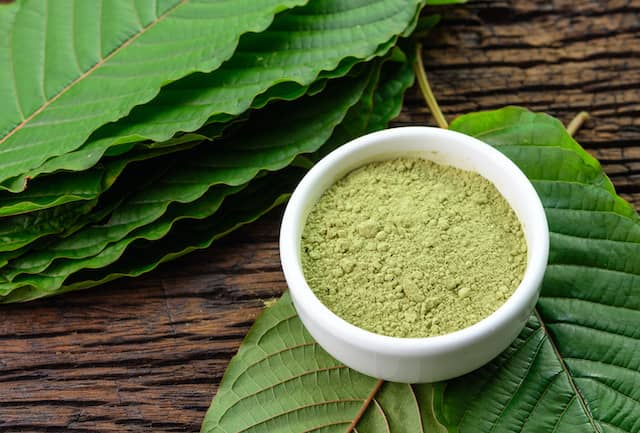
Kratom is a green leafy tree that grows in Malaysia. Its leaves are used to make capsules, tablets, or powder. Kratom products have various effects. Find out what they are.
Legal status of cannabis in the European Union (as of 25 September 2026)
The EU has no single cannabis law: it sets a common framework for hemp farming, trade and drug trafficking, while recreational use is regulated by each Member State.
CBD lawfully produced in one Member State may in principle be sold in another; a national ban is allowed only if it is suitable to protect public health and does not go beyond what is necessary. The Court held that such CBD is not a narcotic drug under the 1961 Single Convention (Articles 34 and 36 TFEU, Case C-663/18 Kanavape, paras 76 and 96).
Member States may restrict how hemp is grown, for example ban indoor hydroponic cultivation, if the restriction is suitable and proportionate for protecting public health (Case C-793/22 Biohemp Concept, 4 October 2024).
Rules on recreational cannabis differ widely: Germany allows adults to possess up to 25 g in public, 50 g at home and three plants (§ 3 and § 9 KCanG), while in Czechia personal use becomes a criminal offence only above 5 plants, 200 g at home or 50 g elsewhere, and plants with up to 1 % THC are excluded (§ 285 Czech Criminal Code).
“Články 34 a 36 SFEU musí být vykládány v tom smyslu, že brání vnitrostátní právní úpravě, která zakazuje uvádět na trh CBD, který je legálně vyprodukován v jiném členském státě, v případě, že je extrahován z celé rostliny cannabis sativa, a nikoli pouze z jejích vláken a semen, ledaže je tato právní úprava s to zaručit naplnění cíle ochrany veřejného zdraví a nepřekračuje meze toho, co je k dosažení tohoto cíle nezbytné.”
[Translation: “Articles 34 and 36 TFEU must be interpreted as precluding national legislation which prohibits the marketing of CBD lawfully produced in another Member State when it is extracted from the Cannabis sativa plant in its entirety and not solely from its fibre and seeds, unless that legislation is appropriate for securing the attainment of the objective of protecting public health and does not go beyond what is necessary for that purpose.”]
This overview is based on legislation and case law in the legal database Europaius. It is not legal advice.
Did you know that in the last year, people in Slovakia searched for the term "kratom" so much that Slovakia became the 3rd country in the world with the highest number of searches for this term? From this, we concluded that it is good to get oriented in this topic, and therefore we bring you valuable information that will introduce you to, but also warn you about this new herb.
What is kratom?
If you have never encountered kratom before, first you should know that it is a tropical green tree belonging to the coffee family. Its scientific name is Mitragyna speciosa. It grows in Malaysia, Thailand, or South Asia. From there, however, its packages are distributed worldwide.
In the past, people discovered that kratom leaf extracts act as a stimulant, but also as a sedative. This is because the leaves contain psychoactive compounds 7-hydroxymitragynine and mitragynine.
Kratom is an evergreen tropical tree
Why is kratom so significant?
Not least because it is a natural source from which additional products can be extracted and manufactured. Its content includes beneficial substances such as flavonoids, terpenoids, polyphenols, and glycosides. As we mentioned, kratom can stimulate us to some extent. Users claim they were more malleable, physically active, and alert.
However, when kratom is used in higher doses, it causes the exact opposite, namely sedative effects. At high doses, there is a risk of developing addiction. And individuals suffering from specific dependencies easily fall into psychotic states such as delusions and hallucinations. In the past, it was even used as an opiate substitute. Kratom is therefore not as safe as it may seem at first glance. It is no coincidence that in some countries its use is completely prohibited.
Other effects of kratom include:
Increased attention
Increased libido
Pain suppression
Inducing euphoria
Is kratom legal here?
With the information that kratom is somewhat of an opiate, you might wonder if it is legal and freely available. In the Czech Republic, kratom has no legislative restrictions, which means you can buy and sell it. Kratom has been banned in Slovakia since 9.12.2021. However, since kratom is not specifically defined, it is automatically considered that you are purchasing it as a "collector's item". You should not use it, as it is not on the list of approved dietary supplements, unlike CBD oil, which is defined as a dietary supplement and its use is safe.
How can kratom be used?
There are several ways to use kratom:
kratom capsules
tablets
powder
extract
Kratom products
However, it can be used "raw", which means you can chew its leaves in your mouth. The leaves can also be dried, crushed, wrapped in rolling paper and smoked. If you are interested in the topic of homemade cigarettes, read our article about rolling a CBD joint. You can also pour kratom powder with water and make a "tea" from it.
Beware of kratom risks
Kratom can be quite dangerous when its doses are not controlled. Let's now look at what it can cause. We'll start with the worst, which is the information that several deaths from kratom have been recorded over the years. However, it must be noted that these were truly extreme doses (15 and more g) and that other drugs were also involved in the deaths.
It is said that kratom can be up to 17 times stronger than morphine. This results in its negative effects:
Nausea, vomiting
Depression
Constipation
However, kratom's side effects are not limited to the physical level. They also affect the psyche, and so it can cause anxiety, irritability, and ultimately strong aggression. Perhaps the most dangerous risk is the development of tolerance to kratom and addiction. If someone uses kratom regularly and especially long-term, they can unknowingly bring about addiction. Not administering the appropriate dose then creates withdrawal symptoms, which include tremors, hypertension, insomnia, and others.
Kratom is still an insufficiently researched subject, and interest in it continues to grow. People like to be interested in the unknown. We hope that scientists will take the same approach, and we will be able to bring you new findings.


 English (English)
 Deutsch (German)
 Čeština (Czech)
 Italiano (Italian)
 Hrvatski (Croatian)
 Română (Romanian)
 български език (Bulgarian)
 Magyar (Hungarian)
 Español (Spanish)
 Français (French)
 Nederlands (Dutch)
 Polski (Polish)
 Slovenčina (Slovak)