


 English (English)
 Deutsch (German)
 Čeština (Czech)
 Italiano (Italian)
 Hrvatski (Croatian)
 Română (Romanian)
 български език (Bulgarian)
 Magyar (Hungarian)
 Español (Spanish)
 Français (French)
 Nederlands (Dutch)
 Polski (Polish)
 Slovenčina (Slovak)
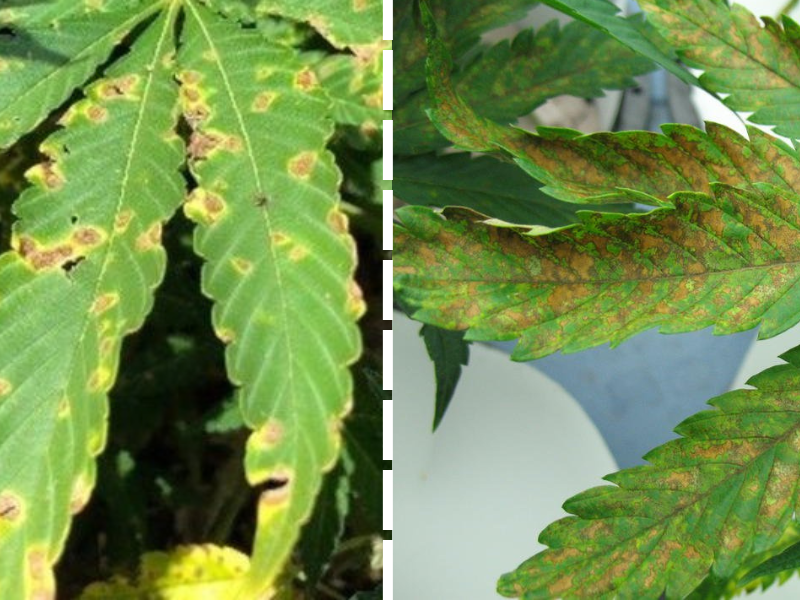



In the world of cannabis seed collecting, understanding the various pathologies that can affect plants is fundamental to appreciating the robustness and characteristics of different genetics. Two issues frequently observed in cultivation are leaf septoria and calcium deficiency, phenomena that present similar symptoms but completely different origins.
Being able to distinguish between these two conditions is a crucial skill for anyone interested in cannabis genetics and their particularities. Both problems manifest mainly through changes in the leaves, but they require completely different management approaches to preserve the genetic potential of the plants.
Leaf septoria: a fungal infection to recognize
Leaf septoria is one of the most common fungal infections that can affect cannabis plants. This disease, caused mainly by the fungus Septoria lycopersici, initially appears on the plant's lower leaves, creating characteristic yellowish and brown spots that compromise the aesthetic appearance of the plant material.
This fungal infection typically develops during summer periods, when high temperatures combine with ambient humidity or moisture from irrigation. The fungus finds wet leaves to be the ideal environment for proliferating and spreading rapidly throughout the plant.
From the point of view of collector genetics, it's interesting to note that some varieties show greater natural resistance to septoria than others. This trait is an important genetic characteristic that can influence the overall assessment of a particular genetic line.
If not managed properly, septoria causes leaf chlorosis, a condition that prevents the leaves from producing sufficient amounts of chlorophyll. This phenomenon, while not compromising the plant's survival, can significantly affect the development of the genetic material and its ability to fully express its aromatic potential.
Preventive strategies for managing septoria
Prevention is always the most effective approach when it comes to managing plant diseases. To minimize the risk of leaf septoria developing, several measures can be implemented:
- Maintaining a clean environment: A clean, tidy environment significantly reduces the presence of fungal spores that could trigger the infection
- Adequate plant spacing: Proper distance between plants promotes air circulation and reduces the buildup of moisture
- Monitoring environmental conditions: Keeping track of temperature and humidity helps maintain conditions unfavorable to fungal development
- Optimal ventilation: A constant, adequate airflow helps keep leaf surfaces dry
- Strategic pruning: Regularly removing excess foliage improves air circulation and reduces potential infection sites
Calcium deficiency: an essential nutritional shortfall
Calcium deficiency is a nutritional problem that can appear at any stage of plant development. Calcium is a fundamental element for developing robust genetics, contributing to the formation of healthy root systems and the strengthening of cell structures.
This macronutrient plays a crucial role in the structural stability of cell walls and in cellular signal transmission. Genetics deficient in calcium typically show bronze or brown spots on the leaves, symptoms that can easily be confused with those of leaf septoria.
From a genetic profile standpoint, some varieties naturally have a higher calcium requirement than others. This trait can be related to growth speed, final plant size, or the density of the plant material produced.
Calcium deficiency develops progressively: initially through discrete bronze spots, which evolve into darker shades if the deficiency is not corrected. This process can negatively affect the development of each genetic's characteristic aromatic profile.
Correcting calcium deficiency
Managing calcium deficiency requires a targeted nutritional approach. Adding calcium-rich fertilizers is the most direct and effective strategy for correcting this nutritional shortfall.
Watering with pH-neutral solutions can help balance nutrient levels in the growing substrate. It's important to keep in mind that calcium absorption can be affected by the presence of other elements and by the pH of the growing medium.
Key diagnostic differences
Distinguishing between leaf septoria and calcium deficiency requires careful observation and systematic analysis of the symptoms. While both conditions cause color changes in the leaves, they have specific distinguishing features.
Septoria typically appears as circular spots with a lighter center and defined edges, often accompanied by yellowish halos. Calcium deficiency, on the other hand, produces more irregular spots, initially bronze, which tend to darken progressively.
Temporal progression is another important diagnostic element: septoria tends to spread quickly under favorable conditions, while calcium deficiency shows a more gradual, steady progression.
In terms of distribution on the plant, septoria typically starts on the lower leaves and moves upward, while calcium deficiency can appear more evenly distributed across the whole plant, often affecting leaves in active development first.
Understanding these differences makes it possible to better appreciate the specific genetic characteristics of each variety and its ability to adapt to different environmental and nutritional conditions, elements that are fundamental for every quality cannabis seed collector.