


 English (English)
 Deutsch (German)
 Čeština (Czech)
 Italiano (Italian)
 Hrvatski (Croatian)
 Română (Romanian)
 български език (Bulgarian)
 Magyar (Hungarian)
 Español (Spanish)
 Français (French)
 Nederlands (Dutch)
 Polski (Polish)
 Slovenčina (Slovak)
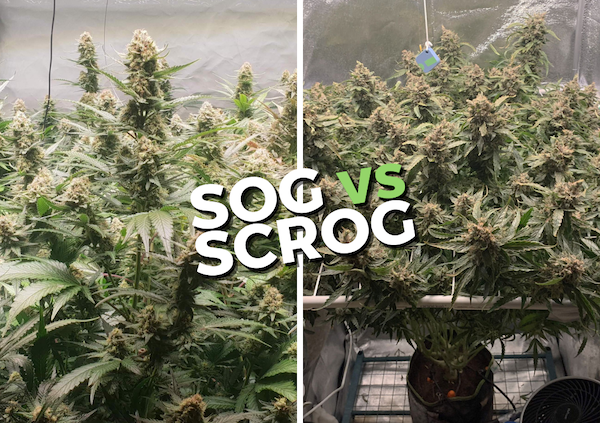
Growing Techniques: SOG vs SCROG for Cannabis Genetics Collectors
In the fascinating world of cannabis genetics, experienced collectors know how important it is to understand different methods for optimizing space and yield. Two approaches stand out for their effectiveness: SOG (Sea of Green) and SCROG (Screen of Green). Although both techniques pursue the same goal - maximizing plant potential in controlled spaces - their approaches are fundamentally different.
These methodologies represent advanced strategies that require deep knowledge of how different genetics behave. For serious collectors, understanding these techniques means getting the most out of the aromatic potential and unique characteristics of every variety in their collection.
The SOG Method: Sea of Green
The SOG technique, whose name evokes a "sea of green", is based on growing many small plants in small containers. This method makes use of concentrated vertical growth, allowing the plants to devote their energy mainly to the development of the central bud.
Characteristics of the SOG System
In SOG practice, plants are kept in 4 to 6 liter pots, starting the flowering cycle almost immediately with a 12/12-hour photoperiod. This approach results in compact plants where production is concentrated in the main apical bud.
Density is key: while each individual plant produces a smaller amount, growing 4 to 6 times more plants per square meter can result in higher total yields. This technique works especially well with indica-dominant genetics, which naturally tend to grow more compactly and bushily.
Advantages of the SOG Method
- Faster cycles from harvest
- Ideal for small spaces
- Perfect for indica genetics and compact hybrids
- Flexibility to move individual plants
- Possibility of multi-level vertical systems
The SCROG Technique: Screen of Green
The SCROG method represents a completely different philosophy. This technique uses fewer plants but gives them an extended vegetative period, typically 1 to 2 months, allowing robust root systems to develop.
Implementing the SCROG System
SCROG plants require large containers of 50 to 100 liters due to their extended growth period. The distinctive feature is the horizontal screen with openings of about 2.5 cm, through which the side branches are woven.
This method is particularly effective with sativa genetics and vigorously growing hybrids, which naturally develop multiple side branches. The result is a uniform canopy that maximizes light exposure at every flowering site.
Benefits of the SCROG Technique
- High yields per individual plant
- Excellent control over canopy height
- Maximum use of lighting
- Ideal for sativa genetics and tall hybrids
- Makes watering and maintenance easier
Detailed Comparison: Growth Phases
Vegetative Phase: Contrasting Approaches
During the vegetative stage, the differences between the two techniques become evident. SOG minimizes this phase, moving the plants directly to the flowering photoperiod after barely 1-2 weeks of vegetative growth.
By contrast, SCROG requires patience: the plants need 1 to 2 full months of vegetative growth to develop the branch structure needed to effectively fill the screen. During this time, constant training is carried out, guiding the branches through the openings in the net.
Flowering Period: Different Strategies
In flowering, SOG produces buds mainly at the apical tips, with typical yields of around 30 grams per plant. However, the total amount is made up for by the larger number of plants per space.
SCROG develops multiple uniform flowering sites throughout the canopy, resulting in several hundred grams per plant. The time invested in the vegetative phase translates into significantly higher yields per individual unit.
Genetic Selection and Practical Considerations
Genetic Compatibility
The choice between SOG and SCROG should take into account the inherent characteristics of each genetic line. Indica varieties and indica-dominant hybrids naturally adapt to the SOG method due to their compact structure and tendency toward apical growth.
Sativa genetics and sativa-dominant hybrids thrive under SCROG, since their vegetative vigor and tendency toward lateral growth are optimally exploited with the screen system.
Space and Time Considerations
For collectors with limited space who want to experiment with multiple genetics quickly, SOG offers the advantage of shorter cycles and the ability to keep several varieties at once in small spaces.
Those with more space and patience can benefit from SCROG to fully explore the potential of particular genetics, especially rare varieties or ones with exceptional growth.
Critical Factors for Success
Regardless of the technique chosen, certain factors remain constant for maximizing results. The quality of the collectible seeds is fundamental - superior genetics will produce better results under any methodology.
Quality LED lighting, appropriate nutrition and precise environmental control are equally crucial. These techniques amplify both successes and mistakes, so mastering the fundamentals before implementing SOG or SCROG is essential.
Drawbacks to Consider
SOG limitations: requires a larger number of cuttings, more complex management of multiple plants, and greater vulnerability to pests that can spread quickly among densely populated plants.
SCROG challenges: longer cycles, difficulty moving plants once the screen is established, and the need for constant maintenance of branch training over several weeks.
For serious cannabis genetics collectors, both SOG and SCROG represent valuable tools for exploring the full potential of their varieties. The choice between the two techniques should be based on specific goals, available space, and the unique characteristics of each genetic line in the collection.