


 English (English)
 Deutsch (German)
 Čeština (Czech)
 Italiano (Italian)
 Hrvatski (Croatian)
 Română (Romanian)
 български език (Bulgarian)
 Magyar (Hungarian)
 Español (Spanish)
 Français (French)
 Nederlands (Dutch)
 Polski (Polish)
 Slovenčina (Slovak)
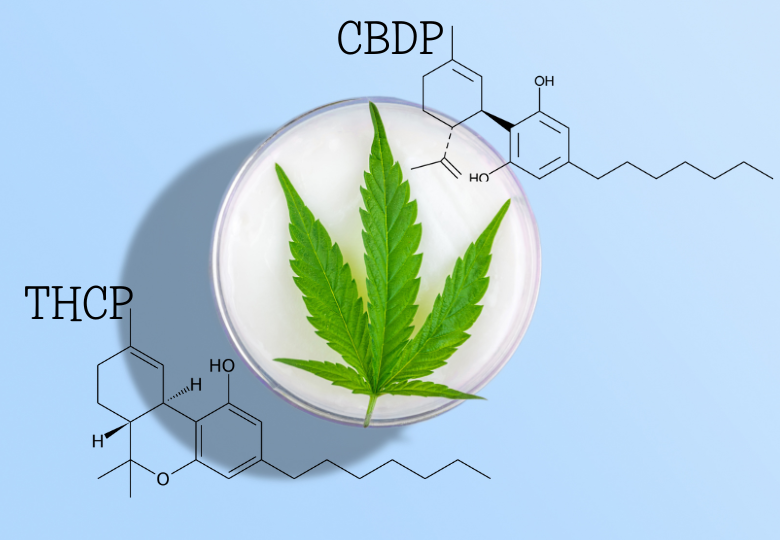
The world of cannabinoid research is constantly evolving, and two new molecules are drawing the attention of the international scientific community. These are THCP and CBDP, two recently identified cannabinoids that display unique structural characteristics compared to their better-known counterparts. These compounds, discovered by a team of Italian researchers, could revolutionize our understanding of cannabis genetic material and its distinctive aromatic profiles.
The Molecular Structure of THCP and CBDP
The most significant feature of these new cannabinoids lies in their particular molecular structure. While traditional THC has a side chain made up of five carbon atoms, THCP has as many as seven. This structural difference is not merely academic: it profoundly affects the way the cannabinoid interacts with the endocannabinoid system.
The THCP shows an affinity for CB1 receptors around thirty times higher than conventional THC. This greater binding capacity suggests that genetics rich in THCP could present significantly different potency profiles compared to traditional varieties. As for CB2 receptors, involved in anti-inflammatory processes and the modulation of the immune system, THCP shows an efficacy five to ten times higher.
The CBDP also has the same seven-carbon side chain, setting it apart from traditional CBD. However, given that CBD naturally has a low affinity for CB1 and CB2 receptors, the enhanced effects of CBDP remain a subject of scientific study and speculation.
Implications for Cannabis Genetics
The presence of these cannabinoids in plants could explain why some collector varieties show unexpected potency profiles despite seemingly standard THC content. THCP could be the hidden factor contributing to the intensity of certain genetics, opening up new perspectives for seed collectors interested in understanding the biochemical complexity of their varieties.
The Scientific Discovery Process
THCP and CBDP were discovered at the end of 2019 thanks to the meticulous work of a group of Italian researchers. The team was conducting an in-depth analysis of the cannabinoid profile of industrial hemp varieties when it came across these previously unknown compounds.
The research required special authorization from the Italian Ministry of Health, given the country's regulatory context. The researchers used advanced analytical techniques, including high-resolution mass spectrometry, to identify and characterize these new cannabinoids. CBDP was identified first, followed by the subsequent discovery of its psychoactive analogue, THCP.
This discovery process highlights the importance of continuing research into cannabis genetic material. With nearly 150 cannabinoids already identified in cannabis plants, many more compounds likely remain to be discovered, each with its own unique properties and potential applications.
Analytical Methodologies
Identifying these cannabinoids required sophisticated analytical techniques to distinguish them from already known compounds. Mass spectrometry and high-performance liquid chromatography were essential in precisely characterizing the molecular structure of THCP and CBDP, confirming the presence of the extended side chain that sets them apart.
Unique Properties and Characteristics
The properties of THCP are particularly interesting from a research standpoint. Preliminary studies conducted on murine models have demonstrated enhanced activity compared to traditional THC, confirming predictions based on the higher receptor affinity. However, it is important to stress that the specific effects on humans have not yet been fully characterized.
The length of the side chain appears to be a critical factor in biological activity. Research has shown that at least three carbon atoms in the side chain are needed for a cannabinoid to bind effectively to CB1 receptors. THCP's seven-carbon chain therefore represents a significant extension that could translate into unique pharmacological properties.
As for CBDP, expectations are more modest but no less interesting. Although traditional CBD does not show a strong affinity for classic cannabinoid receptors, it acts through numerous other molecular targets. CBDP's extended structure could influence its interaction with these alternative receptors, opening up as yet unexplored possibilities.
Potential of Terpene Profiles
A fascinating aspect of these new cannabinoids is their potential interaction with the terpene profiles of different genetics. The entourage effect, which describes the synergistic interaction between cannabinoids and terpenes, could take on new dimensions with the inclusion of THCP and CBDP in the plant's overall biochemical equation.
Future Implications for Research
The discovery of THCP and CBDP opens up new horizons for understanding cannabis genetic diversity. For seed collectors, this means a greater appreciation of the biochemical complexity of their favorite varieties. Every collector seed could potentially contain these cannabinoids in varying concentrations, contributing to the uniqueness of each genotype.
Future research will likely focus on identifying varieties naturally rich in these compounds, as well as understanding the genetic and environmental factors that influence their production. This could lead to the development of new genetic lines specifically selected for high THCP or CBDP content.
It is important to note that, while research continues, these cannabinoids remain the subject of scientific study. Their presence in collector varieties adds a further layer of interest for enthusiasts who wish to understand the full complexity of the genetic material they preserve.
In conclusion, THCP and CBDP represent just the beginning of what could be a new era in the understanding of cannabinoids. As analytical techniques advance and research expands, many more compounds are likely to be discovered, each with its own unique characteristics and potential contribution to the diversity and complexity of the world of collector cannabis.