


 English (English)
 Deutsch (German)
 Čeština (Czech)
 Italiano (Italian)
 Hrvatski (Croatian)
 Română (Romanian)
 български език (Bulgarian)
 Magyar (Hungarian)
 Español (Spanish)
 Français (French)
 Nederlands (Dutch)
 Polski (Polish)
 Slovenčina (Slovak)

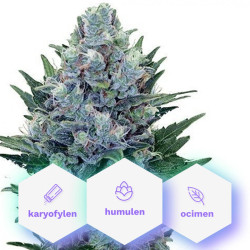


Collectible cannabis seeds contain genetic information about hundreds of cannabinoids and terpenes. Among these aromatic compounds, terpinolene stands out as one of the least common but most intriguing terpenes from the perspective of cannabinoid genetics. This article examines the characteristics of terpinolene, its molecular properties, and the collectible varieties where it is expressed with the greatest intensity.
Chemical profile of terpinolene
Terpinolene belongs to the monoterpene family and is characterized by generating complex and unique aromatic profiles in cannabis genetics. This compound is not limited exclusively to cannabis; it is also found naturally in plants such as sage, rosemary, chamomile, and various pine species, contributing to their distinctive olfactory profiles.
A notable characteristic of terpinolene is its tendency to appear in higher concentrations in genetics with high THC content. Conversely, it is extraordinarily rare to find collectible varieties with high CBD levels that simultaneously present significant concentrations of terpinolene, which makes it a distinctive genetic marker.
Molecular structure and biosynthesis
From a biochemical perspective, terpinolene is synthesized through specific metabolic pathways in the plant's trichomes. Its molecular formula C₁₀H₁₆ gives it unique volatile properties that contribute significantly to the aromatic bouquet of varieties where it is predominantly expressed.
Pharmacological properties of terpinolene
Scientific research has identified multiple bioactive properties associated with terpinolene, which explains the growing interest in genetics that contain it. These properties manifest at the molecular level and have been documented in various peer-reviewed studies.
Antioxidant activity
Studies have shown that terpinolene exhibits potent antioxidant properties, particularly in preventing the oxidation of low-density lipoproteins. A study published in 2005 documented this capacity, suggesting important implications for cardiovascular health.
Sedative and anxiolytic properties
The sedative profile of terpinolene has been the subject of specific research. A 2013 study in the Journal of Natural Medicines demonstrated that terpinolene acts as a central nervous system sedative, which explains why genetics rich in this terpene are often associated with relaxing profiles.
Antimicrobial activity
The antimicrobial capacity of terpinolene has been extensively documented, especially in essential oils such as tea tree oil. A 2015 study in the Journal of Applied Microbiology confirmed the antifungal efficacy of terpinolene against various pathogens, including gray mold.
Anticarcinogenic potential
Preliminary research suggests that terpinolene may possess anticarcinogenic properties. According to specific studies, this terpene can influence protein expression in certain cell types, although more research is needed to fully understand these mechanisms.
Natural repellent properties
A 2009 study identified terpinolene as an effective natural repellent against mosquitoes, beetles, and rodents, suggesting possible applications in crop protection.
Collectible genetics rich in terpinolene
Terpinolene is most frequently found in sativa-dominant genetics rather than in indica varieties. However, it is important to note that only a few collectible varieties present terpinolene as the dominant terpene in their aromatic profile.
Characteristics of varieties with terpinolene
Genetics that express high levels of terpinolene typically present:
- Complex aromatic profiles with herbal and citrus notes
- A tendency toward sativa-dominant genetics
- Elevated THC concentrations in most cases
- Effect profiles associated with relaxation and sedative properties
Entourage effect and molecular synergy
It is crucial to understand that terpinolene does not act in isolation. Researchers have identified that terpenes and cannabinoids work synergistically in what is known as the "entourage effect." This means that the complete profile of a collectible variety depends on the interaction between all its molecular components, not just terpinolene.
Preservation and storage of genetics with terpinolene
For collectors interested in preserving genetics rich in terpinolene, it is essential to understand that terpenes are volatile compounds sensitive to environmental factors. Temperature, humidity, and light exposure can affect the stability of these aromatic profiles in the genetic material.
Considerations for collectors
Collectors of feminized and autoflowering seeds should note that genetics rich in terpinolene require specific storage conditions to maintain the viability of their genetic information related to terpene production.
Terpinolene represents a fascinating example of the chemical complexity present in collectible cannabis genetics. Its relative rarity and multiple bioactive properties make it a valuable marker for collectors and researchers interested in cannabis genetic diversity. As research continues to reveal new aspects of this terpene, the genetics that contain it will remain of great interest to the scientific and collecting community.