


 English (English)
 Deutsch (German)
 Čeština (Czech)
 Italiano (Italian)
 Hrvatski (Croatian)
 Română (Romanian)
 български език (Bulgarian)
 Magyar (Hungarian)
 Español (Spanish)
 Français (French)
 Nederlands (Dutch)
 Polski (Polish)
 Slovenčina (Slovak)
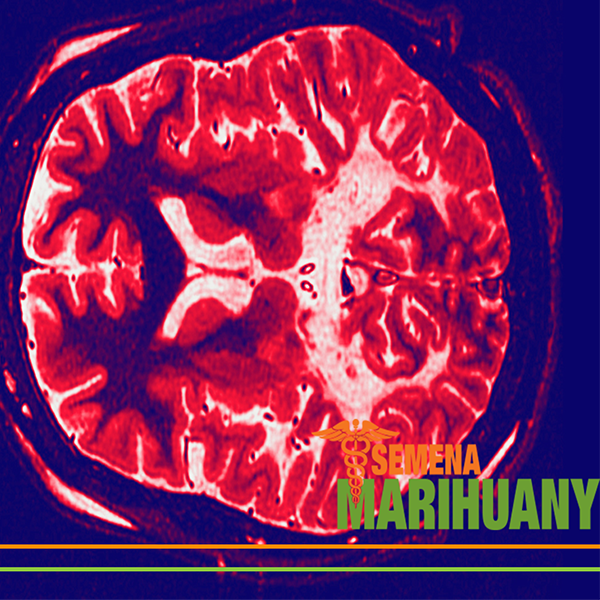



- In today's article we look at the case of Erin, a woman suffering from Huntington's disease, which her mother treats with cannabis oil
Huntington's disease is a rather grim, fatal illness. Even though Huntington's is talked about and generally known about far less than, for example, the better-known multiple sclerosis, it is no less terrible, a life-transforming condition.
Paul Wallis on the Digital Journal website describes the case of young Erin Wade, a young woman from Ottawa who has unfortunately been affected by Huntington's disease: "Young Erin smiled, stood up and said hello. Seemingly normal behaviour, but for Erin a complicated feat and at the same time a huge achievement. Because of Huntington's disease, Erin is almost incapable of movement for most of the day, and ordinary daily activities become superhuman tasks."
In the course of the illness, in addition to a considerable restriction of mobility, there are also convulsive seizures and problems with taking in food, which leads to a whole range of related problems. And as if that were not enough, the commonly prescribed pharmaceutical drugs do not help Erin significantly in any way.
The following excerpt comes from the Huntington Society of Canada and captures the current situation surrounding this disease quite well:
"…there are currently no sufficiently effective therapeutic methods available that could stop, or at least slow down, the progression of this disease. For the time being, only medications capable of reducing the acute symptoms of the disease are available. However, the results of recent research into new substances look very promising, and it can be expected that we will soon be able to provide better and more effective medicines."
Note the phrase "capable of reducing the acute symptoms of the disease". "Capable of reducing" means, at best, helping people like Erin to bear everyday reality, but it is hardly a treatment. The moment the parents or carers of people like Erin realise that today's medical system is unfortunately unable to provide them with effective help, they start looking around for alternative treatment options, such as cannabis oil.
Cannabis oil is an extremely important treatment option
"Cannabis oil is able to give people suffering from Huntington's back the ability to move! It can reverse the pathology of this brutal, merciless disease, and that is why I believe this treatment option is extremely important and should definitely be more accessible," Paul Wallis explains further.
Cannabis oil is for now still known as an effective aid against chronic pain or multiple sclerosis. However, it is certainly not known as an aid for restoring the ability to move. Moreover, we certainly cannot talk about any kind of play-acting here: Erin has suffered from Huntington's since the age of 17 and her condition is currently at a very advanced stage. People with Huntington's are simply not able to pretend that they are suddenly feeling better.
But how is it possible that a few drops of cannabis oil can awaken in people incapable of movement a new awareness of their limbs, and restore coordination, the related neurology and control over the muscle groups that are needed even for such a trivial task as getting up from a chair?
Paul Wallis wanted to find out more about this cannabis mystery and therefore decided to ask the mother of the patient Erin for more information. In the following interview, Cindy Moore describes and maps out the whole condition that has affected Erin and also explains the procedure by which they decided to give Erin cannabis oil.

Interview with Erin's mother, Cindy Moore
Could you describe what is happening in your video from a medical point of view?
Erin suffers from the juvenile form of Huntington's disease. It is a fatal illness. A diagnosis of this form of Huntington's means that you have on average 10 years left to live. With a diagnosis in adulthood the situation is a little better, and your life expectancy is somewhere between 20 and 30 years. Your quality of life, however, is of course miserable. Erin's father, with whom I have two children, died as a result of Huntington's at the age of fifty. For the children of parents suffering from this disease, there is up to a 50% chance that it will also develop in them during their lifetime.
Together with Erin, we are trying to raise awareness of this disease. "We are trying to find a cure and heal everyone who suffers from Huntington's," Erin explains in a halting voice.
What are the symptoms of the Juvenile form of Huntington's disease (JHD)?
The development of JHD manifests itself in changes in personality, behaviour, motor coordination and the ability to express oneself, and in a reduced ability to learn. Physical changes include stiffness, immobility of the legs, clumsiness, a slowing of all movements and tremors. Compared with Huntington's that develops in adulthood, the juvenile form also includes convulsive seizures.
Predispositions and initial symptoms include:
- Previous cases of Huntington's disease in the family
- Stiffening of the legs
- Unusual clumsiness of the hands and legs
- Decline in cognitive functions
- Changes in behaviour
- Convulsive seizures
- Changes in speech and the ability to swallow

How has cannabis oil changed Erin's life?
I only started giving Erin cannabis oil recently, but the positive effects showed almost immediately. In Canada, fortunately, cannabis for medicinal purposes is legal, so we do not have to fear any criminal threats. I simply obtained a prescription for cannabis oil and started giving it to Erin together with a vaporised form of cannabis.
First, we also had to realise that there are considerable differences between different types of cannabis. Some types are rich in THC, others in CBD and some in both. We are currently giving Erin cannabis oil with a high CBD content and a minimal concentration of THC. In this case, the treatment does not cause any changes in her mental state and only attacks the symptoms. As a result, CBD oil has helped her get up from her chair, her seizures and tremors have completely disappeared, her ability to express herself has improved and she can eat without choking.
Is Erin able to move at all without cannabis oil?
Erin is confined to a wheelchair most of the time. Until recently she was able to stand up from time to time, but this has deteriorated sharply lately. The change only came with the administration of cannabis oil – she is now able, with a little help, to stand up, take a few steps, laugh and talk. You can see this, after all, in our sample video as well.
Do you feel that you are coping with the situation? Are you receiving sufficient support and help?
Seeing your child suffer and realising that she is dying is terribly hard. Cannabis oil is the only thing recently that gives me at least some hope. We receive support mainly from friends and family. Thanks to my own activity as Director of Business Affairs for Canada, I met James Valvano, and as an organisation we decided to found the non-profit WeHaveAFace.org. We are currently trying to help as many carers and patients around the world as possible.
A huge current effort is also to obtain funding to launch the Juvenile Huntington’s disease stem cell program.
Have you received any effective help from the current healthcare system?
We have not been provided with anything that would improve the situation significantly. I had to step in myself. Medical cannabis is expensive and insurance companies do not cover the cost, but even so I do not hesitate and pay for Erin's cannabis for as long as it is possible. The results are worth it, and I would gladly pay even more if I had to. I will do everything I can to help my daughter. That is also why I decided to publish these videos and so show other people, parents, patients or carers that there is at least something capable of helping our loved ones.
Cannabis oil as a challenge for scientists
When we look at videos in which we see patients like Erin literally come back to life after cannabis oil, and hear the claims of carers rejoicing that they have finally found visibly working, plant-based help, we naturally have to ask: How does medical cannabis act in the case of Huntington's?
Several studies are currently under way that are trying to get to the bottom of both the mechanism of action of cannabis oil and its statistical effectiveness.
The results of several initial studies have confirmed that the development of Huntington's disease is closely related to a lack of endocannabinoids in the basal ganglia. These results naturally led scientists to further research, and at least some pre-clinical results are currently available.
"One of the most optimistic recent results is the finding that the two main cannabinoids contained in the cannabis plant, i.e. THC and CBD, are able to protect and preserve the health of neurons in the brain."
Both cannabinoids are able to activate the CB1 and CB2 receptors in the relevant areas of the brain. Activation of the CB1 receptors gives the brain the ability to defend itself against inflammation and thus reduce the toxicity of so-called microglia – cells that take part in immune processes in the nervous system. Stimulation of the CB2 receptors in the brain, in turn, leads to an improvement in motor functions and in symptoms such as tremors or convulsions, during which further damage to nerve tissue occurs.
"As a result, stimulation of these receptors by cannabis is therefore neuroprotective and helps at least to slow down the course of the disease."
You can read more about medical cannabis as a remedy for disorders and diseases of neurodegenerative types, for example, in the article "Treatment of Neurodegenerative Disorders with Cannabis" or "Treatment of Multiple Sclerosis with Natural Cannabis".
Sources: medicalmarijuanainc digitaljournal.com
Translation: Filip Maral
Images: sciencemag.org