


 English (English)
 Deutsch (German)
 Čeština (Czech)
 Italiano (Italian)
 Hrvatski (Croatian)
 Română (Romanian)
 български език (Bulgarian)
 Magyar (Hungarian)
 Español (Spanish)
 Français (French)
 Nederlands (Dutch)
 Polski (Polish)
 Slovenčina (Slovak)
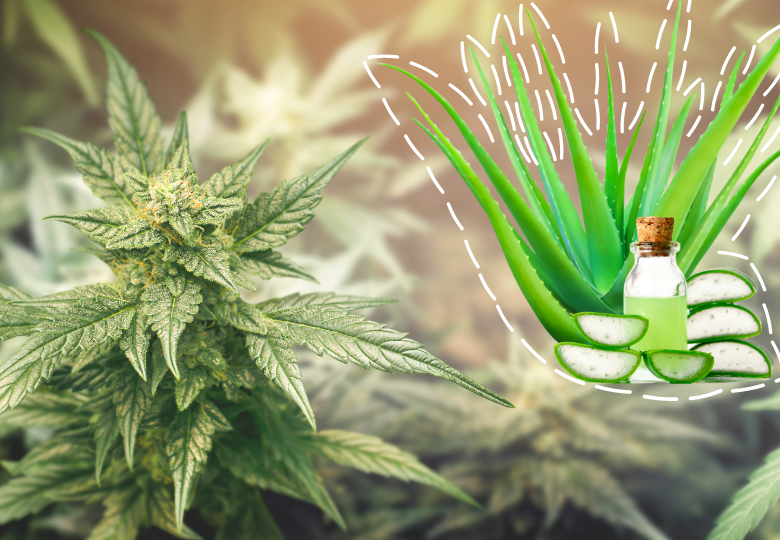



Aloe Vera: A Natural Ally for Cannabis Genetics Collectors
In the fascinating world of cannabis genetics, collectors are always on the lookout for information about natural methods that could theoretically enhance the properties of their varieties. Aloe vera stands out as an extraordinary plant with more than 75 active compounds, including vitamins, minerals, enzymes and amino acids, making it a subject of great interest for cannabis enthusiasts.
This succulent plant is not only known for its benefits in natural medicine, but it also represents a fascinating field of study for understanding how natural compounds could theoretically interact with high-quality cannabis genetics that characterize collector varieties.
Chemical Composition of Aloe Vera: A Natural Laboratory
Acemannan: The Protective Polysaccharide
The most notable component of aloe vera is acemannan, a complex polysaccharide that acts as a natural antimicrobial barrier. This compound has unique properties that make it a fascinating subject of study for collectors interested in the theoretical protection of sensitive genetic material.
Acemannan forms an invisible protective film that, in theory, could act as a shield against pathogenic microorganisms, bacteria and fungi that could compromise the integrity of collector seed samples.
Complete Nutritional Profile
The nutritional richness of aloe vera includes:
- B-complex vitamins: Essential for metabolic processes
- Vitamins A, C and E: Powerful natural antioxidants
- Key minerals: Calcium, magnesium, zinc, iron and potassium
- Essential amino acids: Building blocks of proteins
- Natural enzymes: Facilitators of biochemical processes
Theoretical Applications in Collection Management
Natural Antimicrobial Protection
For cannabis seed collectors, maintaining genetic purity is essential. Aloe vera, with its natural antimicrobial properties, represents a theoretical method of protection that does not involve synthetic chemicals.
The phenolic compounds present in aloe vera act as natural protective agents, creating an environment less favorable to the development of microorganisms that could compromise the quality of collector genetics.
Microenvironment Stabilization
Aloe vera gel has unique hygroscopic properties that allow it to naturally regulate humidity levels. This characteristic is particularly interesting for collectors seeking to maintain stable conditions for their premium genetic material.
The ability of aloe vera to form a semi-permeable barrier could theoretically help to:
- Stabilize humidity fluctuations
- Create a protective microenvironment
- Reduce oxidative stress on sensitive material
- Maintain genetic viability over the long term
Preparing and Using Aloe Vera as a Natural Protector
Extracting Pure Gel
To get the most out of aloe vera, it is crucial to correctly extract the gel from mature leaves. The process involves selecting leaves at least 2-3 years old, which contain the highest concentrations of active compounds.
The extracted gel should be transparent in consistency and free of the yellow resin (aloin) found in the outer rind, since this substance can be counterproductive for delicate applications.
Protective Formulations
Antimicrobial Solution
A mixture of pure aloe vera gel with distilled water in a 1:4 ratio creates a mild but effective solution. This formulation preserves the protective properties of aloe vera while allowing for versatile application.
Nutrient Concentrate
For more intensive applications, a concentrate can be prepared using a 1:2 ratio, which provides a higher density of active compounds per unit of volume.
Theoretical Benefits for Different Genetics
Indica Varieties and Their Theoretical Response
Indica genetics, known for their relaxing profiles and compact structure, could theoretically benefit from the stabilizing properties of aloe vera. The terpenes characteristic of these varieties, such as myrcene and linalool, could be better preserved in the presence of aloe's natural antioxidants.
Sativa Genetics and Terpene Protection
Sativa varieties, with their complex aromatic profiles rich in limonene and pinene, present a particular challenge for preservation. Aloe vera could act as a natural stabilizer that helps maintain the integrity of these delicate aromatic compounds.
Premium Hybrids and Genetic Conservation
High-quality hybrids combine the best of both genetic worlds. For these especially valuable materials, aloe vera offers a comprehensive method of protection that does not compromise genetic purity or alter natural cannabinoid profiles.
Storage and Conservation Considerations
Long-Term Stability
Fresh aloe vera retains its active properties for limited periods. For long-term conservation applications, it is important to consider stabilization methods that preserve the bioactive compounds without introducing synthetic preservatives.
Freeze-drying emerges as a promising technique for keeping aloe vera's properties stable, creating a concentrated powder that can be reconstituted according to the specific needs of each application.
Sustainability and Ethical Considerations
Using aloe vera as a natural protector aligns perfectly with the trend toward more sustainable and ecological methods in genetic collection management. This plant can be grown sustainably, requires minimal resources and generates no toxic waste.
For environmentally conscious collectors, aloe vera represents a natural alternative to traditional chemical methods, offering effective protection while maintaining a responsible ecological profile.
The Future of Research
The potential of aloe vera in preserving cannabis genetics is only just beginning to be explored. Future research could reveal even more specific applications, especially in the conservation of rare terpenes and the protection of minor cannabinoids that define the unique characteristics of the most exclusive collector varieties.
Seed collectors seeking natural, effective methods to preserve their most prized genetics will find in aloe vera a fascinating natural ally, backed by centuries of traditional use and an increasingly deep scientific understanding of its unique properties.