


 English (English)
 Deutsch (German)
 Čeština (Czech)
 Italiano (Italian)
 Hrvatski (Croatian)
 Română (Romanian)
 български език (Bulgarian)
 Magyar (Hungarian)
 Español (Spanish)
 Français (French)
 Nederlands (Dutch)
 Polski (Polish)
 Slovenčina (Slovak)
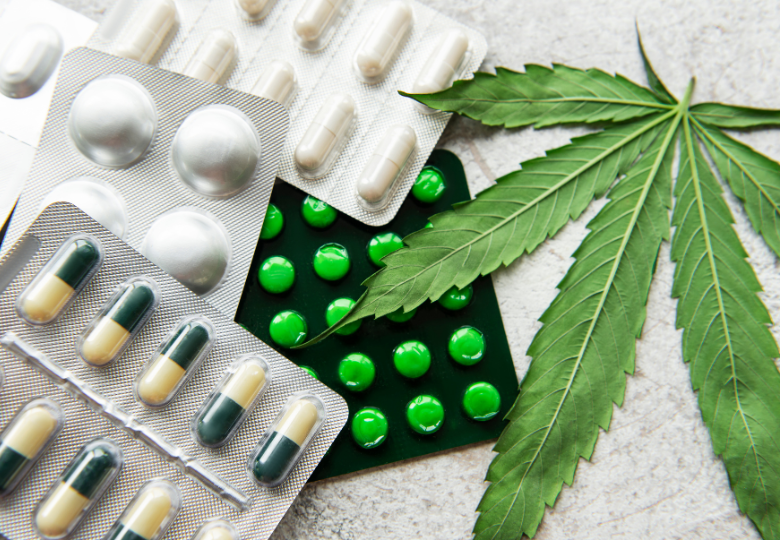



Cannabidiol (CBD) has gained growing popularity as a natural compound of great scientific interest. However, for people who take medications regularly, a key question arises: is it safe to combine CBD with prescribed medications? Research on collector's seeds rich in CBD has revealed complex genetic profiles that produce this cannabinoid at varying concentrations. Understanding CBD's potential drug interactions is essential for a safe, informed approach. In this article, we'll explore the mechanisms through which cannabidiol can influence drug metabolism and what precautions to take.
Mechanisms of CBD-Drug Interactions: The Liver Enzyme System
CBD interacts mainly with the cytochrome P450 system, a liver enzyme complex responsible for metabolizing many drugs. This system is the primary metabolic pathway for over 75% of commonly used medications. Cannabis genetics rich in CBD show terpene profiles that can influence these metabolic processes in various ways.
The main types of interaction include:
- Enzyme inhibition: CBD can block specific cytochrome P450 enzymes, slowing down drug breakdown and increasing their plasma concentration
- Metabolic induction: In some cases, cannabidiol can speed up enzymatic activity, reducing the therapeutic effectiveness of medications
- Competition for binding sites: CBD and drugs can compete for the same receptors or transport proteins
- Modulation of absorption: Cannabidiol can alter the intestinal absorption of certain medications
Research on collector's seeds with high CBD levels has identified more than 100 different cannabinoids that may contribute to these synergistic effects.
Drug Categories at Risk of Interaction
There are specific drug classes that show a higher likelihood of interaction with CBD. A practical indicator is the so-called "grapefruit rule": medications that carry warnings about grapefruit consumption often also carry potential interactions with cannabidiol.
Neurological and Psychiatric Drugs
Antiepileptics are a particularly sensitive category. CBD can alter the plasma levels of drugs such as carbamazepine, phenytoin, and valproate. CBD-rich genetic varieties studied for collecting purposes often show terpene profiles with myrcene and limonene that can amplify these effects.
As for antidepressants, particularly serotonergic ones, CBD can boost serotonin levels, requiring close medical supervision.
Cardiovascular Drugs
Anticoagulant drugs such as warfarin and heparin show significant interactions with CBD. Cannabidiol can prolong clotting time, increasing the risk of bleeding. This interaction is particularly relevant given the genetic profiles of collector's seeds that produce CBD in combination with other minor cannabinoids.
Benzodiazepines and Sedatives
CBD can enhance the sedative effects of benzodiazepines, causing excessive drowsiness and central nervous system depression. This synergy is due to the modulation cannabidiol exerts on GABA receptors.
Safe Management of Interactions: A Clinical Approach
Getting medical advice is the first essential step for anyone considering the use of CBD-containing products while taking medication. Healthcare professionals can assess an individual's drug profile and identify potential risks.
Monitoring and Precautions
A safe approach requires ongoing monitoring of clinical parameters. This includes regular checks of drug plasma concentrations, assessment of liver function, and observation of any emerging side effects.
Risk mitigation strategies include:
- Separating the timing of medication and CBD product intake
- Starting with minimal doses to assess tolerability
- Detailed documentation of all observed effects
- Dosage adjustments based on clinical response
Individual Factors to Consider
Individual genetic variability in liver metabolism significantly influences the risk of interactions. Some individuals are slow or rapid metabolizers of specific drugs, a condition that changes CBD's impact on metabolic processes.
Age, sex, and liver and kidney function are additional factors that shape interactions. Older adults, in particular, show greater susceptibility to the effects of drug interactions.
Side Effects and Warning Signs
Early recognition of drug interaction warning signs is crucial for safety. The most common symptoms include changes in therapeutic effectiveness, the appearance of unexpected side effects, or the intensification of existing ones.
The most frequent adverse effects in CBD-drug interactions include:
- Excessive sedation and cognitive changes
- Changes in blood pressure
- Gastrointestinal disturbances
- Changes in appetite
- Changes in the sleep-wake cycle
Precise documentation of these effects makes it easier to identify interactions and allows for appropriate therapeutic adjustments.
Future Prospects in Interaction Research
Scientific research continues to explore the molecular mechanisms of CBD-drug interactions. Studies on collector's genetic varieties reveal increasingly complex cannabinoid profiles, with potential therapeutic implications.
CBD-rich genetics developed for collecting purposes show variable ratios between cannabinoids, suggesting the possibility of differentiated synergistic effects. This genetic diversity opens new avenues for understanding drug interactions.
The evolution of personalized pharmacogenetics promises safer and more effective therapeutic approaches, based on a patient's individual genetic profile. This precision will make it possible to better predict interactions and optimize treatment protocols.
In conclusion, while CBD is a cannabinoid of great scientific interest, combining it with medications requires a cautious approach and qualified medical supervision. Understanding drug interactions, combined with appropriate clinical monitoring, helps minimize risks and maximize potential benefits.