


 English (English)
 Deutsch (German)
 Čeština (Czech)
 Italiano (Italian)
 Hrvatski (Croatian)
 Română (Romanian)
 български език (Bulgarian)
 Magyar (Hungarian)
 Español (Spanish)
 Français (French)
 Nederlands (Dutch)
 Polski (Polish)
 Slovenčina (Slovak)
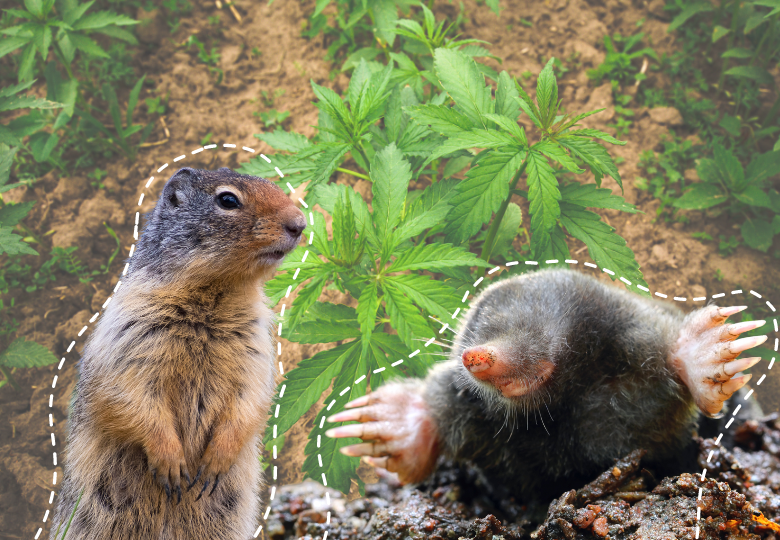



Underground rodents are one of the most common challenges for those who grow plants as a hobby or keep collections of cannabis genetics. These small mammals can compromise the integrity of collectible seeds and affect the natural development of the plants that collectors study for their unique aromatic profiles. Fortunately, there are multiple natural and effective strategies to keep these growing areas protected without resorting to aggressive methods.
Species Identification: Moles vs. Ground Squirrels
Before implementing any control method, it is essential to distinguish between the different species that can affect our collections. Moles are small creatures with dark coloring and dense fur, measuring approximately 5 to 7 centimeters in length. They are characterized by tiny eyes, a pointed snout and claws specialized for digging.
Ground squirrels, on the other hand, are larger, ranging between 5 and 14 centimeters, with coloring that varies from light brown tones to intense black. They have a characteristic flattened head and sturdy teeth adapted for gnawing plant material.
Geographic distribution also differs significantly: while moles inhabit mainly Europe, Asia and North America, ground squirrels are found exclusively in North American and Central American territories. This distinction is crucial, since their feeding habits are completely opposite: moles are exclusively insectivorous, while ground squirrels are strict herbivores that feed on roots, bulbs and fresh plant material.
Signs of Presence in Collectible Growing Areas
Early detection of these rodents allows preventive measures to be implemented before they cause significant damage to our collectible genetics. Moles leave characteristic evidence of their underground activity that every collector should learn to recognize.
Surface Soil Mounds
Conical soil mounds are the most obvious sign of mole activity. These formations, similar to small volcanoes about 15 centimeters in diameter, are created when the animal pushes soil to the surface while building its tunnels. Unlike other natural formations, these mounds feature finely sifted soil and a characteristic shape.
Root System Deterioration
Although moles do not consume plant material directly, their digging activity can interfere with the root system of plants. This is particularly problematic when studying specific genetics for their growth characteristics, since root damage can alter natural development patterns and affect the expression of terpenes and cannabinoids.
Visible Surface Furrows
Tunnels built near the surface create linear depressions in the ground, forming a characteristic pattern that reveals underground travel routes.
Ground squirrels, due to their herbivorous nature, cause a different type of damage that directly affects collectible plants.
Complex Burrow Systems
These creatures build entrances of larger diameter, approximately 30 centimeters, surrounded by crescent-shaped mounds of soil. These structures are considerably larger than mole mounds and usually feature multiple interconnected entrances.
Direct Foliage Damage
Unlike moles, ground squirrels occasionally emerge to feed on surface plant material, including young leaves and tender shoots. This behavior can significantly alter the natural development of plants studied for their unique genetic profiles.
Complete Disappearance of Specimens
In extreme cases, these rodents can drag entire plants into their underground tunnels, resulting in the total loss of valuable genetic material from the collection.
Natural Protection and Control Strategies
Protecting cannabis collections requires a comprehensive approach that combines multiple natural and sustainable techniques. These methods have proven effective without compromising the integrity of the genetics being studied or altering their natural chemical profiles.
Applying Castor Oil as a Repellent
Castor oil contains naturally irritating compounds that are highly effective at deterring both rodent species. To prepare this solution, combine three parts castor oil, one part biodegradable organic soap and three parts distilled water. This mixture is applied directly to burrow entrances and surrounding areas, creating an olfactory barrier that the animals associate with danger.
Biological Control through Natural Predators
The controlled introduction of natural predators represents an ecological and sustainable solution. Domestic cats are particularly effective due to their hunting instinct and ability to detect underground movement. Dogs, while less specialized in hunting small rodents, contribute by altering the environment through their presence and territorial marking.
Humane Trapping Systems
Live-capture traps allow population control without harming the animals. These are placed strategically near active entrances, using bait appropriate for each species: earthworms for moles and plant material for ground squirrels. Once captured, the animals are relocated to natural habitats far from the growing areas.
Companion Planting with Repellent Plants
The strategic planting of repellent species creates a natural barrier around the areas where collectible genetics are kept. Plants such as garlic, onion, chives and leek release sulfur compounds that are unpleasant for these rodents. Additionally, aromatic species such as rosemary, thyme and mint establish an olfactory perimeter that deters these animals from approaching.
Habitat Modifications
Altering the environment to make it less attractive is a highly effective long-term strategy. This includes removing standing water sources, keeping areas free of weeds that could serve as shelter, and installing underground physical barriers in critical areas where the collection's most valuable genetics are kept.
Combining these strategies guarantees comprehensive protection for cannabis collections, preserving both the genetic integrity of the specimens and the unique aromatic and chemical characteristics that make them valuable to collectors and researchers of these fascinating genetics.