


 English (English)
 Deutsch (German)
 Čeština (Czech)
 Italiano (Italian)
 Hrvatski (Croatian)
 Română (Romanian)
 български език (Bulgarian)
 Magyar (Hungarian)
 Español (Spanish)
 Français (French)
 Nederlands (Dutch)
 Polski (Polish)
 Slovenčina (Slovak)
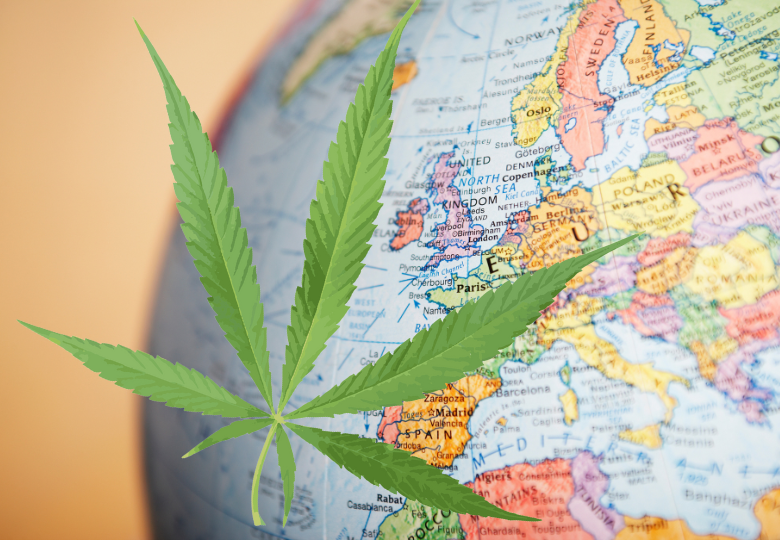



The global picture surrounding cannabis shows extreme contrasts: while some countries are moving toward legalization and acceptance of this plant, other nations pursue draconian policies with devastating consequences. These legal systems have developed frameworks that treat any interaction with cannabis as a serious crime, with sanctions ranging from long prison sentences to the death penalty.
For collectors of cannabis genetics and for frequent travelers, understanding these legal realities is essential. The diversity of genetic profiles and terpene compositions that characterize the various cannabis varieties has sparked considerable scientific and collecting interest, but this interest must always remain subordinate to full respect for local regulations.
Singapore: Absolute Zero Tolerance
The city-state of Singapore has created the strictest legal framework regarding cannabis in the world. Its zero-tolerance approach makes no distinction between minimal amounts and large quantities: any trace found leads to immediate legal consequences.
The Singaporean justice system treats possession of just a few grams as a serious crime, punishable by up to ten years in prison and fines equivalent to 20,000 US dollars. The legislation sets automatic thresholds: anyone possessing more than 15 grams is automatically classified as a dealer, raising the penalty to life imprisonment.
The death penalty is applied automatically when quantities exceed 500 grams. In addition, Singaporean authorities can conduct random substance tests at any time, which makes even transiting through the country a high risk for people who have used cannabis in other jurisdictions.
United Arab Emirates: Applied Islamic Strictness
The United Arab Emirates codified its rejection of cannabis in Law No. 14 of 1995, which categorically prohibits any activity connected with this plant. This law covers everything from simple possession to the cultivation of cannabis genetics, without distinguishing between recreational, medical, or collecting use.
The Emirati penal framework is particularly severe: minimum sentences stand at four years in prison combined with fines of 36,000 US dollars, even for microscopic quantities. The legal definition of "possession" includes any detectable trace of THC in blood tests, meaning that people who used cannabis weeks earlier in countries where it is legal can still face serious charges.
International cannabis trafficking carries the death penalty, consistently applied by Emirati courts. This approach reflects the incorporation of Islamic religious principles into the secular justice system.
Philippines: An Institutionalized War on Drugs
The Philippine archipelago has placed cannabis on its list of dangerous substances and introduced a penal system that scales sanctions according to the quantities involved. Possession of 500 grams of cannabis resin can lead to life imprisonment and astronomical fines of 210 million US dollars.
The Dangerous Drugs Act of 2002 introduced a mandatory treatment system for first-time offenders, requiring six months of forced rehabilitation. Repeat offenses drastically increase the penalties: from a minimum of six up to twelve years in prison.
This law makes no distinction between different cannabinoids or forms in which the genetic cannabis material is presented, treating all derivatives of the plant equally.
Indonesia: An Archipelago of Total Prohibition
Indonesia takes an uncompromising stance toward all forms of cannabis. Its legal framework treats any interaction with the plant as a serious crime and sets minimum sentences of four years in prison for consumption alone.
Penalties for possession can reach up to fourteen years in prison combined with fines of 8 billion rupiah (around 550,000 US dollars). Particularly relevant for collectors is that all cannabinoids, including CBD and CBG, are legally treated the same way as the whole plant material.
This comprehensive approach means that even derivatives with specific terpene profiles or non-psychoactive cannabinoid compositions face the same strict penalties.
Malaysia: Corporal Punishment and Extreme Penalties
The Malaysian justice system combines traditional punishment methods with modern sanctions, creating a particularly deterrent system. Possession of 50-200 grams leads to a minimum of five years in prison, frequently combined with ten strokes of public caning.
Distribution of genetic cannabis material can carry up to fourteen years in prison, while import or export activities can lead to life imprisonment or the death penalty. Notably, Malaysia also explicitly bans CBD, eliminating any exception for non-psychoactive cannabinoids.
Turkey: A Bridge Between Europe and Prohibition
Despite its geographic proximity to Europe and its aspirations toward continental integration, Turkey pursues extremely restrictive anti-drug policies. Intentional possession can carry up to five years in prison, while trafficking can lead to 10-15 years in prison.
Although the 2016 law theoretically allowed medical cannabis, practical implementation remains limited due to social stigma and fear of the historical legal consequences. This situation creates a paradox in which theoretically legal access coexists with practical reluctance among patients and medical professionals.
Japan: A Prohibitionist Tradition Since 1940
Japan represents a unique case of historical prohibition that has been consistently maintained since the late 1940s. Penalties for possession range from 5-7 years in prison with fines of up to 20,000 US dollars, while cultivation, trafficking, or distribution can lead to 10-15 years in prison.
The most striking feature of the Japanese system is the extreme social stigmatization that accompanies any connection to cannabis. Those affected can face exclusion from education, job loss, and social ostracism, creating consequences that go far beyond the formal legal sanctions.
Paradoxically, CBD was legalized in 2016 and is now widely available, showing that the distinction between different cannabinoids is gradually being recognized legally as well.
Considerations for Collectors and Travelers
This global picture underscores how crucial it is to understand local regulations before any international trip. For collectors of cannabis genetics, it is essential to recognize that scientific interest in terpene profiles and cannabinoid compositions must always be subordinate to strict compliance with the law.
The dramatic differences between legal systems - from countries with regulated markets to nations with the death penalty - demand constant vigilance and full respect for local laws. Global legal developments point toward future changes, but until then, caution and compliance with regulations must be placed above any other interest.
For enthusiasts in more liberal jurisdictions, these international realities offer valuable context on the diversity of state approaches to this fascinating plant from a genetic and chemical perspective.