


 English (English)
 Deutsch (German)
 Čeština (Czech)
 Italiano (Italian)
 Hrvatski (Croatian)
 Română (Romanian)
 български език (Bulgarian)
 Magyar (Hungarian)
 Español (Spanish)
 Français (French)
 Nederlands (Dutch)
 Polski (Polish)
 Slovenčina (Slovak)
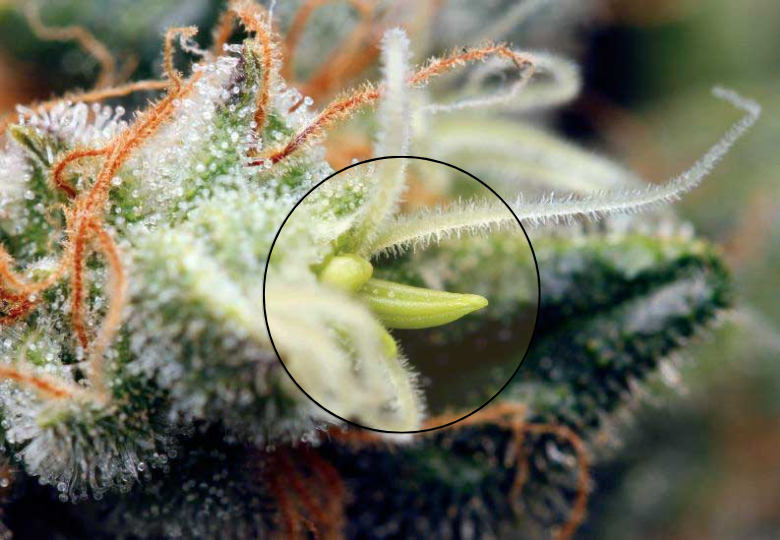


For collectors of cannabis seeds, the phenomenon of 'bananas' represents one of the most fascinating genetic traits. These small, yellow growths that can appear on female cannabis flowers are a fascinating example of how genetics and environmental factors influence each other. In this comprehensive guide, we explore the scientific background of this phenomenon and what it means for the genetic traits of your collected seeds.
What exactly are cannabis 'bananas'?
Cannabis 'bananas' are elongated, yellowish structures that grow directly from the female flowers. This genetic trait differs from regular male pollen sacs and represents a unique form of intersexual flowering. They develop in the center of the flower clusters as a result of a genetic predisposition or specific environmental triggers.
When you study cannabis genetics, you will notice that pollen is normally enclosed in sacs around the pistil. If you open such a pollen sac, you will see many of these 'banana-like' structures. The key difference lies in their immediate effect - while pollen sacs must first mature and open, bananas are immediately functional.
As soon as bananas appear on a plant, they begin pollinating immediately - no maturation or opening process is required. This makes them a special genetic trait that fascinates collectors.
Detecting the banana phenomenon
Due to their small size and light yellow to green color, these structures can easily hide within dense flowers. Some collectors initially mistake them for new pistil hairs or normal flower components. Therefore, it is essential to know what to look for when examining genetic material.
When inspecting flowers, you should carefully look for yellow or green growths that protrude from the flowers and look like small bananas - hence the colloquial term. If you see some suspicious yellow structures that do not look like normal pistil hairs, examine them carefully with a magnifying glass.
Genetic and environmental factors that cause bananas
The appearance of bananas is never random. There is always a specific cause behind it, which is worth identifying from a collector's perspective. Let us examine all the main factors in detail.
Genetic predisposition and inheritance
Genetics form the foundation of everything. Some lines are more prone to banana formation, while others are practically resistant. This explains why identical conditions can cause problems in one genetic line and not in another.
Certain stable genetic lines can tolerate significant stress - bananas never develop in them, even under extreme conditions. In genetically unstable or overbred lines, on the other hand, bananas can appear even with minimal stress. This is why it is so important to choose collector seeds from reputable breeders who thoroughly test their genetics.
In some modern hybrids, especially those bred for extremely high THC levels or unusual aroma profiles, there may be an increased risk of hermaphroditism and banana formation. These lines offer exceptional traits but require stable conditions.
Light stress - the main suspect
The most common cause of banana formation is a disruption of the light regime in photoperiodic genetics. Cannabis requires a regular alternation of light and darkness during flowering, ideally in a 12/12 hour ratio. Any interruption of the dark period can confuse the plant and trigger a stress response.
Typical factors that cause light stress:
- Light leakage from outdoor lighting such as street lamps
- Red or green indicator LEDs on devices
- Defective timers that turn on lights randomly
- Too intense lighting placed too close to the flowers
- Irregular light cycles
Another problem arises when grow lights are placed too close to the plant. Intense light and heat directly above the flowers act as enormous stress. The plant tries to resolve this by producing seeds to ensure the survival of the species - bananas develop.
Temperature shocks and extreme conditions
Temperature plays a crucial role in genetic expression in cannabis. Sudden temperature fluctuations or persistently extreme temperatures can disrupt the plant's hormonal balance and trigger banana formation.
Particularly problematic are:
- Temperature fluctuations of more than 10°C between day and night
- Persistent temperatures above 30°C
- Sudden cold shocks below 15°C
- Hot spots caused by poor ventilation
Scientific background and cannabinoid production
From a scientific perspective, bananas represent a fascinating adaptation mechanism. When cannabis genetics are under stress, primitive survival instincts are activated. The plant 'believes' it is time to reproduce quickly before conditions deteriorate further.
This phenomenon also affects terpene profiles and cannabinoid production. Plants that develop bananas may show changes in their aromatic properties and chemical composition. This is relevant for collectors because it reflects the potential traits of the genetics under stress conditions.
Hormonal changes
The formation of bananas is accompanied by complex hormonal shifts within the plant. Ethylene, auxins, and gibberellins all play a role in this process. These natural plant hormones determine how the genetics respond to environmental stimuli.
Interestingly, some genetic lines interpret these hormonal signals differently, leading to varying degrees of susceptibility to banana formation. This makes studying this trait valuable for understanding cannabis genetics.
Prevention and genetic selection
For collectors interested in stable genetics, understanding preventive measures is essential. The best approach is always selecting proven stable genetic lines from reputable breeders.
Look for collector seeds that come from parent genetics that have been rigorously tested for stability. Breeders who document their selection processes and transparently inform about their genetic lines generally offer more reliable, collectible seeds.
Environmental control for genetic stability
Stable environmental conditions are crucial for maintaining genetic integrity:
- Light regime: Consistent 12/12 cycles without interruption
- Temperature: Stable temperatures between 20-26°C
- Humidity: Gradual adjustment during the different growth phases
- Ventilation: Adequate air circulation without drafty conditions
Monitoring these parameters helps to understand how different genetic lines respond to environmental changes, providing valuable information for collectors.