


 English (English)
 Deutsch (German)
 Čeština (Czech)
 Italiano (Italian)
 Hrvatski (Croatian)
 Română (Romanian)
 български език (Bulgarian)
 Magyar (Hungarian)
 Español (Spanish)
 Français (French)
 Nederlands (Dutch)
 Polski (Polish)
 Slovenčina (Slovak)
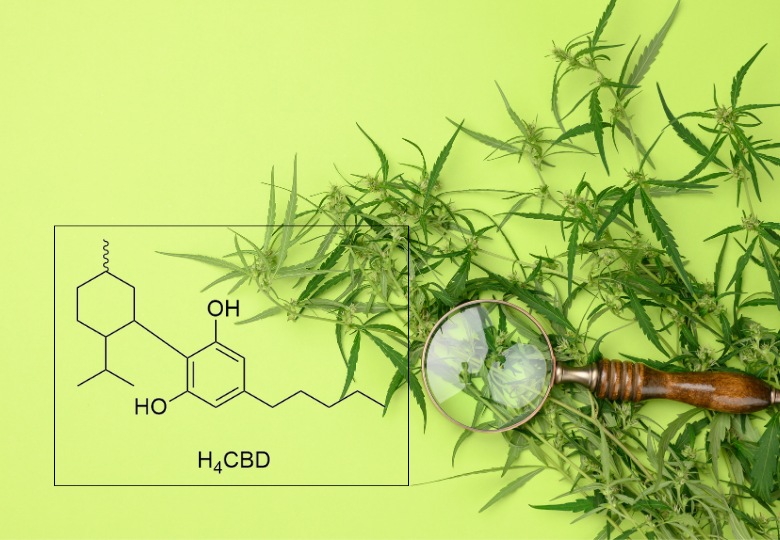



The cannabis world is constantly evolving with new discoveries of cannabinoids possessing unique properties. For cannabis seed collectors interested in the genetic diversity of cannabis, it is essential to understand the various cannabinoids this plant can produce. One of the most intriguing recent developments is H4CBD, or hexahydrocannabidiol - a synthetic variant attracting attention for its potentially powerful properties.
What exactly is H4CBD?
H4CBD represents a fascinating development in cannabinoid research. This synthetic cannabinoid is created through a specific chemical process in which four hydrogen atoms are added to the molecular structure of CBD. The result is what scientists call a hydrogenated version of cannabidiol.
Unlike natural cannabinoids found in cannabis genetics, H4CBD is produced exclusively under laboratory conditions. The production process resembles industrial hydrogenation - similar to how vegetable oils are converted into margarine. Chemists take CBD molecules extracted from cannabis material and combine them with hydrogen atoms under controlled conditions.
For genetics enthusiasts, it is important to understand that this cannabinoid does not occur naturally in cannabis strains, but it does offer insight into the possible chemical variations that could theoretically exist within the cannabinoid spectrum.
Properties and characteristics of H4CBD
Scientific research into H4CBD is still in its infancy, but the available data suggest remarkable properties. Studies indicate that this synthetic cannabinoid shows a significantly higher affinity for CB1 neuroreceptors compared to regular CBD.
A particularly interesting aspect is its presumed potency. Research suggests that in certain applications, H4CBD could be up to a hundred times more potent than traditional CBD. This characteristic makes it a fascinating subject of study for researchers exploring the frontiers of cannabinoid science.
Users describe the properties of H4CBD as a blend containing elements reminiscent of both CBD and other cannabinoids. Unlike CBD, H4CBD is characterized as a psychoactive substance, which constitutes a fundamental difference from its natural counterpart.
Chemical composition and molecular structure
The molecular architecture of H4CBD is distinguished by the addition of four hydrogen atoms to its core structure. This modification results in a more stable chemical configuration that interacts with the endocannabinoid system differently than natural cannabinoids.
For collectors interested in the genetic variety of cannabis, H4CBD offers insight into how small molecular changes can have drastic effects on cannabinoid properties.
Comparison between H4CBD and traditional CBD
Although both cannabinoids are related, there are fundamental differences that are important for cannabis genetics enthusiasts to understand.
Natural versus synthetic origin
The most notable difference lies in their origin. CBD is a natural cannabinoid found in cannabis strains, whereas H4CBD is synthesized entirely under laboratory conditions. This distinction has implications for how we classify and understand these substances.
Biological activity and receptor binding
Research from 2006 showed that hydrogenated forms of CBD exhibit an extremely high binding affinity for CB1 neuroreceptors. This property suggests a fundamentally different interaction with the endocannabinoid system compared to natural CBD.
The psychoactive properties of H4CBD stand in stark contrast to CBD, which is widely recognized as a non-psychoactive cannabinoid. For collectors interested in the diverse properties of cannabis genetics, this difference illustrates how molecular variations can result in completely different characteristics.
Availability and accessibility
CBD products are widely available and well established in the market. H4CBD, on the other hand, is still in an experimental phase with limited availability. For enthusiasts interested in cannabinoid developments, this means H4CBD remains a niche topic for now.
Possible side effects and safety considerations
Due to the lack of extensive research, the possible side effects of H4CBD remain largely unknown. Scientists speculate that, given the combination of properties resembling both CBD and THC, its side effects could include elements of both cannabinoids.
Potential effects could include fatigue, eye irritation, dry mouth, headaches, and gastrointestinal issues. However, without solid scientific research, these remain speculative.
Legal status and regulation
The legal position of synthetic cannabinoids such as H4CBD lies in a gray area. In many jurisdictions, the laws have not yet been adapted to these new developments, resulting in uncertainty about their legal status.
For collectors and enthusiasts, it is crucial to consult local legislation before engaging with synthetic cannabinoids.
Future perspectives for cannabinoid research
H4CBD represents just one example of how scientific innovation creates new possibilities within cannabinoid research. For cannabis genetics enthusiasts, this underscores the ongoing evolution of our understanding of this complex plant chemistry.
Future research will likely yield more synthetic variants, each with unique properties that further expand our understanding of cannabinoid science.
Important: This article is intended solely for informational purposes for collectors and enthusiasts. Cannapio focuses on providing collectible seeds and genetic material for educational purposes. Always consult qualified professionals for medical advice.