


 English (English)
 Deutsch (German)
 Čeština (Czech)
 Italiano (Italian)
 Hrvatski (Croatian)
 Română (Romanian)
 български език (Bulgarian)
 Magyar (Hungarian)
 Español (Spanish)
 Français (French)
 Nederlands (Dutch)
 Polski (Polish)
 Slovenčina (Slovak)
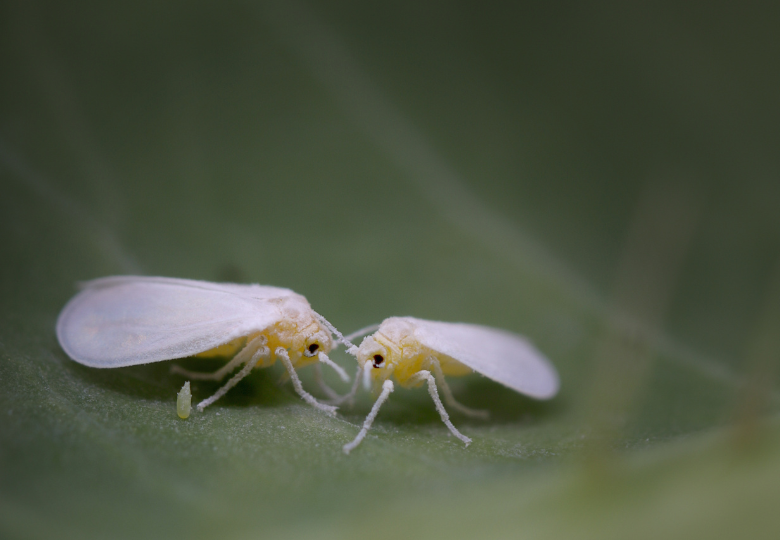



Thrips are one of the most problematic insects that can affect cannabis plants in any growing environment. These tiny arthropods, although barely visible to the naked eye, have the capacity to cause devastating damage to valuable cannabis genetics specimens. For seed collectors and cannabis enthusiasts, understanding the biology of these insects and mastering integrated management strategies is essential to preserve the integrity of their specimens.
Identification and biological characteristics of thrips
Thrips belong to the order Thysanoptera and comprise more than 6000 scientifically described species. The species that most commonly affect cannabis include Thrips tabaci (onion thrips), Frankliniella occidentalis (western flower thrips), and Thrips palmi. These insects have an extremely reduced size, ranging between 0.5 and 2 millimeters in length, which makes them particularly difficult pests to detect in early stages of infestation.
Morphologically, adult thrips exhibit an elongated and narrow body, with coloration ranging from pale yellow to dark brown or black, depending on the species. Their wings are narrow and fringed, an adaptation that allows efficient flight despite their small size. Females have a serrated ovipositor that they use to insert their eggs into plant tissues, preferably in the epidermis of young and tender leaves.
The life cycle of thrips comprises several stages: egg, two mobile larval stages, two generally immobile pupal stages (prepupa and pupa), and finally the adult. At optimal temperatures of 25-30°C, this cycle can be completed in as little as 15-20 days, which explains the speed with which large populations can establish under favorable conditions.
Symptoms and diagnosis of thrips infestations
Early recognition of a thrips infestation is crucial for implementing effective control measures. The first symptoms usually appear on the youngest and most tender leaves of the plant, where these insects prefer to feed due to the higher concentration of nutrients and the lower resistance of the tissues.
Thrips have a unique rasping-sucking mouthpart, which they use to scrape the leaf surface and suck out cellular content. This feeding mechanism generates small silver or bronze spots on the upper surface of the leaves, which can initially be confused with nutritional deficiencies or mite damage. However, a detailed examination with a magnifying glass will reveal the presence of small black dots, which correspond to thrips excrement.
As the infestation progresses, affected leaves may show a characteristic mottled appearance, with discolored areas that eventually become necrotic. In severe cases, leaves may curl, distort, or even detach prematurely from the plant. Terminal shoots and young inflorescences can also be affected, which compromises the normal development of the plant significantly.
To confirm the presence of thrips, it is recommended to carefully examine the underside of leaves during the early morning hours, when these insects are most active. The use of yellow sticky traps constitutes a valuable diagnostic tool, as thrips show a strong attraction to this specific color.
Biological control strategies and integrated management
Effective control of thrips requires a multidisciplinary approach that combines preventive, cultural, biological, and, when necessary, chemical methods. Biological control represents the most sustainable and environmentally friendly first line of defense.
Among the most effective natural enemies of thrips are several groups of beneficial arthropods. Predatory mites of the genus Amblyseius, particularly A. cucumeris and A. degenerans, have demonstrated high efficacy in controlling thrips larvae. These mites can establish stable populations in the crop and provide continuous long-term control.
Predatory bugs such as Orius spp. represent another group of highly effective natural enemies. These insects are capable of feeding on both thrips larvae and adults, and their presence can significantly reduce pest populations. The introduction of refuge plants such as basil, dill, or fennel can favor the establishment of these beneficial species.
Entomopathogenic fungi such as Beauveria bassiana and Metarhizium anisopliae offer a promising biological alternative. These microorganisms infect thrips through direct contact, causing their death within a period of 5-10 days. Their foliar application should be carried out during hours of lower light intensity to preserve spore viability.
Neem oil: properties and application
Neem oil (Azadirachta indica) constitutes one of the most versatile botanical insecticides available for thrips control. Its active ingredient, azadirachtin, interferes with the endocrine system of insects, inhibiting their development, reproduction, and feeding. Additionally, it exerts a repellent effect that deters adults from ovipositing on treated plants.
For effective application, it is recommended to dilute neem oil at 0.5-1% in water, adding a surfactant or emulsifier to improve adhesion and distribution of the product. Applications should be carried out during hours of lower temperature to avoid phytotoxicity and maximize the persistence of the active compound.
Preventive measures and cultural management
Prevention constitutes the most effective and economical strategy to avoid thrips problems. Maintaining adequate environmental conditions represents the first step toward successful management. Thrips thrive in warm and dry environments, so maintaining a relative humidity of 60-70% can significantly reduce their reproduction and survival rates.
Adequate ventilation not only helps control humidity but also creates air currents that hinder the flight and establishment of adult thrips. Ventilation systems should be equipped with fine mesh filters to prevent insects from entering from outside.
Regular and systematic monitoring using yellow sticky traps should be implemented from the start of cultivation. These traps should be placed strategically at the level of the plant canopy and checked weekly to detect the first individuals before reproductive populations become established.
Quarantine of new plants represents another fundamental preventive measure. Any introduced plant material should be kept isolated for at least 7-14 days and subjected to thorough inspection before being incorporated into the main growing area.
Regular removal of plant debris and weeds in the perimeter of the crop reduces alternative refuges where thrips can complete their life cycle. Particular attention should be paid to species such as dandelion, plantain, and other plants that can serve as secondary hosts.
Control through physical barriers
Anti-thrips mesh with an opening of 0.15-0.3 mm can be installed in ventilation openings, doors, and windows to prevent the entry of adults from outside. Although these meshes can slightly reduce airflow, their effectiveness in excluding thrips makes them a valuable investment for susceptible facilities.
Silver reflective films placed around the growing area can disorient adult thrips and reduce their ability to locate host plants. This method is especially useful in small greenhouses or propagation areas.