


 English (English)
 Deutsch (German)
 Čeština (Czech)
 Italiano (Italian)
 Hrvatski (Croatian)
 Română (Romanian)
 български език (Bulgarian)
 Magyar (Hungarian)
 Español (Spanish)
 Français (French)
 Nederlands (Dutch)
 Polski (Polish)
 Slovenčina (Slovak)
Legal status of cannabis in the European Union (as of 25 September 2026)
- The EU has no single cannabis law: it sets a common framework for hemp farming, trade and drug trafficking, while recreational use is regulated by each Member State.
- CBD lawfully produced in one Member State may in principle be sold in another; a national ban is allowed only if it is suitable to protect public health and does not go beyond what is necessary. The Court held that such CBD is not a narcotic drug under the 1961 Single Convention (Articles 34 and 36 TFEU, Case C-663/18 Kanavape, paras 76 and 96).
- Industrial hemp qualifies for CAP direct payments only if the THC content of the variety does not exceed 0.3 % (Art. 4(4) Regulation (EU) 2021/2115); THC control methods are set by the Commission (Art. 60(4)(a) Regulation (EU) 2021/2116).
- Member States may restrict how hemp is grown, for example ban indoor hydroponic cultivation, if the restriction is suitable and proportionate for protecting public health (Case C-793/22 Biohemp Concept, 4 October 2024).
- Member States must make intentional unlawful cultivation of cannabis plants and drug trafficking a criminal offence (Art. 2(1)(b) Framework Decision 2004/757/JHA, as quoted in Case C-271/23).
- Rules on recreational cannabis differ widely: Germany allows adults to possess up to 25 g in public, 50 g at home and three plants (§ 3 and § 9 KCanG), while in Czechia personal use becomes a criminal offence only above 5 plants, 200 g at home or 50 g elsewhere, and plants with up to 1 % THC are excluded (§ 285 Czech Criminal Code).
“Články 34 a 36 SFEU musí být vykládány v tom smyslu, že brání vnitrostátní právní úpravě, která zakazuje uvádět na trh CBD, který je legálně vyprodukován v jiném členském státě, v případě, že je extrahován z celé rostliny cannabis sativa, a nikoli pouze z jejích vláken a semen, ledaže je tato právní úprava s to zaručit naplnění cíle ochrany veřejného zdraví a nepřekračuje meze toho, co je k dosažení tohoto cíle nezbytné.”
[Translation: “Articles 34 and 36 TFEU must be interpreted as precluding national legislation which prohibits the marketing of CBD lawfully produced in another Member State when it is extracted from the Cannabis sativa plant in its entirety and not solely from its fibre and seeds, unless that legislation is appropriate for securing the attainment of the objective of protecting public health and does not go beyond what is necessary for that purpose.”]



This overview is based on legislation and case law in the legal database Europaius. It is not legal advice.
Cannabis Legalization in the Czech Republic 2026 – Complete Guide for Growers and Consumers
Disclaimer: This article is for informational purposes only and does not constitute legal advice. For specific legal questions, please consult a qualified attorney.
As of January 1, 2026, a historic amendment to the Criminal Code came into force in the Czech Republic, fundamentally rewriting the rules for cannabis handling. Adults aged 21 and older can now legally grow up to 3 cannabis plants and possess 100 grams of dried material at home or 25 grams in public. The Czech Republic has thus joined Malta, Luxembourg, and Germany as another European country that has legalized home cannabis cultivation for personal use – while simultaneously choosing one of the most conservative models in the entire EU.
In this guide, we comprehensively address what is legal from 2026 onwards, what remains criminal, what the specific limits and obligations are, and how the Czech regulation compares to foreign models.
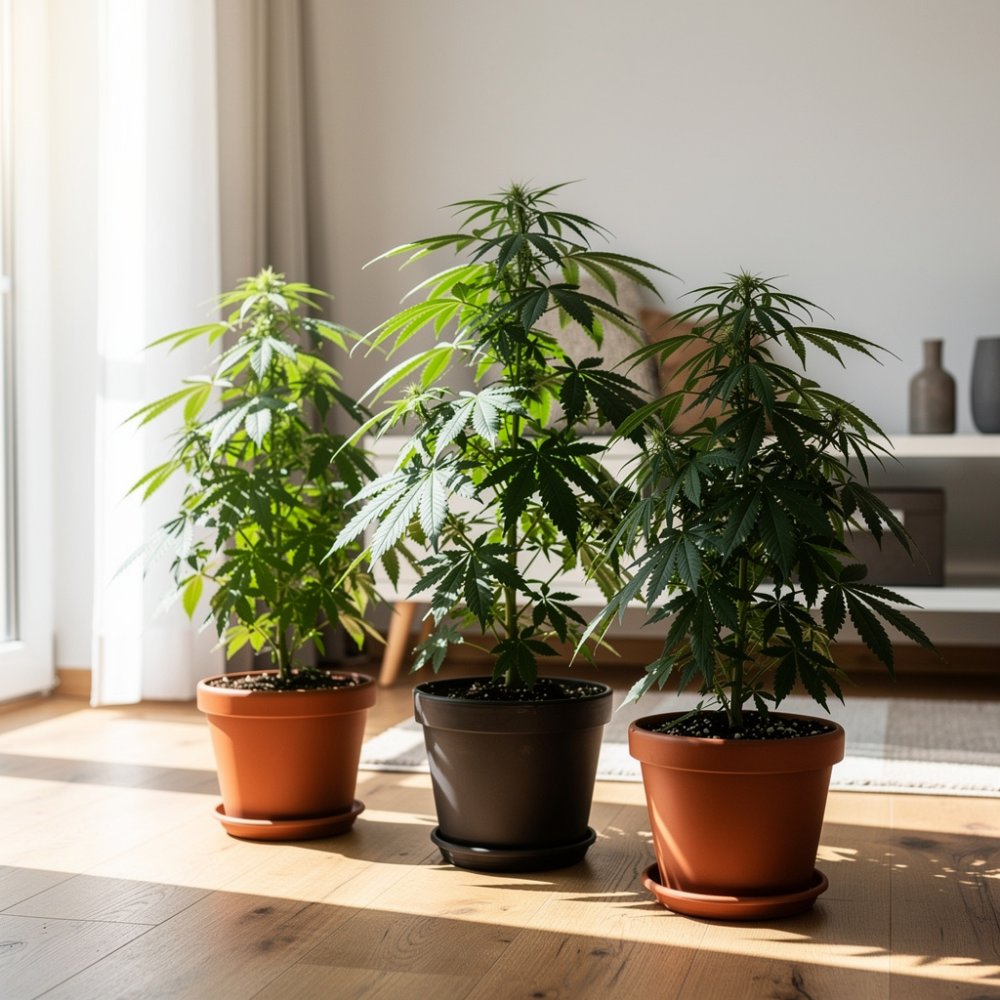
What Changed on January 1, 2026
The amendment to the Criminal Code, which Parliament approved on May 30, 2025, the Senate confirmed on July 3, 2025, and the President signed on July 17, 2025, introduced a new § 283a of the Criminal Code into Czech law. It covers the unlawful production, sale and other supply of cannabis; under the new wording of Section 285 of the Criminal Code, growing for personal use is a criminal offence only above 5 plants.
The law builds on three decades of gradual liberalization: from decriminalization of small quantities in 2010, through legalization of medical cannabis in 2013, to the current partial legalization of recreational use.
Key changes at a glance:
- Legal cultivation of up to 3 cannabis plants (THC above 1%) for personal use
- Legal possession of up to 100 g of dried material at home and 25 g in public
- Age limit of 21 years – stricter than for alcohol and tobacco
- Basic home processing permitted: drying, grinding, harvesting
- Introduction of misdemeanor bands instead of direct criminalization of minor offenses
- Reduced criminal penalties for less serious violations
What Is Legal and What Remains Illegal – Overview Table
| Area | Legal from 1/1/2026 | Still Illegal |
|---|---|---|
| Cultivation | Up to 3 plants (THC above 1%) for personal use, age 21+ | 6 or more plants = criminal offense |
| Home possession | Up to 100 g dried cannabis | Over 200 g = criminal offense |
| Public possession | Up to 25 g | Over 50 g = criminal offense |
| Processing | Drying, grinding, harvesting, making salves | Manufacturing concentrates and extracts with high THC content |
| Age | From 21 years | Persons under 21 years |
| Growing location | Property owned or rented by grower | Public areas, third-party land |
| Seed sales | Legal (seeds contain no THC) | Any sale of harvested cannabis or products made from it |
| Distribution | – | Gifting, sharing, any transfer to another person |
| Import/export | – | Any cross-border movement of cannabis |
| Medical cannabis | On medical prescription (from 2013) | Without prescription |
Important: Sale, gifting, or any other form of distribution of cannabis to another person is not legal from 2026 onwards, regardless of whether it is paid or unpaid transfer. This is a fundamental difference from the German model with cannabis clubs, where members can share joint production under strictly defined conditions.
Home Cultivation – Rules and Limits
Who Can Grow
Any adult person aged 21 or older who is a Czech citizen or has a legal residence in the Czech Republic can grow cannabis for personal use. The age limit of 21 is deliberately stricter than for alcohol or tobacco (18 years) and reflects lawmakers' cautious approach to recreational cannabis – particularly regarding neurobiological risks in young adults.
How Many Plants and Where
- Maximum 3 plants of cannabis with THC content higher than 1%
- Cultivation must take place in a property to which the grower has a legal relationship – that is, in their own house, apartment, garden, or rented space with a valid rental agreement
- Plants must not be visible from public areas – this is a condition directly enshrined in the law
- Cultivation in public places, parks, or on third-party land is prohibited
Permitted Processing
The law explicitly allows standard home processing of harvested plants:
- Harvesting – cutting flowers and leaves
- Drying – natural drying or drying under controlled conditions (temperature, humidity)
- Grinding – mechanical crushing of dried material, for example using a grinder
- Making salves – simple plant-based preparations for personal use
What Is Prohibited Even in Home Cultivation
The law does not permit sophisticated extraction of active substances. Legal experts warn that the manufacture of hashish, BHO extracts, rosin resin, and other concentrates with high THC content may be legally qualified as "manufacturing narcotic and psychotropic substances" and falls under criminal liability even with relatively small resulting quantities. The boundary between legally permitted "grinding" and prohibited "concentrate manufacturing" is not precisely defined in the amendment text – this is one of the repeatedly criticized legislative shortcomings that will likely be clarified through case law.
Penalties and Sanctions – What Happens When You Exceed Limits
The amendment introduced a graduated sanctions system that strictly distinguishes between misdemeanors and criminal offenses based on the severity of violation. Transitions between bands are defined by specific quantity thresholds.
Misdemeanors (Administrative Sanctions)
| Violation | Category | Sanction |
|---|---|---|
| 4–5 plants | Misdemeanor | Fine |
| 100–200 g at home | Misdemeanor | Fine |
| 25–50 g in public | Misdemeanor | Fine |
Criminal Offenses
| Violation | Category | Criminal Sentence |
|---|---|---|
| 6 or more plants | Criminal offense | Up to 6 months imprisonment |
| Over 200 g at home | Criminal offense | Up to 6 months |
| Over 50 g in public | Criminal offense | Up to 6 months |
| Over 2,000 g at home | Criminal offense | Up to 3 years |
| Over 20,000 g at home | Criminal offense | Up to 5 years |
| Distribution / sale | Criminal offense | 1–18 years (depending on circumstances) |
| Distribution in organized group | Criminal offense | Up to 18 years |
Warning: Passing cannabis to a friend, sharing at a social event, or any other transfer to another person is still a criminal offense, not a misdemeanor. The law allows exclusively personal cultivation and personal consumption – without exception.
THC Limits and Testing
1% THC Threshold
Czech legislation distinguishes two basic cannabis categories based on THC content:
- Industrial hemp – THC content up to 1%. Subject to different regulation under the Psychomodulatory Substances Act. Can be sold in a regulated manner by licensed entities.
- Cannabis with THC above 1% – falls under the Criminal Code amendment. Legal exclusively for home cultivation within legally established limits.
The 1% threshold is significantly higher in the European context – most EU countries set the limit for industrial and technical hemp at 0.2%, or 0.3% (Switzerland, United Kingdom). The higher Czech threshold effectively means that many varieties previously in a gray zone now fall into the technical hemp category.
Testing
The law does not require routine testing of THC content in home plants. Testing occurs only within police investigations, where laboratories verify whether THC content exceeds the legal threshold of 1% – and thus whether it is regulated cannabis.
In practice for home growers, this means you do not need to proactively prove the THC content of your plants. However, samples will be tested during inspection. We recommend keeping proof of seed purchase, variety name, and ideally a product sheet from the manufacturer – this information may be relevant when communicating with the Czech Police.
Registration and Grower Obligations
Unlike the German model, where cannabis clubs (Anbauvereinigungen) are bound by strict registration requirements, Czech legislation does not impose any registration or reporting obligation on home growers. There is no central registry, reporting to authorities, or licensing system.
What this means in practice for the average grower:
- You don't need any permit or license
- You don't have to inform anyone that you're growing
- No evidence system exists for home growers
- The only requirement is compliance with legal limits: maximum 3 plants, maximum 100 g dried, age at least 21 years
The absence of a registration framework is viewed as an administrative advantage, while critics call it a legislative gap: without a regulated market, there is no legal way to obtain cannabis from a third party, and there is no quality or origin control mechanism.
The Psychomodulatory Substances Law – What Does It Mean
Parallel to the Criminal Code amendment, the Psychomodulatory Substances (PML) Law has been in force in the Czech Republic since January 1, 2025. This is an entirely new legal category introduced in response to the rapidly growing gray market for products containing HHC, kratom, and low-THC hemp products.
What Are Psychomodulatory Substances
Psychomodulatory substances are psychoactive substances for which expert assessment has documented an acceptable health risk profile – they are not classified as medicines, food, or dietary supplements, but form a separate regulated category with its own rules for sales, labeling, and control.
List of Psychomodulatory Substances (2025)
The current PML list includes the following items:
- The list is set by Government Regulation No. 456/2025 Sb. (hemp extracts and tinctures up to 1% THC are not on it)
- Kratom (Mitragyna speciosa)
- Kratom extract
- Hexahydrocannabinol (HHC) is not on the PML list: it is classified as a psychotropic substance (Annex 4 to nařízení vlády č. 463/2013 Sb.) and its sale is prohibited
Rules for PML Sales
- Sales exclusively through licensed specialty stores from the Ministry of Health of the Czech Republic
- Prohibition on sales to persons under 18 years with mandatory age verification before sale
- Strict advertising and marketing communication restrictions
- Quality obligations for products, labeling, and record-keeping
- License renewal annually
- Online sales are limited and conditional on the existence of a licensed physical store
For e-shops selling CBD products: Under Czech law, hemp extracts and tinctures with no more than 1% THC used for industrial, food, cosmetic, technical or horticultural purposes are not considered handling of psychomodulatory substances (Section 33a(2) of Act No. 167/1998 Sb.); the PML licence does not apply to them.
Kratom and Other Regulated Substances
Kratom in the New Regulatory Framework
Kratom (Mitragyna speciosa) has been officially listed on the Psychomodulatory Substances list since July 1, 2025. The state does not prohibit kratom but introduces a strict regulatory framework:
- Authorization: Any entity wishing to handle kratom – sell, process, or import – must obtain authorization from the Ministry of Health of the Czech Republic
- Sales restrictions: Sales are permitted only to licensed sellers; sales to persons under 18 are prohibited
- E-shops: Online sales are conditional on the existence of a licensed physical store; sales through vending machines are completely prohibited
- Quality: Mandatory composition testing, standardized labeling, and accompanying documentation
Psilocybin – Therapeutic Use
As part of a comprehensive drug policy reform, the Czech Republic became the first European country on January 1, 2026 to allow therapeutic use of psilocybin – a psychoactive substance naturally occurring in certain mushroom species.
- Psilocybin can only be prescribed by certified psychiatrists who have completed psychedelic therapy training
- One therapeutic session lasts approximately 6 hours in the presence of two qualified therapists, typically in a controlled clinical setting
- Main indications: treatment of resistant depression and other serious mental illnesses where the patient has not responded to standard pharmacotherapy
- Availability is limited in the initial phase to several dozen patients per year, concentrated mainly in Prague and Brno
Impact on E-shops and Retailers
What Changes for Cannabis Seed Retailers
Legalization of home cultivation creates an entirely new market context for e-shops selling cannabis seeds. While previously seeds were formally sold as "collectible items," they now have behind them a legitimate and legally recognized demand for home cultivation.
Sale of cannabis seeds in the Czech Republic remains legal – seeds themselves contain no THC and are not classified as narcotic or psychotropic substances. From 2026 onwards, the customer base naturally expands to those seeking seeds for legal home cultivation, and interest grows in feminized and autoflowering varieties suitable for indoor and outdoor growing in Czech conditions.
What Still Applies
- Sale of dried cannabis (flowers, extract) remains illegal – regulated commercial market does not exist
- Sale of high-THC cannabis concentrates is criminal
- Sale of CBD products and hemp extracts up to 1% THC for industrial, food, cosmetic, technical or horticultural purposes does not require a licence under the Psychomodulatory Substances Law (Section 33a(2) of Act No. 167/1998 Sb.)
Economic Impact of Absence of Regulated Market
Critics repeatedly point out that the absence of a regulated commercial cannabis market represents an unutilized tax potential. Expert estimates speak of approximately 3 billion CZK annually that the state budget could gain from licensing fees, excise tax, and VAT from regulated sales. Commercial sales have been blocked in this phase of legislation mainly by coalition opposition from KDU-ČSL.
Comparison with Germany and Other European Countries
Overview Table – Cannabis Legalization in Europe (2026)
| Parameter | Czech Republic (2026) | Germany (CanG, 2024) | Malta (2021) | Luxembourg (2023) |
|---|---|---|---|---|
| Age limit | 21 years | 18 years | 18 years | 18 years |
| Max. plants | 3 | 3 | 4 | 4 |
| Home possession | 100 g | 50 g | – | – |
| Public possession | 25 g | 25 g | 7 g | 3 g |
| Cannabis clubs | No | Yes (non-profit, max. 500 members) | Yes (CHRA, max. 500 members) | No |
| Commercial sales | No | No (pilot programs being prepared) | No | No |
| Grower registration | No | No (clubs yes) | No | No |
| Medical cannabis | Yes (from 2013) | Yes | Yes | Yes |
Germany – Cannabis-Gesetz (CanG)
The German model is currently the most comprehensive in Europe. Compared to the Czech Republic, it offers a lower age limit (18 years) but simultaneously a stricter home possession limit (50 g vs. 100 g). The key difference is the existence of cannabis clubs (Anbauvereinigungen) – non-profit associations that can unite up to 500 members and legally jointly cultivate cannabis for distribution to their members. Czech legislation has not yet introduced any equivalent to this system.
Malta – EU Pioneer
Malta became the first European Union country to legalize recreational cannabis in 2021. The Maltese model allows 4 plants per household and features a network of non-profit organizations CHRA (Cannabis Harm Reduction Associations), providing cultivation and safe cannabis distribution to their registered members.
Luxembourg – Conservative Approach
Luxembourg permits 4 plants but with a very low public limit (3 grams). There are no cannabis clubs, licensed commercial sales, or other forms of organized distribution.
Where the Czech Republic Is Unique
- Highest home possession limit in all of Europe (100 g dried)
- Highest age limit of all legalizing countries (21 years vs. 18 years elsewhere)
- No form of legal distribution – as the only legalizing European country, it has neither cannabis clubs nor regulated sales
- Part of wider reform including regulation of psychomodulatory substances and therapeutic use of psilocybin
Frequently Asked Questions (FAQ)
1. Can I legally grow cannabis at home from January 1, 2026?
Yes, if you meet all legal requirements: you are at least 21 years old, you grow a maximum of 3 plants, you do it in a property to which you have a legal relationship (ownership or valid rental agreement), and you grow exclusively for personal use.
2. Can I give cannabis to a friend or invite them to smoke at my place?
No. Gifting, sharing, or any other transfer of cannabis to another person remains a criminal offense, not a misdemeanor. The law allows cultivation and possession exclusively for personal use without exception – the fact that the transfer is unpaid has no effect on the legal qualification.
3. Do I need to register somewhere as a grower?
No. Czech legislation does not establish any registration or reporting obligation. There is no central registry of home growers or any administrative obligation to state authorities.
4. Can I buy cannabis in a store or online?
No. A regulated commercial market for cannabis (flowers or other high-THC products) does not yet exist in the Czech Republic. Cannabis can be legally obtained exclusively through personal cultivation. Cannabis seeds can be legally purchased – seeds contain no THC and are not classified as narcotic substances.
5. What is the difference between a misdemeanor and a criminal offense?
Growing 4–5 plants or possessing slightly over the limit (up to 200 g at home or up to 50 g in public) is classified as a misdemeanor handled with a fine in administrative proceedings. Exceeding higher legal thresholds (6 or more plants, over 200 g) is a criminal offense with the threat of imprisonment.
6. Can I make hashish or oil from cannabis?
The law allows only simple processing – drying, grinding, harvesting, and making salves for personal use. Manufacturing high-THC concentrates (hashish, BHO, plant rosin) may be criminally qualified as "manufacturing narcotic and psychotropic substances" – even if you start with cannabis legally grown within your own limit.
7. Does legalization also apply to foreigners living in the Czech Republic?
Yes, provided they have legal residence in the Czech Republic, meet the age requirement of 21 years, and grow in a property to which they have a valid legal relationship. Citizenship is not a decisive condition.
8. What is the Psychomodulatory Substances Law and does it affect me?
The Psychomodulatory Substances Law (PML) regulates the sale and distribution of substances such as kratom and cannabis products with THC up to 1% (including most CBD products). As a consumer, it affects you in that these products must come from licensed sellers and cannot be sold to you if you are under 18. As a seller without a license, you cannot offer these products.
Practical Tips for Home Growers
For those who decide to take advantage of the new possibilities of legal home cultivation, we provide basic recommendations:
-
Choose suitable seeds – feminized seeds guarantee that all plants will be female and produce resinous flowers. Autoflowering varieties are an ideal choice for beginners: they require no light cycle change, have a shorter seed-to-harvest time, and are less demanding.
-
Stick to the 3-plant limit – the count includes all plants regardless of developmental stage, including seedlings. Exceeding to 4–5 plants is a misdemeanor with a fine; 6 or more plants constitutes a criminal offense.
-
Document seed origin – keep proof of purchase, variety name, and manufacturer's product sheet. In case of police inspection, these documents prove the legal origin of the plants and facilitate communication with law enforcement.
-
Ensure discretion – the law directly requires that plants not be visible from public areas. Growing behind an opaque fence, indoors, or in a greenhouse with opaque plastic is standard practice.
-
Do not sell or share – any distribution of cannabis to another person is criminal, regardless of quantity or payment.
-
Monitor quantity at harvest – in case of abundant harvest, the total weight of dried material may exceed the legal limit of 100 g. Excess must be disposed of, not given away or stored over the limit.
Conclusion – Where Is Czech Cannabis Legislation Headed
The amendment effective January 1, 2026 represents a fundamental, yet deliberately cautious step in Czech drug policy. The Czech Republic has joined the group of European countries that prefer regulation to prohibition while choosing one of the most conservative legalization models – without commercial sales, without cannabis clubs, with the highest age limit in Europe.
Discussion about further reform phases – including the possible introduction of cannabis clubs or regulated commercial sales – has no established legislative schedule. Their outcome will depend on political developments, experience with the functioning of the current model, and evaluation of the impact of Germany's Cannabis-Gesetz, whose first revision is also planned for 2026.
For growers and consumers, it is essential to thoroughly understand the current legal framework, strictly adhere to established limits, and continuously monitor legislative developments.
Sources
- InternationalCBC – "Czech Cannabis Legalization To Take Effect On January 1, 2026" (internationalcbc.com)
- InternationalCBC – "Czech President Officially Signs Cannabis Legalization Measure" (internationalcbc.com)
- InternationalCBC – "Czech Cannabis Legalization Officially Takes Effect" (internationalcbc.com)
- Harris Sliwoski / Canna Law Blog – "Global Cannabis Spotlight: The Czech Republic's Psychomodulatory Substances Law" (harris-sliwoski.com)