


 English (English)
 Deutsch (German)
 Čeština (Czech)
 Italiano (Italian)
 Hrvatski (Croatian)
 Română (Romanian)
 български език (Bulgarian)
 Magyar (Hungarian)
 Español (Spanish)
 Français (French)
 Nederlands (Dutch)
 Polski (Polish)
 Slovenčina (Slovak)
CBD Varieties – Hemp with High CBD and Low THC
CBD (cannabidiol) hemp varieties represent a fundamental shift in breeding philosophy. While geneticists focused for decades on maximizing THC for the strongest psychoactive effect, a new generation of varieties goes in the opposite direction – high CBD content for therapeutic use, minimal or zero THC to preserve mental clarity. This approach has opened hemp to an entirely new audience and gave rise to a separate market segment.
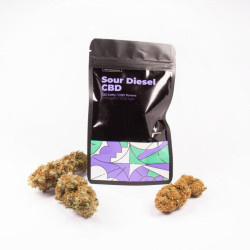
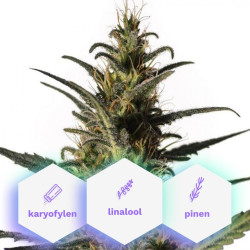

In this article, we explore the history of CBD variety breeding, explain CBD:THC ratios and their practical impact, introduce the 10 best CBD varieties, and provide specific growing tips.
What Are CBD Varieties and Why Were They Created
Cannabidiol – The Second Most Important Cannabinoid
CBD (cannabidiol) is the second most abundant cannabinoid in hemp after THC. Unlike THC, CBD is non-psychoactive – it does not produce euphoria, does not affect perception of reality, and does not cause anxiety or paranoia. Instead, it modulates the endocannabinoid system through different mechanisms that account for its therapeutic properties:
- Anxiolytic effects – reduces anxiety and chronic stress
- Analgesic effects – alleviates acute and chronic pain
- Anti-inflammatory effects – suppresses inflammatory processes at the cellular level
- Antiepileptic effects – demonstrably reduces seizure frequency in certain types of epilepsy
- Neuroprotective effects – supports protection of nerve cells from oxidative damage
- Antiemetic effects – suppresses nausea and vomiting, used in cancer treatment
Why CBD Varieties Were Created
Practically all cultivated hemp varieties carried high THC content and negligible amounts of CBD for a long time. The market demanded it – consumers sought the strongest possible psychoactive effect. The turning point came when science began to reveal CBD's therapeutic potential, specifically through several key events:
- 2013: The story of Charlotte Figi – a six-year-old girl with severe epilepsy (Dravet syndrome), whose seizures dropped from 300 to fewer than 3 per month thanks to CBD oil from the Charlotte's Web variety. This case brought CBD unprecedented media attention and sparked research interest worldwide.
- 2018: The U.S. FDA approved Epidiolex – the first pure CBD-based drug for treating refractory epilepsy. This was a pivotal regulatory precedent.
- 2020+: Explosive growth in demand for CBD products for anxiety, pain, sleep disorders, and overall wellness prompted breeders to invest in an entire new category of varieties.
History of CBD Variety Breeding
Pioneers
The path to modern CBD varieties was paved by several key players whose work defined the entire segment.
Resin Seeds (Spain) – In 2008, they created Cannatonic, one of the first commercially available CBD varieties. It was created by crossing Reina Madre (sativa-dominant) and NYC Diesel. From the original seeds, phenotypes with varying CBD:THC ratios were gradually selected – from 1:1 to 18:1. Cannatonic became the genetic foundation for other legendary CBD varieties, including ACDC.
Dutch Passion (Netherlands) – They developed Charlotte's Angel, the first CBD-dominant variety with THC consistently below 1%. It came from crossing Dutch Charlotte (CBD-rich clone) and Red Angel (Amsterdam CBD line). Charlotte's Angel remains one of the most reliable CBD varieties available in seed form to this day.
CBD Crew (international collaboration) – A project dedicated exclusively to breeding CBD varieties, co-founded by Shantibaba (Mr. Nice Seeds) and Jaime from Spanish Seeds. Their approach was scientifically oriented from the start – each generation underwent laboratory testing of the cannabinoid profile.
How CBD Varieties Are Bred
Breeding stable CBD varieties is a time-consuming process built on precise phenotype selection:
- Starting genetics: The process begins with varieties naturally higher in CBD – typically hemp landraces from Central Asia, Africa, or Himalayan regions, where CBD:THC ratios differ from Indo-American lines.
- Phenotype selection: From each generation, individuals with the highest CBD and lowest THC are selected through laboratory testing.
- Stabilization: Repeated backcrossing over 4–6 generations fixes the desired cannabinoid ratio and ensures consistency.
- Result verification: Final generations undergo independent laboratory testing of the cannabinoid and terpene profile.
The entire process from starting genetics to stable variety typically takes 3–5 years.
CBD:THC Ratios – What They Mean in Practice
| CBD:THC Ratio | THC Content | CBD Content | Psychoactivity | Suitable For |
|---|---|---|---|---|
| 1:1 | 5–12 % | 5–12 % | Mild | Balanced therapy, pain relief |
| 2:1 | 3–8 % | 6–16 % | Minimal | Anxiety, stress, mild pain |
| 5:1 | 1–4 % | 5–20 % | Very low | Epilepsy, inflammation, daily use |
| 10:1 | 0.5–2 % | 10–20 % | None | Chronic pain, epilepsy |
| 20:1+ | < 1 % | 15–20 % | None | Purely medicinal, pediatric use |
Entourage effect: Research repeatedly shows that CBD exhibits higher therapeutic efficacy in the presence of trace amounts of THC, other minor cannabinoids, and terpenes than as an isolated molecule. Varieties with a 5:1 or 10:1 ratio may therefore be more effective in practice than pure CBD isolate. We discuss cannabinoid synergy in more detail in the article on minor cannabinoids CBG, CBN and THCV.
Top 10 CBD Varieties
Comparison Table
| Variety | CBD | THC | CBD:THC Ratio | Flowering Time | Difficulty |
|---|---|---|---|---|---|
| Charlotte's Angel | 10–16 % | < 1 % | 15:1+ | 9–10 weeks | Medium |
| CBD Therapy | 8–10 % | < 1 % | 20:1 | 8–9 weeks | Easy |
| ACDC | 16–24 % | < 1–6 % | 20:1 | 9–10 weeks | Medium |
| Harlequin | 8–15 % | 4–7 % | 5:2 | 8–9 weeks | Easy |
| Cannatonic | 6–17 % | 3–15 % | 1:1 to 18:1 | 9–10 weeks | Medium |
| Pennywise | 8–15 % | 8–15 % | 1:1 | 8–9 weeks | Easy |
| Sour Tsunami | 10–13 % | 1–10 % | 1:1 to 13:1 | 9–10 weeks | Medium |
| Ringo's Gift | 10–20 % | 1–7 % | 1:1 to 24:1 | 9–10 weeks | Medium |
| Dancehall | 8–15 % | 4–9 % | 1:1 to 2:1 | 8–9 weeks | Easy |
| CBD Critical Mass | 5–8 % | 5–8 % | 1:1 | 7–8 weeks | Easy |
1. Charlotte's Angel
Charlotte's Angel is a sativa-dominant CBD variety from Dutch Passion with THC consistently below 1% and CBD ranging from 10–16%. The name references Charlotte Figi, whose story sparked worldwide interest in the therapeutic use of CBD. The genetics come from Dutch Charlotte and Red Angel – two proven CBD-rich clones. Due to extraordinarily low THC, Charlotte's Angel is the first choice for anyone wanting maximum CBD without the slightest psychoactivity.
Growing: Medium difficulty, sativa-dominant habit (120–180 cm), flowering time 9–10 weeks. Significantly benefits from SCROG training for even light coverage and better yields.
2. CBD Therapy
CBD Therapy is one of the first varieties intentionally bred for maximum CBD and minimal THC. It was developed by the CBD Crew seed bank. With a CBD:THC ratio of 20:1 and THC consistently below 1%, it is among the most reliable and "purest" CBD varieties in commercial supply. CBD content hovers around 8–10%, with a subtle terpene profile dominated by myrcene and beta-caryophyllene.
Growing: Easy, compact indica-dominant plants (60–100 cm), flowering time 8–9 weeks. Ideal choice for beginner growers or smaller spaces.
3. ACDC
ACDC is a Cannatonic phenotype selected for extremely high CBD content – up to 24% with THC ranging from trace amounts to 6%, with a CBD:THC ratio potentially reaching 20:1. This variety ranks among the strongest CBD genetics available in seed form and is widely used in medicinal programs. A distinct terpene profile with myrcene, beta-caryophyllene, and pinene contributes to a pronounced entourage effect.
Growing: Medium difficulty, average height, flowering time 9–10 weeks. Prefers consistent temperatures of 20–27 °C and lower air humidity toward the end of flowering to protect dense, resin-covered flowers from mold.
4. Harlequin
Harlequin is a sativa-dominant CBD variety with a typical CBD:THC ratio around 5:2, with roots tracing back to Colombian Gold, Thai, and Swiss sativa landraces. The resulting effect is characteristic – a clear, active mind with gentle body relaxation and pain relief, practically without psychoactivity. Harlequin is therefore a popular choice for daytime use, when the user needs to remain functional.
Growing: Easy, resilient variety suitable for indoor and outdoor growing. Flowering time 8–9 weeks. Yields are moderate, resin quality above average.
5. Cannatonic
Cannatonic is a pioneering CBD variety from Resin Seeds – historically one of the first commercial CBD genetics in the world. Created in 2008 by crossing Reina Madre and NYC Diesel. Cannatonic's key feature is phenotypic variability – different phenotypes offer CBD:THC ratios from 1:1 to 18:1, with CBD content from 6 to 17%. For medicinal growers, this means that phenotype selection combined with laboratory testing is practically essential.
Growing: Medium difficulty, compact to medium-sized plants, flowering time 9–10 weeks. Requires a stable environment – temperature and humidity fluctuations can affect the final cannabinoid profile.
6. Pennywise
Pennywise is an indica-dominant CBD variety from TGA Subcool Seeds, created by crossing Harlequin and Jack the Ripper. The name references the titular clown from Stephen King's novel – not as a tribute to horror, but as a reference to the "crazy" balanced CBD:THC ratio of 1:1. The resulting effect is describable as a gentle balance: mild body relaxation, calm mind, without pronounced psychoactivity.
Growing: Easy, compact indica habit (80–120 cm), flowering time 8–9 weeks. Solid yields and hardy genetics make it ideal for growers seeking reliable 1:1 CBD:THC without complications.
7. Sour Tsunami
Sour Tsunami is one of the first American varieties intentionally bred for high CBD. It was created by activist Lawrence Ringo by crossing Sour Diesel and NYC Diesel. The CBD:THC ratio ranges from 1:1 to 13:1 depending on phenotype, with selected phenotypes reaching CBD content over 10% at minimal THC. The terpene profile carries a distinct diesel character from both parent lines.
Growing: Medium difficulty, sativa-dominant habit, flowering time 9–10 weeks. Taller plants require training (LST or SCROG) for optimal yields in indoor conditions.
8. Ringo's Gift
Ringo's Gift bears the name of Lawrence Ringo, one of the pioneers of CBD breeding. It was created by crossing ACDC and Harle-Tsu and inherited excellent CBD potential from both parents. It offers an extraordinarily wide range of phenotypes – CBD:THC ratio from 1:1 to 24:1 – with the best phenotypes reaching 20% CBD. This very variability makes it a variety for more experienced growers willing to invest in phenotype selection.
Growing: Medium difficulty, medium height, flowering time 9–10 weeks. For consistent medicinal results, laboratory testing of individual phenotypes is practically necessary – without it, one cannot predict the final CBD:THC ratio in advance.
9. Dancehall
Dancehall is a CBD variety from Royal Queen Seeds with a typical CBD:THC ratio of 1:1 to 2:1. Created by crossing Juanita la Lagrimosa and Kalijah, it offers a light, social effect – pleasant physical relaxation with mild euphoria, while the user remains mentally present. It is one of the few CBD varieties that appeals to recreational users seeking an alternative to strong THC genetics.
Growing: Easy, compact to medium-high plants (80–130 cm), flowering time 8–9 weeks. Suitable for beginner growers, tolerant of minor growing errors.
10. CBD Critical Mass
CBD Critical Mass brings the CBD profile into the genetics of the renowned record-breaking yields. It offers a balanced CBD:THC ratio of 1:1 (typically 5–8% of each) while maintaining the massive production of dense, heavy buds characteristic of the Critical Mass line.
Growing: Easy, indica-dominant compact habit (80–120 cm), flowering time 7–8 weeks. Extremely dense and heavy buds require strong branch supports – without them, branch breakage is likely, especially in outdoor growing.
Medicinal vs. Recreational CBD Varieties
Medicinal Use
For medicinal purposes, varieties with high CBD:THC ratio (10:1 and higher) are most suitable, where psychoactivity is minimal or absent:
- Epilepsy: ACDC (20:1), Charlotte's Angel (15:1+), CBD Therapy (20:1)
- Chronic pain: Cannatonic, Harlequin, Ringo's Gift
- Anxiety and depression: Charlotte's Angel, CBD Therapy, ACDC
- Inflammatory diseases: ACDC, Sour Tsunami, Harlequin
Before starting CBD therapy, especially when taking other medications concurrently, consult the procedure with a doctor. CBD affects the metabolism of many drugs through the CYP450 enzyme system. For details, see the article CBD and medications – interactions.
Recreational and Wellness Use
For relaxation, daily wellness, or social situations, varieties with a more balanced ratio are suitable, where THC contributes to a pleasant but controllable effect:
- 1:1 varieties: Pennywise, Dancehall, CBD Critical Mass – gentle, balanced effect without strong psychoactivity
- 2:1 to 5:1 varieties: Harlequin, Cannatonic – body relaxation while maintaining mental clarity
Tips for Growing CBD Varieties
General Principles
-
Same approach as THC varieties. CBD varieties do not require any special growing conditions – the same principles apply for lighting, substrates, nutrition, temperature, and humidity as for THC genetics.
-
Test phenotypes in variable varieties. Varieties such as Cannatonic, Ringo's Gift, or Sour Tsunami show pronounced phenotypic variability. Without laboratory testing, one cannot guarantee a specific CBD:THC ratio in advance – this is key information for growers with medicinal intent.
-
Time harvest by trichomes. For maximum CBD content, harvest at milky white trichomes. Amber trichomes signal advanced CBD degradation to CBN – delayed harvest can significantly reduce therapeutic potential.
-
Practice slow drying and curing. CBD varieties benefit from controlled drying (10–14 days at 15–20 °C and 50–60% humidity) and curing in sealed containers (4–6 weeks). This process preserves the terpene profile and thus the entourage effect of the final product.
-
Monitor legislation. From 2026, it is permitted in the Czech Republic to grow up to 3 hemp plants for personal use. CBD varieties with THC below 1% additionally fall into the category of industrial hemp, which has an even milder regulatory framework.
Indoor vs. Outdoor
- Indoor: Full environmental control ensures consistent results. Most CBD varieties are compact and well-suited to indoor spaces.
- Outdoor: CBD varieties are generally robust and tolerant of variable conditions. In the Czech Republic, plant after the last frosts (end of April – early May) for harvest in September to October.
Frequently Asked Questions (FAQ)
Can CBD varieties cause a "high"?
Varieties with THC below 1% – Charlotte's Angel, CBD Therapy, ACDC – produce no psychoactivity whatsoever. Varieties with a 1:1 ratio, such as Pennywise or Dancehall, may produce a gentle, balanced effect, but in no way resembles the intense "high" typical of strong THC genetics.
Which CBD variety is best for pain?
ACDC and Harlequin are most frequently recommended for chronic pain. Their combination of CBD, trace cannabinoids, and terpenes – particularly beta-caryophyllene and myrcene – creates a pronounced analgesic effect through the entourage effect, which pure CBD isolate typically does not achieve.
Are CBD varieties legal in the Czech Republic?
Hemp with THC content below 1% has been fully legal for retail in the Czech Republic since 2025 in specialized shops. From 2026, it is additionally permitted to grow up to 3 hemp plants for personal use by persons over 21 years of age, without THC content restrictions.
Are there autoflower CBD varieties?
Yes, most popular CBD varieties are now available in autoflowering versions. Autoflower CBD genetics combine growing simplicity (no light cycle switching) with the therapeutic profile of CBD varieties. The topic is covered in more detail in the article on top 10 autoflower varieties.
How do I know CBD content without laboratory testing?
Precise CBD content can only be reliably determined through accredited laboratory analysis. Data from seed banks are guideline values – actual content depends on specific phenotype, growing conditions, nutrition, and harvest timing. For medicinal use, laboratory testing is always recommended as an essential step.
What is the difference between CBD varieties and industrial hemp?
Industrial hemp varieties are certified and registered in the European catalog with THC below the legal limit (currently 1% in the Czech Republic), primarily grown for fiber, seed, or CBD extraction. CBD varieties such as Charlotte's Angel or ACDC, on the other hand, are bred exclusively for maximum CBD content and need not appear in the EU catalog. The topic is discussed in more detail in the article Industrial hemp – varieties and uses.
Conclusion
CBD varieties have opened hemp to an audience that previously gave this plant no thought – people seeking therapeutic benefits, not psychoactivity. From the pioneering Cannatonic of 2008, through the extremely potent ACDC, to the modern and reliable Charlotte's Angel – today's supply of CBD genetics is richer and higher quality than ever before in history.
Whether you are seeking relief from chronic pain, support for anxiety, an alternative to epilepsy medications, or simply daily relaxation with a clear head – among CBD varieties you will find your ideal choice.
Explore the complete range of CBD seeds on Cannapio.cz and discover hemp's therapeutic potential.
Sources: Leafly, Weedmaps, Dutch Passion, Resin Seeds, CBD Crew, Cannigma, Magazín Konopí, Soft Secrets, Kanabidiol.eu