


 English (English)
 Deutsch (German)
 Čeština (Czech)
 Italiano (Italian)
 Hrvatski (Croatian)
 Română (Romanian)
 български език (Bulgarian)
 Magyar (Hungarian)
 Español (Spanish)
 Français (French)
 Nederlands (Dutch)
 Polski (Polish)
 Slovenčina (Slovak)
In short: Beta-caryophyllene is the only cannabis terpene that directly activates the CB2 cannabinoid receptor without acting psychoactively on CB1 receptors the way THC does. It is also commonly found in black pepper (15 to 25 % of the essential oil) and in cloves (10 to 20 % of the essential oil).


| Chemical formula | C15H24 |
|---|---|
| Boiling point | 130 °C |
| Content in black pepper | 15-25 % of essential oil |
| Content in cloves | 10-20 % of essential oil |
| Average daily intake in a Western diet | 10-200 mg |
| Year CB2 receptor activation was discovered | 2008 (Gertsch study, PNAS) |
Among all the terpenes cannabis produces, beta-caryophyllene (BCP) holds a truly unique position. It is the only known terpene that directly activates the CB2 cannabinoid receptor – which de facto makes it a "dietary cannabinoid". When you bite into black pepper and notice its typical pungent, spicy aroma, what you are perceiving is beta-caryophyllene. This molecule links the worlds of terpenes and cannabinoids in a way that fundamentally changes our understanding of both categories.
What beta-caryophyllene is and why it is so exceptional
Beta-caryophyllene (BCP, C15H24) is a bicyclic sesquiterpene – a terpene with fifteen carbon atoms and two ring structures. Unlike monoterpenes such as myrcene or limonene (which have ten carbons), BCP is a larger and heavier molecule with a higher boiling point and a different pharmacological profile.
A key structural feature of BCP is the trans double bond in its nine-membered ring – a very unusual element in natural substances. It is precisely this geometric specificity that allows it to bind to CB2 receptors in a complementary way and activate them as a selective agonist.
Why it is called a "dietary cannabinoid"
In 2008, a team of scientists led by Jürg Gertsch published a groundbreaking study in Proceedings of the National Academy of Sciences (PNAS), in which they demonstrated that BCP is a functional CB2 receptor agonist. Important implications of this finding:
- BCP binds to the CB2 receptor and activates it with measurable efficacy
- It acts selectively – it does not activate the CB1 receptors responsible for the psychoactive effects of THC
- It is commonly present in the human diet (black pepper, cloves, cinnamon, oregano)
- The term "dietary cannabinoid" reflects the fact that you take in a biologically active modulator of the endocannabinoid system with every meal
This finding caused a paradigm shift in the understanding of terpenes. BCP is not merely an aromatic substance – it is a biologically active molecule that interacts directly with the endocannabinoid system without any psychoactive consequences.
Aroma and flavour profile
BCP has a distinctive and instantly recognisable aromatic profile that is easy to identify in cannabis:
- Peppery dominance – a sharp, pungent note reminiscent of freshly ground black pepper
- Spicy nuances – clove and cinnamon undertones with warmth and depth
- Woody background – subtle notes reminiscent of cedar or sandalwood
- Root-like depth – earthy, dark notes that give the aroma complexity and length
In cannabis, BCP is often present together with its structural isomer alpha-humulene (humulene), creating the characteristic spicy, hoppy profile typical of many indica and hybrid strains.
Where beta-caryophyllene occurs in nature
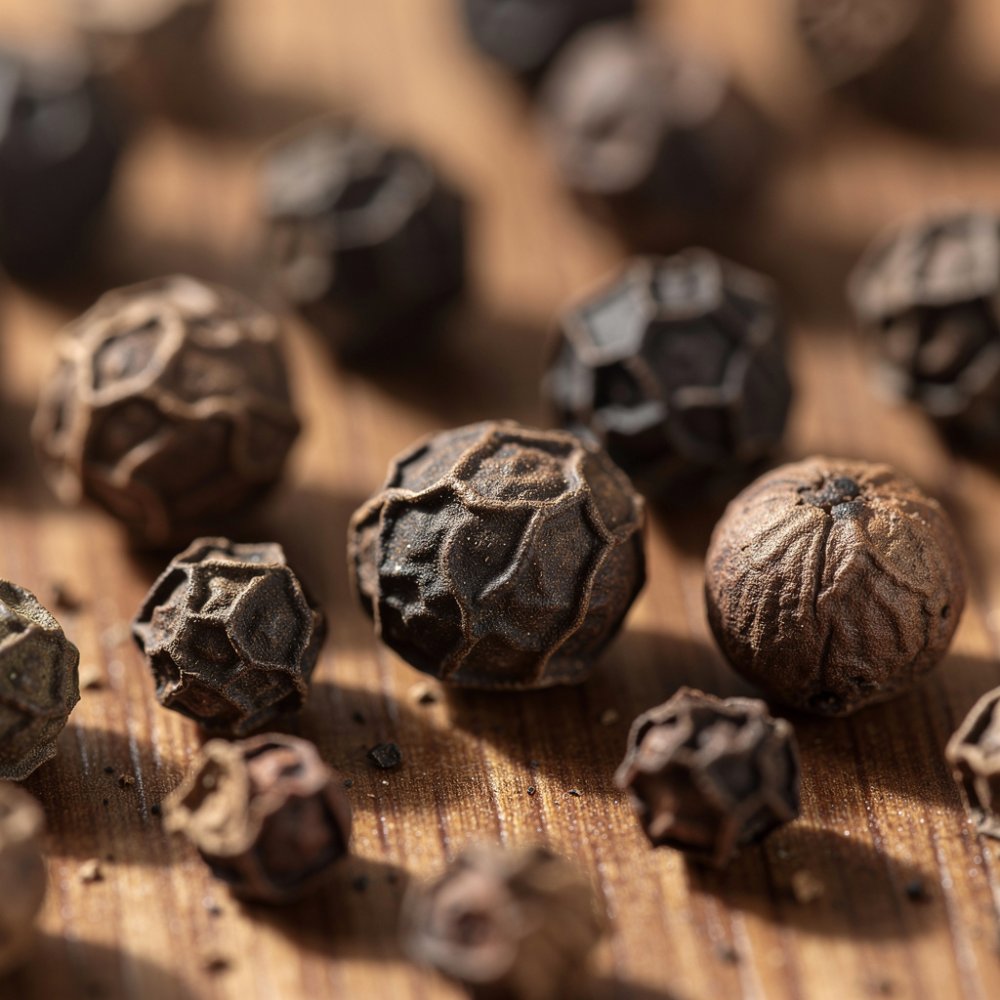
BCP is abundant in the culinary herbs and spices we consume every day:
| Plant | BCP content | Traditional use |
|---|---|---|
| Black pepper (Piper nigrum) | 15-25 % of essential oil | Culinary spice, traditional medicine |
| Cloves (Syzygium aromaticum) | 10-20 % of essential oil | Anaesthetic in dentistry |
| Cinnamon (Cinnamomum) | 5-10 % of essential oil | Cooking, Ayurveda |
| Oregano (Origanum vulgare) | 5-15 % of essential oil | Mediterranean cuisine, folk medicine |
| Basil (Ocimum basilicum) | 3-8 % of essential oil | Cooking, aromatherapy |
| Rosemary (Rosmarinus officinalis) | 3-7 % of essential oil | Seasoning, traditional medicine |
| Hops (Humulus lupulus) | 5-15 % of essential oil | Brewing, herbal sedatives |
This widespread presence in the everyday diet means that most people consume BCP daily without knowing it. Scientists estimate that the average daily intake of BCP in a Western diet is 10-200 mg depending on eating habits – regular consumers of black pepper and Mediterranean cuisine are at the higher end of this range.
Effects and potential health benefits
Anti-inflammatory effects (CB2 mechanism)
The anti-inflammatory effect of BCP is its best-studied property and is directly related to CB2 receptor activation. CB2 receptors are located mainly on immune system cells – macrophages, B lymphocytes and T lymphocytes – and their targeted activation leads to:
- Reduced production of pro-inflammatory cytokines (TNF-alpha, IL-1beta, IL-6)
- Inhibition of the NF-kappaB signalling pathway, the main transcriptional regulator of the inflammatory response
- Reduced oxidative stress through activation of the Nrf2/HO-1 pathway
A study published in the European Journal of Pain (2014) showed that BCP significantly reduced inflammatory pain in mice, and this effect was completely blocked by a CB2 receptor antagonist – which clearly confirms that this is a CB2-specific mechanism, not a non-specific effect.
Analgesic effects
BCP shows pain-relieving effects through CB2-mediated modulation of pain. Unlike opioid analgesics, it does not act on CB1 receptors in the brain and therefore does not cause euphoria, sedation or a risk of developing dependence.
A study published in Pain (2017) showed that BCP reduced neuropathic pain in mice through selective activation of CB2 receptors in the peripheral nervous system. This finding opens up the prospect of non-opioid analgesia, which is extremely relevant in the context of the current opioid crisis.
Gastroprotective effects
BCP shows significant protective effects on the gastric mucosa. A study published in Life Sciences demonstrated that BCP:
- Reduces gastric acidity
- Increases the production of protective gastric mucus
- Speeds up the healing of stomach ulcers
- Protects the mucosa from damage caused by non-steroidal anti-inflammatory drugs (NSAIDs)
This gastroprotective profile makes it a potentially interesting component for people who take anti-inflammatory drugs long term.
Neuroprotective effects
More recent research suggests that BCP may have neuroprotective properties. A study in Frontiers in Pharmacology (2021) showed that BCP reduces neuroinflammation and oxidative stress in brain tissue – two key pathophysiological mechanisms of neurodegenerative diseases such as Alzheimer's and Parkinson's disease. Research in this area is still ongoing, but the results are promising.
Anxiolytic and antidepressant effects
BCP shows anxiolytic and antidepressant effects in animal models. A study in Physiology & Behavior (2014) showed that BCP reduced anxious and depressive behaviour in mice, with the effects mediated by CB2 receptors. This finding is particularly interesting because the role of CB2 receptors in mood regulation was underestimated for a long time, and this research significantly reassesses it.
Cannabis strains rich in beta-caryophyllene
BCP is one of the most common terpenes in cannabis and dominates in a number of popular strains with a spicy profile:
| Strain | Type | BCP content | Characteristics |
|---|---|---|---|
| GSC (Girl Scout Cookies) | Hybrid | Very high | Sweet, peppery aroma with dessert notes |
| Original Glue (GG4) | Hybrid | Very high | Earthy, spicy notes with resinous complexity |
| Bubba Kush | Indica | High | Spicy coffee notes with physical relaxation |
| Chemdawg | Hybrid | High | Chemical, peppery aroma, parent genetics of many strains |
| Sour Diesel | Sativa-dominant | Medium-high | Fuel-like with a peppery background and an energising character |
| OG Kush | Hybrid | Medium-high | Spicy, earthy profile, a classic West Coast kush |
Strains high in BCP tend to produce full-body, physically relaxing effects without pronounced sedation – which corresponds to the CB2-mediated anti-inflammatory action that does not engage the direct psychoactive pathways.
Entourage effect – the synergy of BCP with cannabinoids
BCP plays a completely unique role in the entourage effect, as it is the only terpenoid component that interacts directly and verifiably with the endocannabinoid system:
- BCP + CBD: Both act on anti-inflammatory pathways, but through different mechanisms – CBD via 5-HT1A, TRPV1 and GPR55, BCP via CB2. Their combination can provide broader and more comprehensive anti-inflammatory action than either substance achieves alone.
- BCP + CBG: CBG is also a partial agonist of the CB2 receptor. Combining it with BCP can lead to enhanced activation of the CB2 pathway. You can find more about CBG in our article on cannabinoids and CB2 receptors.
- BCP + THC: BCP can modulate the resulting character of THC's effects through indirect modulation of CB1 signalling and direct anti-inflammatory action via CB2, contributing to a more balanced overall experience.
- BCP + myrcene: Anti-inflammatory synergy from different mechanisms – BCP activates CB2, myrcene inhibits prostaglandin synthesis.
- BCP + humulene: These two terpenes often occur together in cannabis as structural isomers, and their anti-inflammatory effects complement each other.
As Ethan Russo's study (2011) in the British Journal of Pharmacology emphasises, it is precisely this multi-level synergy that explains why full spectrum cannabis products can show greater clinical efficacy than pure isolates of individual components.
How to use terpene products with beta-caryophyllene
- Vaporisation: BCP has a boiling point of approximately 130 °C – it is one of the first terpenes released during vaporisation. For the fullest terpene experience, start at lower temperatures (120-140 °C) and increase gradually.
- Oral administration: Unlike many terpenes, BCP is relatively stable as it passes through the digestive tract, which allows effective oral administration. Cannabis terpenes in capsules or oils take full advantage of this property.
- E-liquids: Terpene e-liquids with a spicy aromatic profile typically contain a significant proportion of BCP as one of their main components.
- Diet: Increase your BCP intake naturally and for free – use freshly ground black pepper, oregano, cloves and cinnamon in everyday cooking.
Comparison of BCP with other major cannabis terpenes
| Property | BCP | Myrcene | Limonene | Pinene | Linalool | Humulene |
|---|---|---|---|---|---|---|
| Aroma | Pepper, spice | Earthy, mango | Citrus | Pine | Lavender | Hops, wood |
| Main effect | Anti-inflammatory | Sedative | Anxiolytic | Bronchodilating | Sedative | Anorectic |
| CB2 receptor | Activates directly | Indirect | Indirect | Indirect | Indirect | Indirect |
| Boiling point | 130 °C | 167 °C | 176 °C | 155 °C | 198 °C | 106 °C |
| Type | Sesquiterpene | Monoterpene | Monoterpene | Monoterpene | Monoterpene | Sesquiterpene |
FAQ – Frequently asked questions
Is beta-caryophyllene really a cannabinoid?
From a pharmacological point of view, yes – BCP selectively activates the CB2 cannabinoid receptor, which is the defining function of cannabinoids. Chemically, however, it is a sesquiterpene. That is why the term "dietary cannabinoid" or "atypical cannabinoid" is used, which accurately reflects its dual chemical and pharmacological nature.
Does beta-caryophyllene have psychoactive effects?
No. BCP selectively activates only CB2 receptors, which are not concentrated in the brain regions responsible for psychoactivity. BCP does not activate CB1 receptors, through which THC produces its intoxicating effects, at all. BCP is therefore completely non-psychoactive and safe for everyday use.
How much beta-caryophyllene do I take in from food each day?
Estimates vary depending on eating habits, but the average daily intake in a Western diet is around 10-200 mg. If you regularly use black pepper, oregano, cloves and cinnamon, your intake will be at the higher end of this range – without any conscious supplementation.
Can beta-caryophyllene replace CBD?
BCP and CBD share some effects (anti-inflammatory, anxiolytic), but they act through different mechanisms. BCP acts primarily via CB2, whereas CBD has a considerably broader receptor profile including TRPV1, 5-HT1A, GPR55 and other targets. They are complementary rather than interchangeable – their combination provides a broad range of effects that neither substance achieves on its own.
Why does black pepper taste so intense and pungent?
The burning sensation of black pepper is caused primarily by piperine, an alkaloid specific to the Piper genus. BCP, however, contributes to the spicy, woody aroma and is responsible for a considerable part of black pepper's health benefits – especially the anti-inflammatory and gastroprotective effects that are being actively studied today.
This article is for information and educational purposes only. It does not constitute medical advice or an invitation to use any substances. Consult your doctor before using any cannabis preparations.
Sources
- Gertsch, J. et al. (2008). Beta-caryophyllene is a dietary cannabinoid. Proceedings of the National Academy of Sciences, 105(26), 9099-9104. pmc.ncbi.nlm.nih.gov/articles/PMC2449371
- Russo, E.B. (2011). Taming THC: potential cannabis synergy and phytocannabinoid-terpenoid entourage effects. British Journal of Pharmacology, 163(7), 1344-1364. pmc.ncbi.nlm.nih.gov/articles/PMC3165946
- Fidyt, K. et al. (2016). beta-caryophyllene and beta-caryophyllene oxide – natural compounds of anticancer and analgesic properties. Cancer Medicine, 5(10), 3007-3017. pmc.ncbi.nlm.nih.gov/articles/PMC5083753
- Klauke, A.L. et al. (2014). The cannabinoid CB2 receptor-selective phytocannabinoid beta-caryophyllene exerts analgesic effects in mouse models. European Journal of Pain, 18(1), 136-145.
- Leafly Terpene Guide: Caryophyllene. leafly.com/news/cannabis-101/caryophyllene-terpene
- Cannabis sativa terpenes are cannabimimetic and selectively enhance cannabinoid activity. Scientific Reports, 2021. nature.com/articles/s41598-021-87740-8
- Bahi, A. et al. (2014). beta-Caryophyllene, a CB2 receptor agonist produces multiple behavioral changes relevant to anxiety and depression in mice. Physiology & Behavior, 135, 119-124.