


 English (English)
 Deutsch (German)
 Čeština (Czech)
 Italiano (Italian)
 Hrvatski (Croatian)
 Română (Romanian)
 български език (Bulgarian)
 Magyar (Hungarian)
 Español (Spanish)
 Français (French)
 Nederlands (Dutch)
 Polski (Polish)
 Slovenčina (Slovak)
Humulene -- Hop Terpene with Anti-inflammatory and Anorexigenic Effects
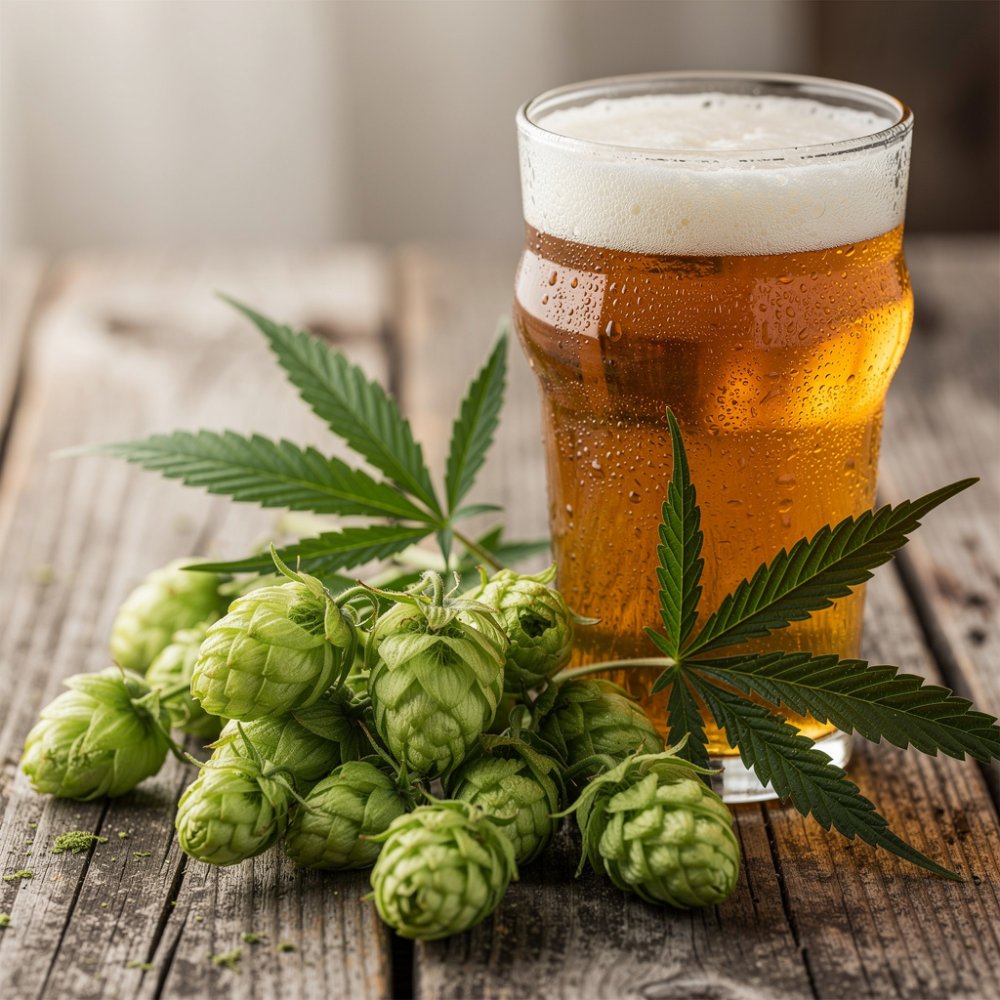
When you open a can of quality IPA and smell that earthy, herbal, slightly woody aroma, you're primarily perceiving humulene -- a terpene that connects the world of cannabis and brewing in a way that's far from coincidental. Cannabis and hops (Humulus lupulus) are close botanical relatives from the same family Cannabaceae and share a number of common aromatic compounds. Humulene ranks among cannabis terpenes as one of the more overlooked ones, but scientific research reveals its remarkable anti-inflammatory, antibacterial, and anorexigenic (appetite-suppressing) properties that deserve closer attention.
What is Humulene and Its Relationship to Caryophyllene
Humulene (alpha-humulene, alpha-caryophyllene, C15H24) is a monocyclic sesquiterpene with an eleven-membered ring. Chemically, it is an isomer of beta-caryophyllene (BCP) -- both share the molecular formula C15H24, but differ in the spatial arrangement of atoms, which is significantly reflected in their biological activity and aromatic profile.
Key Differences Between Humulene and BCP
| Property | Humulene (alpha-caryophyllene) | Beta-caryophyllene |
|---|---|---|
| Structure | 11-membered ring | 9-membered + 4-membered ring |
| CB2 activity | Indirect | Direct (agonist) |
| Aroma | Hoppy, woody | Peppery, spicy |
| Anorexigenic effect | Yes (proven) | No |
| Co-occurrence | Always with BCP | Always with humulene |
Humulene and BCP occur together in cannabis and hops practically always -- the biosynthesis of both terpenes shares a common precursor (farnesyl pyrophosphate). The ratio between them varies by cultivar, but typically forms a combination that gives cannabis its characteristic spicy-hoppy character.
The boiling point of humulene is approximately 106 °C, making it one of the first terpenes released during vaporization -- practical information for anyone wanting to consciously utilize its effects.
Aroma and Flavor Profile
Humulene has a more subtle and deeper aromatic profile than most cannabis terpenes:
- Hoppy dominant -- unmistakable beer, hoppy note
- Woody tones -- cedar and oak nuances
- Earthy background -- damp soil, leaves, underbrush
- Herbal accents -- sage, ginger root
- Spiced undertones -- subtle, not sharp (unlike peppery BCP)
In brewing, humulene is responsible for the "noble hop" character -- that classic, elegant hoppy bitterness that defines traditional European beers. In cannabis, it contributes to earthy, woody, and "mature" tones typical of many indica cultivars and adds depth and complexity to the overall aromatic profile.
Where Humulene Occurs in Nature
Humulene is fairly widely distributed in nature, especially in aromatic and medicinal plants:
| Plant | Humulene Content | Traditional Use |
|---|---|---|
| Hops (Humulus lupulus) | 15-40 % essential oil | Brewing, sedatives, insomnia |
| Sage (Salvia officinalis) | 5-12 % essential oil | Traditional medicine, culinary |
| Ginseng (Panax ginseng) | 3-8 % essential oil | Adaptogen, traditional Chinese medicine |
| Black Pepper (Piper nigrum) | 3-7 % essential oil | Culinary (with BCP) |
| Coriander (Coriandrum sativum) | 2-6 % essential oil | Culinary, digestive support |
| Basil (Ocimum basilicum) | 1-5 % essential oil | Culinary, aromatherapy |
| Balsam Fir (Abies balsamea) | 5-15 % essential oil | Traditional North American medicine |
Hops and cannabis share an evolutionary history -- both plants diverged from a common ancestor approximately 28 million years ago. The sharing of terpenes like humulene and myrcene is direct evidence of this genetic connection and explains why their aromatic profiles are sometimes surprisingly similar.
Effects and Potential Health Benefits
Anti-inflammatory Effects
The anti-inflammatory action of humulene is its best-studied property. A key study published in the European Journal of Pharmacology (2007) demonstrated that humulene:
- Inhibits production of pro-inflammatory cytokines (TNF-alpha, IL-1beta)
- Reduces activity of COX-2 enzyme (cyclooxygenase-2) -- the same target as non-steroidal anti-inflammatories (ibuprofen, diclofenac)
- Suppresses nitric oxide (NO) production in activated macrophages
- Reduces neutrophil migration to inflammatory sites
In a mouse model of airway inflammation, humulene significantly reduced inflammation comparably to dexamethasone (a corticosteroid) -- a remarkable finding for a naturally occurring terpene without the typical side effects of synthetic steroids.
Follow-up research in International Immunopharmacology (2008) confirmed that humulene shows stronger anti-inflammatory action than some synthetic steroids in local application, opening interesting possibilities for future dermatological research.
Anorexigenic Effects (Appetite Suppression)
Unlike most cannabis terpenes -- and unlike THC, the cannabinoid notorious for stimulating appetite -- humulene shows the opposite effect. Studies in animal models demonstrated that humulene:
- Reduces food intake in experimental animals
- Does not negatively affect overall energy metabolism
- Likely works through modulation of hypothalamic satiety centers
This property is particularly interesting in the context of cannabis. Many users report that certain cultivars do not produce the typical "munchies" effect. One probable explanation is higher humulene content in these cultivars, which may partially compensate for the appetite-stimulating effects of THC. However, clinical studies in humans are still lacking, and this area requires further research before specific recommendations can be formulated.
Antibacterial Activity
Humulene exhibits remarkable antibacterial activity. Research in Phytotherapy Research demonstrated efficacy against:
- Staphylococcus aureus (including resistant strains)
- Bacteroides fragilis (anaerobic pathogen)
- Some strains of Streptococcus
Important observation: the antibacterial effect of humulene is demonstrably enhanced in combination with beta-caryophyllene and other terpenes. This suggests that natural terpene blends may be more effective than isolated components -- one argument in favor of the full spectrum approach.
Anti-tumor Potential
Preliminary research suggests potential anti-tumor properties of humulene. A study published in Planta Medica (2003) showed that humulene exhibits cytotoxic effects against some tumor cell lines. Newer research suggests this effect may be enhanced in combination with BCP and other sesquiterpenes -- again in line with the entourage effect concept.
These findings come exclusively from cell cultures and animal models. Clinical trials in humans do not yet exist, and the anti-tumor potential of humulene cannot be extrapolated to practical recommendations without further research.
Cannabis Cultivars Rich in Humulene
Humulene typically occurs in cultivars with pronounced earthy, spicy, or woody profiles:
| Cultivar | Type | Humulene Content | Characteristics |
|---|---|---|---|
| White Widow | Hybrid | High | Earthy-spicy aroma, balanced effects |
| Headband | Hybrid | High | Citrus-earthy profile, strong effects |
| Sour Diesel | Sativa-dominant | Medium-high | Fuel-hoppy tones |
| GSC (Girl Scout Cookies) | Hybrid | Medium | Sweet-earthy aroma (with BCP) |
| Pink Kush | Indica | Medium-high | Sweet-woody profile |
| Skywalker OG | Indica-dominant | Medium | Spicy-hoppy nuances |
In these cultivars, humulene typically occurs together with BCP. Their mutual ratio (humulene:BCP) influences whether the cultivar tends toward hoppy or peppery aromatic profile -- and correspondingly changes the character of effects.
Entourage Effect -- Synergy of Humulene with Cannabinoids and Terpenes
Humulene plays a complementary but important role in the entourage effect:
- Humulene + beta-caryophyllene: The most important synergy. Both sesquiterpenes occur together in cannabis and their anti-inflammatory effects complement each other -- BCP through CB2 receptors, humulene through COX-2 inhibition and TNF-alpha suppression. Together they provide broader anti-inflammatory coverage than either alone.
- Humulene + CBD: Both CBD and humulene have anti-inflammatory properties but act through different mechanisms. Their combination in full spectrum products can offer more comprehensive relief from inflammation.
- Humulene + THC: The anorexigenic effect of humulene may partially compensate for the appetite-stimulating effect of THC. This likely explains why some humulene-rich cultivars do not produce as pronounced a "munchies" effect.
- Humulene + myrcene: Anti-inflammatory synergy -- myrcene inhibits prostaglandins, humulene COX-2 and cytokines. In indica cultivars, this combination contributes to overall relaxing effects.
- Humulene + pinene: Both terpenes exhibit anti-inflammatory and antimicrobial properties; their combination can cover a broader spectrum of microbial targets.
As Russo (2011) emphasized, it is precisely the multiple mechanisms of action of various terpenes and cannabinoids that form the basis of the entourage effect. More on this concept in the article on cannabinoids and the entourage effect.
Humulene in Brewing -- Bridge Between Cannabis and Beer
Humulene's relationship to hops deserves special attention. In brewing, humulene is one of the key components of hop aroma, and its role is more complex than might be thought:
- Bitterness: Humulene itself is not bitter, but during beer brewing its oxidation products contribute to the typical hoppy character of the beverage.
- Aroma: Humulene contributes to the "noble" hop smell -- earthy, herbal, and gently spiced -- which differs from the more aggressive myrcene profile of American hops.
- Brewing hop varieties: Traditional European varieties (Saaz, Hallertau, Tettnanger) have high humulene:myrcene ratios, giving them a more delicate, elegant character compared to the intense tropical tones of newer varieties.
For beer lovers: when you appreciate the complex hoppy aroma of quality pilsner or pale ale, you're largely perceiving humulene -- the same terpene you'll find in cannabis.
How to Use Terpene Products with Humulene
- Vaporization: Humulene has a low boiling point (106 °C) and is released as one of the first terpenes. For maximum use of its effects, start at lower temperatures and gradually increase.
- E-liquids: E-liquids with terpenes with earthy or hoppy profiles typically contain humulene in combination with BCP.
- Full spectrum products: Cannabis terpenes in full spectrum oils naturally contain humulene as part of the entourage effect, without needing to reach for isolated compounds.
- Hop products: Hop tea or hop tinctures are natural sources of humulene with documented sedative effects. Hops have traditionally been used as a natural sedative and sleep support.
- Spices and food: Regular use of sage, black pepper, and coriander in cooking represents a simple way to naturally increase humulene intake.
Comparison of Humulene with Other Major Cannabis Terpenes
| Property | Humulene | Myrcene | Limonene | BCP | Pinene | Linalool |
|---|---|---|---|---|---|---|
| Aroma | Hop, wood | Earthy, mango | Citrus | Pepper | Pine | Lavender |
| Main effect | Anorexigenic | Sedative | Anxiolytic | Anti-inflammatory (CB2) | Bronchodilatory | Anxiolytic |
| Appetite | Suppresses | Neutral | Neutral | Neutral | Neutral | Neutral |
| Boiling point | 106 °C | 167 °C | 176 °C | 130 °C | 155 °C | 198 °C |
| Type | Sesquiterpene | Monoterpene | Monoterpene | Sesquiterpene | Monoterpene | Monoterpene alcohol |
FAQ -- Frequently Asked Questions
Can humulene really suppress appetite?
Animal studies suggest yes -- humulene reduced food intake in experimental animals while not negatively affecting overall energy metabolism. In the context of cannabis, higher humulene content in certain cultivars may partially compensate for the appetite-stimulating effect of THC. However, clinical studies in humans are still lacking and this effect should be interpreted with appropriate caution.
What's the difference between humulene and beta-caryophyllene?
They are structural isomers -- they share the molecular formula (C15H24) but differ in the arrangement of atoms, and thus in biological activity. The key difference is that BCP directly activates CB2 cannabinoid receptors, while humulene does not. Humulene, on the other hand, shows stronger anorexigenic effects. In cannabis, both terpenes occur together practically always and complement each other.
Why is humulene present even in beer?
Cannabis and hops are botanical relatives from the same family Cannabaceae that diverged from a common ancestor approximately 28 million years ago. They share a number of common genetic traits, including enzymes responsible for terpene biosynthesis. Humulene is one of the terpenes that both plants "inherited" from their common ancestor -- and that's why beer from aromatic hops and some cannabis cultivars share surprisingly similar aromatic tones.
Is humulene safe?
Humulene is generally considered safe. It naturally occurs in common foods (black pepper, sage, coriander) and in beer, and the FDA classifies it as GRAS (Generally Recognized As Safe). At typical cannabis product usage levels, it presents no health risk.
How do hop and cannabis aromas differ?
The basic terpene profile is similar -- both plants contain humulene, myrcene, and BCP. However, cannabis additionally contains cannabinoids and a substantially wider range of terpenes (limonene, pinene, linalool, and many others), which give it a more complex and diverse aromatic profile. Hops are aromatically "simpler," with humulene and myrcene dominance, while cannabis offers a significantly richer palette of scents.
This article is purely informational and educational in nature. It does not constitute medical advice or an invitation to use any substances. Consult your doctor before using any cannabis preparations.
Sources
- Russo, E.B. (2011). Taming THC: potential cannabis synergy and phytocannabinoid-terpenoid entourage effects. British Journal of Pharmacology, 163(7), 1344-1364. pmc.ncbi.nlm.nih.gov/articles/PMC3165946
- Fernandes, E.S. et al. (2007). Anti-inflammatory effects of compounds alpha-humulene and (-)-trans-caryophyllene isolated from the essential oil of Cordia verbenacea. European Journal of Pharmacology, 569(3), 228-236. pubmed.ncbi.nlm.nih.gov/17559833
- Rogerio, A.P. et al. (2009). Preventive and therapeutic anti-inflammatory properties of the sesquiterpene alpha-humulene in experimental airways allergic inflammation. British Journal of Pharmacology, 158(4), 1074-1087. pmc.ncbi.nlm.nih.gov/articles/PMC2785529
- Legault, J. & Pichette, A. (2007). Potentiating effect of beta-caryophyllene on anticancer activity of alpha-humulene, isocaryophyllene and paclitaxel. Journal of Pharmacy and Pharmacology, 59(12), 1643-1647.
- Leafly Terpene Guide: Humulene. leafly.com/news/cannabis-101/humulene-terpene
- Cannabis sativa terpenes are cannabimimetic and selectively enhance cannabinoid activity. Scientific Reports, 2021. nature.com/articles/s41598-021-87740-8
- Pinho-da-Silva, L. et al. (2012). Trans-caryophyllene, a natural sesquiterpene, causes tracheal smooth muscle relaxation through blockade of voltage-dependent Ca2+ channels. Molecules, 17(10), 11965-11977.