


 English (English)
 Deutsch (German)
 Čeština (Czech)
 Italiano (Italian)
 Hrvatski (Croatian)
 Română (Romanian)
 български език (Bulgarian)
 Magyar (Hungarian)
 Español (Spanish)
 Français (French)
 Nederlands (Dutch)
 Polski (Polish)
 Slovenčina (Slovak)
Hemp Food Products – What They Contain and How to Use Them
Hemp food products were among the staple foods of ancient civilizations – from China through India to Slavic tribes. After decades of prohibition-driven oblivion, hemp foods have returned to plates and smoothie bowls as one of the most complete plant-based superfoods – this time supported by solid scientific data.


Hemp food products contain neither THC nor CBD – they come from industrial hemp and are processed mainly from seeds. Yet they offer an exceptional combination of complete protein, optimal fatty acid ratios, and a rich palette of minerals. Let's take a look at what exactly hemp food products contain and how to effectively incorporate them into your daily diet.
Hemp Seeds – Nutritional Profile
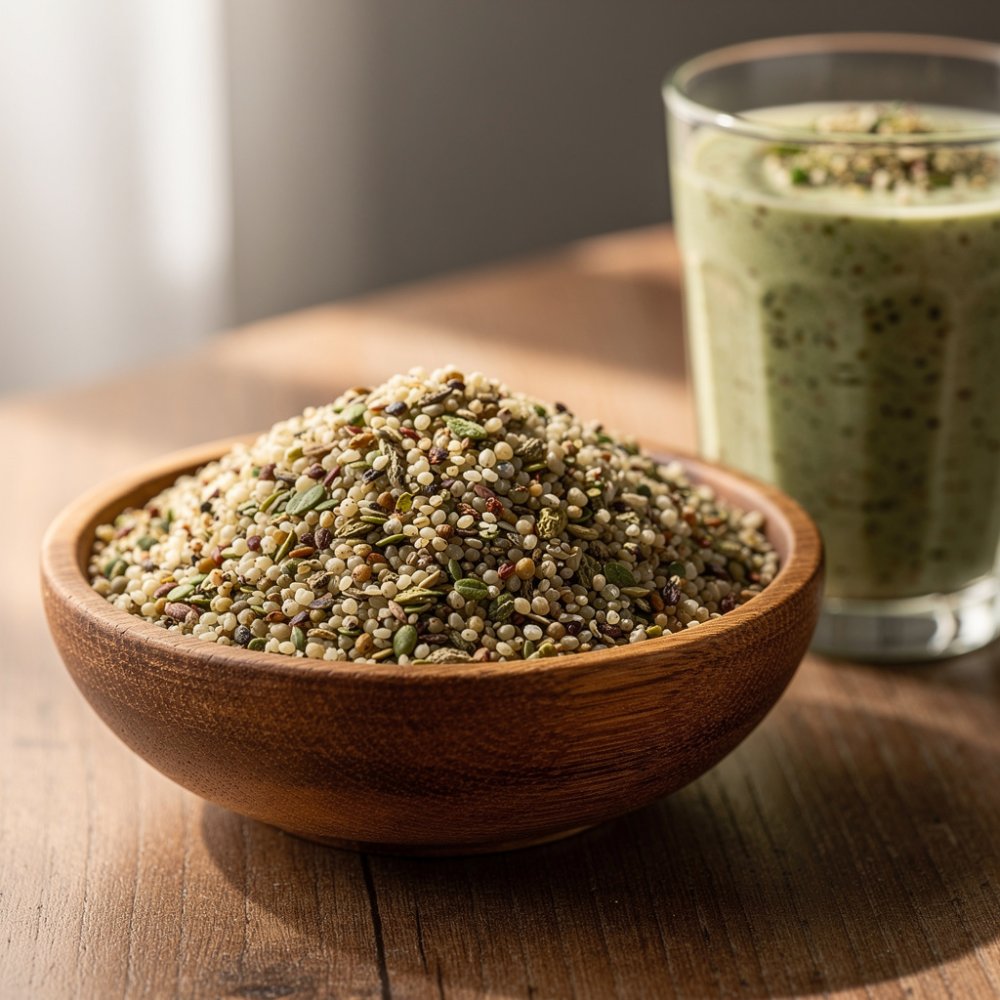
Hulled hemp seeds (hemp hearts) form the most nutritionally valuable foundation of all hemp food products. Their composition is remarkably balanced according to USDA data and in several categories even surpasses recognized superfoods.
Macronutrients per 100 g Hulled Seeds
| Component | Amount | % Daily Recommended Value |
|---|---|---|
| Energy | 553 kcal | 28 % |
| Protein | 31.6 g | 63 % |
| Fat | 48.8 g | 75 % |
| – of which omega-6 (LA) | 27.4 g | – |
| – of which omega-3 (ALA) | 8.7 g | – |
| – of which GLA | 1.7 g | – |
| Carbohydrates | 8.7 g | 3 % |
| Fiber | 4.0 g | 16 % |
Minerals and Vitamins
| Mineral/Vitamin | Per 100 g | % DRV |
|---|---|---|
| Phosphorus | 1,650 mg | 236 % |
| Magnesium | 700 mg | 167 % |
| Zinc | 9.9 mg | 90 % |
| Iron | 7.9 mg | 44 % |
| Manganese | 7.6 mg | 330 % |
| Vitamin E | 0.8 mg | 5 % |
| Thiamine (B1) | 1.3 mg | 108 % |
| Vitamin B6 | 0.6 mg | 35 % |
Complete Protein
Hemp seed is among very rare plant sources of complete protein – it contains all nine essential amino acids in ratios that the human body cannot synthesize independently. The main proteins are edestin (65%) and albumin (35%), both with exceptionally high biological availability. Hemp protein digestibility reaches 91–98%, as demonstrated by the House et al. (2010) study.
Comparison of amino acid profile with other plant sources (values per 100 g):
| Amino Acid | Hemp | Soy | Pea | Rice |
|---|---|---|---|---|
| Leucine | 2.2 g | 2.9 g | 2.5 g | 0.6 g |
| Lysine | 1.3 g | 2.4 g | 2.2 g | 0.3 g |
| Methionine | 0.9 g | 0.5 g | 0.3 g | 0.2 g |
| Arginine | 4.5 g | 2.6 g | 2.7 g | 0.6 g |
Hemp stands out with an exceptionally high arginine content – the amino acid key to nitric oxide biosynthesis, which regulates blood pressure, vascular tone, and blood flow through tissues. From the perspective of cardiovascular health, this is one of the most significant nutritional benefits of hemp seeds.
Omega-6 : Omega-3 Ratio
The ratio of linoleic acid (omega-6) to alpha-linolenic acid (omega-3) in hemp seeds is approximately 3:1. The WHO recommends a ratio of 4:1 or lower – while the typical Western diet ranges between 15:1 and 20:1. Regular consumption of hemp seeds thus actively contributes to rebalancing this pro-inflammatory imbalance.
Moreover, hemp is one of the few foods that contains the rare gamma-linolenic acid (GLA) and stearidonic acid (SDA) – direct precursors of anti-inflammatory eicosanoids, which are nearly unavailable in a typical diet without supplementation.
Hemp Protein
Hemp protein is created by grinding the residue – the pressings remaining after oil extraction from seeds. The resulting powder contains around 50% protein (premium concentrates reach up to 70%) and preserves most of the minerals and fiber from the original seeds – unlike many other protein isolates, which are stripped of these substances.
Comparison with Other Plant Proteins
| Parameter | Hemp | Pea | Soy | Rice |
|---|---|---|---|---|
| Protein per 30 g serving | 15 g | 24 g | 27 g | 22 g |
| Complete AA profile | Yes | Nearly | Yes | No |
| Fiber per 30 g | 8 g | 1 g | 2 g | 0.5 g |
| Allergens | No | No | Yes (top 8) | No |
| Taste | Nutty, earthy | Neutral | Beany | Neutral |
| Digestibility (PDCAAS) | 0.49–0.63 | 0.89 | 0.91 | 0.42 |
Hemp protein achieves a lower PDCAAS score than pea or soy protein – primarily due to relatively lower lysine content. For athletes and active individuals, this has a practical consequence: combining hemp protein with a legume source (peas, lentils, edamame) effectively supplements the limiting amino acids and the resulting profile approaches animal proteins.
Key Benefits of Hemp Protein:
- No industrially recognized allergens – a suitable choice for people with soy, dairy protein, or gluten intolerance
- Exceptionally high fiber content increases satiety and favorably affects gut microbiome
- Natural source of magnesium, zinc, and iron without the need for fortification
- Nutty, earthy taste that naturally fits into smoothies, porridges, and baking
How to Use Hemp Protein
- Smoothies – 2 tablespoons into a blender with fruit, spinach, and plant milk; add a banana for better consistency
- Oatmeal – stir into finished, slightly cooled porridge to avoid protein denaturation
- Baking – replace 20–25% of regular flour with hemp protein in muffin, pancake, or cookie recipes; expect a denser batter texture
- Energy balls – mix with dates, cocoa, coconut oil, and nuts; shape while cold
Hemp Oil (Culinary)
Cold-pressed hemp oil is a culinary gem with an exceptional nutritional profile – but requires specific handling. Unlike CBD oil, it contains no cannabinoids and is used exclusively as food. Its value lies precisely in the rich polyunsaturated fatty acid content, which is also the reason for its sensitivity to heat and light.
Principles of Proper Use:
- Never heat – the smoke point is low (approximately 165 °C) and heat rapidly degrades valuable fatty acids into harmful oxidation products
- Store in the refrigerator after opening, always in a dark glass bottle away from light
- Use within 3 months of opening – rancid oil is recognizable by a sharp, fishy smell
- Daily dosage – 1–2 tablespoons are sufficient to cover omega fatty acid needs
Culinary Uses:
- Salad dressing – works excellently with lemon juice, mustard, and garlic
- Adding to finished dishes just before serving – soups, pasta, roasted vegetables
- Smoothie and muesli base
- Herbal dip – mix with fresh herbs, salt, and garlic
The taste of hemp oil is distinctly nutty with a subtle grassy note. Quality, fresh oil has a deep green color caused by chlorophyll content – the more intense the color, the gentler the oil was processed.
Hemp Tea
Hemp tea is prepared from dried leaves, flowers, and sometimes stems of industrial hemp. Unlike seed products, it may contain trace amounts of cannabinoids – particularly CBD, CBG, and their acidic precursors CBDA and CBGA, which gradually decarboxylate with heat.
Preparing Hemp Tea for Maximum Efficacy
Cannabinoids are lipophilic compounds – they dissolve in fats, not water. Pure water extraction therefore captures only a fraction of their potential. For more effective preparation:
- Infuse for 10–15 minutes in boiling or just-below-boiling water (90–95 °C preserves more aromatic compounds)
- Add a fat component – a teaspoon of coconut oil, ghee, full-fat milk, or almond milk; the fat serves as a carrier for cannabinoids
- Amount – 1–2 teaspoons of dried material per cup (250 ml); for stronger infusion, increase the amount, not the brewing time
- Sweeten to taste – add honey only to the beverage at temperatures below 60 °C to preserve its enzymes
Hemp tea taste is subtly herbal, reminiscent of a combination of sage and chamomile with a slightly earthy undertone. Traditionally, it is used to promote relaxation, support sleep, and calm the digestive tract.
Hemp Flour
Hemp flour is a finely ground variant of the residue with lower protein content than hemp protein (30–35%), but with a finer texture favorable for baking. Due to the higher proportion of fiber and specific binding interactions with other ingredients, however, it requires minor recipe adjustments.
Practical Tips for Baking with Hemp Flour:
- Replace no more than 20–25% of regular flour – higher proportions cause overly dense and crumbly dough
- Add 10–15% more liquid than the recipe states – hemp flour absorbs it more strongly
- Combine with binders such as eggs or flax eggs (ground flaxseed + water), which compensate for the lack of gluten
- Works excellently in recipes for: whole grain bread, savory crackers, muffins, pancakes, and gluten-free cookies
- Expect greenish coloring of finished products and pronounced nutty flavor, which suits particularly savory recipes
Nutritional Comparison – Hemp vs. Other Superfoods
| Per 100 g | Hemp Seeds | Chia Seeds | Flax Seeds | Quinoa |
|---|---|---|---|---|
| Protein | 31.6 g | 16.5 g | 18.3 g | 14.1 g |
| Omega-3 (ALA) | 8.7 g | 17.8 g | 22.8 g | 0.3 g |
| Omega-6 (LA) | 27.4 g | 5.8 g | 5.9 g | 2.4 g |
| Ratio ω6:ω3 | 3:1 | 0.3:1 | 0.3:1 | 8:1 |
| Magnesium | 700 mg | 335 mg | 392 mg | 197 mg |
| Iron | 7.9 mg | 7.7 mg | 5.7 mg | 4.6 mg |
| Fiber | 4.0 g | 34.4 g | 27.3 g | 7.0 g |
Hemp seeds dominate in protein content, magnesium, and balanced fatty acid ratio. Chia and flax seeds, conversely, significantly lead in omega-3 and fiber quantity – chia additionally forms a gel that supports hydration and digestion. Quinoa, in turn, provides complex carbohydrates and is the most satiating per portion. The truly optimal approach is not choosing a single favorite, but their regular rotation and mutual combination.
Frequently Asked Questions (FAQ)
Do Hemp Food Products Contain THC?
Hemp seeds and products made from them (oil, protein, flour) contain neither THC nor CBD. Seeds are protected by a hard shell and are not in direct contact with the resin from flowers, where cannabinoids concentrate. Current European standards for culinary hemp set the THC limit at a level that is commonly undetectable by analytical methods and toxicologically insignificant.
How Many Hemp Seeds to Eat Daily?
The recommended daily serving is 2–3 tablespoons (30–45 g). This portion covers approximately 10 g of protein, 15 g of healthy fats, and one third of the daily magnesium requirement. Larger amounts are safe, but calorically substantial – take this into account when planning your meals.
Are Hemp Foods Suitable for Children?
Yes. Hemp seeds contain no psychoactive substances and are suitable for children from 1 year old. Start with a small portion (1 teaspoon of ground seeds added to porridge or yogurt) and monitor for any digestive tract reactions, as it needs to adjust to the higher fat and mineral content.
Can Hemp Food Products Cause Allergic Reactions?
Allergy to hemp seeds is very rare, but it exists. Proven cross-reactivity with other allergens – nuts, seeds, or pollen – has not yet been conclusively confirmed. Hemp protein is therefore a suitable alternative for people allergic to soy, dairy proteins, or gluten.
How to Store Hemp Food Products?
Keep hulled seeds and oil in the refrigerator and use within 3–6 months of opening. Store unhulled seeds, hemp protein, and flour in a dry, dark place at room temperature – they will last up to 12 months. Store hemp tea in a tightly sealed container protected from light and moisture. Oxidation and moisture are the greatest enemies of the nutritional value of all hemp products.
Sources
- USDA FoodData Central – Hemp seed, hulled (NDB 170148)
- House, J.D. et al. (2010). Evaluating the quality of protein from hemp seed products. Journal of Agricultural and Food Chemistry, 58(22), 11801–11807.
- Callaway, J.C. (2004). Hempseed as a nutritional resource: An overview. Euphytica, 140, 65–72.
- WHO/FAO (2008). Interim Summary of Conclusions and Dietary Recommendations on Total Fat & Fatty Acids.
- Mihoc, M. et al. (2012). Nutritive quality of Romanian hemp varieties. South Western Journal of Horticulture, Biology and Environment, 3(2), 169–176.