


 English (English)
 Deutsch (German)
 Čeština (Czech)
 Italiano (Italian)
 Hrvatski (Croatian)
 Română (Romanian)
 български език (Bulgarian)
 Magyar (Hungarian)
 Español (Spanish)
 Français (French)
 Nederlands (Dutch)
 Polski (Polish)
 Slovenčina (Slovak)
In short: OG Kush is the stronger of the two (THC 20–26 % vs 16–21 %) with a euphoric, creative high, but it needs experience and humidity below 50 %. Northern Lights is the easier grower: 7–8 weeks of flowering, 450–550 g/m² indoors and a deeply sedative effect suited to evening use and sleep.

| THC (OG Kush vs Northern Lights) | 20–26 % vs 16–21 % |
|---|---|
| Flowering time | 8–9 weeks vs 7–8 weeks |
| Indoor yield | 400–500 g/m² vs 450–550 g/m² |
| Outdoor yield | 450–550 g/plant vs 500–600 g/plant |
| Height | 90–160 cm vs 80–130 cm |
| Grow difficulty | Intermediate (humidity under 50 %, pH 6.0–6.5) vs beginner |
OG Kush and Northern Lights rank among the absolute legends of the cannabis world. Both strains have fundamentally shaped modern genetics and remain among the most sought-after choices for growers worldwide. Although both fall predominantly into the indica category, each offers a distinctly different experience – from flavor and aroma through effects to growing requirements. This comparison will help you decide which of these two icons better suits your needs.
Comparison table
| Parameter | OG Kush | Northern Lights |
|---|---|---|
| Genetics | Chemdawg x Lemon Thai x Hindu Kush | Afghani x Thai |
| Type | Indica-dominant hybrid (75/25) | Indica-dominant (90/10) |
| THC | 20–26 % | 16–21 % |
| CBD | < 0.3 % | < 0.1 % |
| Flowering time | 8–9 weeks | 7–8 weeks |
| Indoor yield | 400–500 g/m² | 450–550 g/m² |
| Outdoor yield | 450–550 g/plant | 500–600 g/plant |
| Height | 90–160 cm | 80–130 cm |
| Difficulty | Intermediate | Beginner |
| Dominant terpene | Myrcene, limonene, caryophyllene | Myrcene, pinene, caryophyllene |
| Effect | Euphoria, relaxation, creativity | Deep relaxation, sleep, pain relief |
| Taste/aroma | Earthy, citrus, fuel | Sweet, pine, earthy |
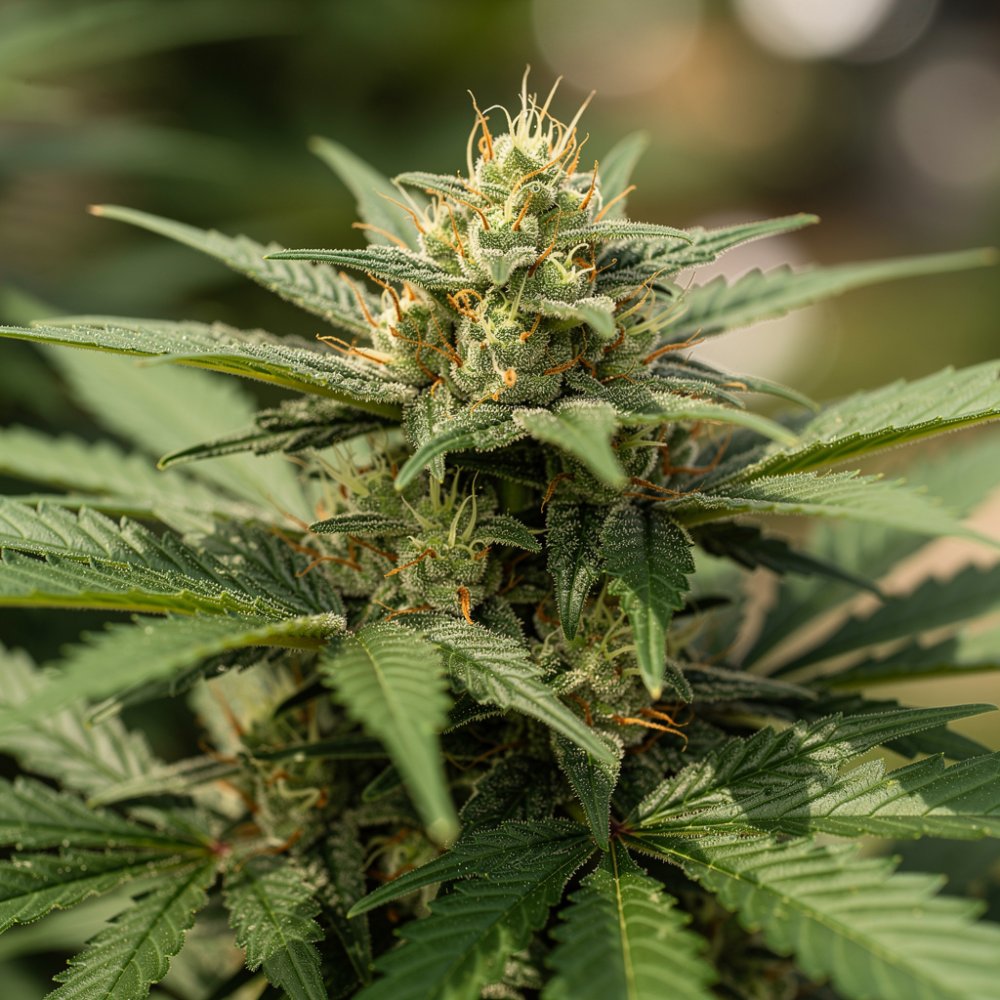
OG Kush – detailed profile
Genetics and history
OG Kush emerged in the early 1990s in California and quickly became one of the most influential strains in modern cannabis history. The precise origin remains a subject of expert debate, though the most widespread theory points to a cross of Chemdawg, Lemon Thai, and Hindu Kush. The abbreviation "OG" is most commonly interpreted as "Ocean Grown," referring to the Pacific coast where the strain gained legendary status.
OG Kush's influence on modern cannabis genetics is indisputable – it became the foundation for dozens of famous hybrids including Girl Scout Cookies, Headband, and SFV OG. It was this combination of potent effects, characteristic aroma, and balanced high that made it a genetic foundation breeders return to time and again.
Growing tips
OG Kush is not ideal for complete beginners. Plants are susceptible to powdery mildew and spider mites, making it crucial to maintain humidity below 50 % throughout the flowering phase. Indoor cultivation in a controlled environment unquestionably yields the best results. The SCROG (Screen of Green) technique effectively maximizes yield by ensuring even light distribution throughout the canopy, while LST (Low Stress Training) and topping promote branching and development of multiple main colas.
Feed moderately – OG Kush is sensitive to nutrient excess, particularly nitrogen during flowering. Ideal substrate pH ranges between 6.0 and 6.5. The dense, trichome-covered buds make it an excellent choice for hash, rosin, or other concentrate production.
Effect and medicinal use
The OG Kush effect sets in quickly and noticeably – cerebral euphoria soon blends with deep physical relaxation. Users typically describe elevated mood, increased creativity, and pleasant muscle relief. With THC content reaching up to 26 %, this is a strain intended for more experienced consumers.
From a medicinal perspective, OG Kush finds primary application in chronic pain, stress, anxiety, and insomnia. The synergy of myrcene, limonene, and caryophyllene terpenes contributes to anti-inflammatory and antidepressant effects – a classic example of the entourage effect, where the plant's complete profile works more complexly than THC alone.
Northern Lights – detailed profile
Genetics and history
Northern Lights is considered one of the purest indica strains ever bred. It emerged in the 1980s in Seattle and reached its perfect expression after refinement in the Netherlands by Sensi Seeds. The genetic foundation consists of Afghan and Thai landrace varieties, which gave it hardiness, rapid flowering, and soothing effects. Northern Lights #5 phenotype is still considered one of the most prestigious in history and won numerous Cannabis Cup awards.
From a breeding perspective, Northern Lights is equally influential as OG Kush – it became the parent strain of hybrids such as Shiva Skunk, Super Silver Haze, and Hash Plant. Its genetic stability and predictable characteristics made it a favorite base for new crosses.
Growing tips
Northern Lights is considered one of the best strains for beginning growers. Plants are compact, robust, and resistant to mold, pests, and temperature fluctuations – traits inherited directly from its Afghan landrace ancestors. The flowering phase lasts just 7–8 weeks, ranking it among the fastest photoperiodic strains on the market.
The strain works excellently with both SOG (Sea of Green) and SCROG methods. A significant advantage for indoor cultivation is minimal odor production during the vegetative phase, something you'll appreciate especially for discreet growing. Yields are above average with buds generously covered in resin – requiring minimal effort.
Effect and medicinal use
Northern Lights offers the archetype of indica effect in its purest form. Physical relaxation is deep and gradually transitions into drowsiness – an ideal evening strain for those seeking genuine relief and quality sleep. THC content ranges between 16 and 21 %, potency strong enough for experienced users while remaining accessible for those still getting accustomed to stronger strains.
Northern Lights excels medicinally especially for insomnia, chronic pain, muscle spasms, and appetite loss. The sedative character of the effect also makes it effective for anxiety and PTSD, where deep physical relaxation helps suppress lingering psychological tension.
Direct comparison – where strains truly differ
Potency (THC): OG Kush wins with average THC content of 20–26 % versus 16–21 % for Northern Lights. For consumers seeking a more intense psychoactive experience, the choice is clear, but higher potency increases the probability of side effects for sensitive individuals.
Growing ease: Northern Lights has no competition in this regard. It's one of the most hardy photoperiodic strains ever. OG Kush requires more experienced hands, more precise environmental control, and greater attention to mold prevention.
Yield: Northern Lights offers higher and, most importantly, more reliable yields in both environments, while achieving these numbers with significantly lower care requirements.
Flowering time: Northern Lights flowers a week faster (7–8 vs. 8–9 weeks), meaning one additional harvest per year with repeated indoor cultivation cycles.
Flavor profile: OG Kush delivers a complex earthy-citrus profile complemented by characteristic fuel notes – for many users an unmistakable strain signature. Northern Lights is more approachable flavor-wise, sweeter, with piney and subtly floral accents.
Effect: OG Kush offers a balanced combination of cerebral and physical components; Northern Lights is predominantly sedative and physical. OG Kush is better for creative or social activities, Northern Lights for deep rest and sleep.
Medicinal use: A tie with specific applications – OG Kush excels for stress, depression, and anxiety; Northern Lights dominates for pain, insomnia, and muscle issues.
Which strain is for you?
Choose OG Kush if you:
- Seek stronger psychoactive effects with pronounced cerebral components
- Want a combination of euphoria, creativity, and physical relaxation
- Have growing experience and are prepared to give plants increased attention
- Prefer earthy, citrus, and fuel aroma
- Plan to produce extracts or concentrates due to dense trichome coverage
Choose Northern Lights if you:
- Are starting to grow and want the most hardy strain possible
- Need discreet indoor cultivation with minimal odor
- Care about rapid flowering time and high, predictable yield
- Seek deep sedative effects for evening relaxation and quality sleep
- Use cannabis primarily for pain or insomnia
Both strains are legends for good reason, and the choice between them depends primarily on your specific priorities. If you're uncertain, explore our indica seed selection and find the right strain for your needs. For deeper insight into cannabis genetics, also read our guide on how to choose the right strain.
Frequently asked questions
Is OG Kush stronger than Northern Lights?
Yes, OG Kush has a higher average THC content (20–26 %) compared to Northern Lights (16–21 %). The result is a more intense psychoactive effect, but also a higher probability of side effects such as paranoia or increased heart rate, especially in sensitive users or at higher doses.
Which strain is better for beginner growers?
Northern Lights is significantly more suitable for beginners. Thanks to its Afghan genetics, it's extremely resistant to mold, pests, and care mistakes, flowers quickly, and produces above-average yields even without advanced growing techniques.
Can I grow OG Kush and Northern Lights side by side?
Technically yes – both strains have similar temperature and nutrient requirements. However, expect slightly different flowering times (roughly one week difference) and keep in mind OG Kush requires stricter humidity control. If you combine them in the same space, careful individual monitoring of conditions for each is recommended.
Which strain is better for insomnia?
Northern Lights is unquestionably the better choice for this purpose. Its strong sedative indica effect induces deep physical relaxation and drowsiness. While OG Kush also relaxes, its more pronounced cerebral component may actually stimulate the mind in some users and make falling asleep more difficult.
How do OG Kush and Northern Lights flavors differ?
OG Kush is characterized by a complex earthy, citrus aroma with pronounced fuel and spice notes – this characteristic smell is primarily responsible for the terpene profile with dominant myrcene and limonene. Northern Lights is more flavor-approachable: sweet, with piney and subtly floral undertones, qualities for which pinene content is responsible. Both strains offer rich terpene profiles but differ fundamentally in flavor.