


 English (English)
 Deutsch (German)
 Čeština (Czech)
 Italiano (Italian)
 Hrvatski (Croatian)
 Română (Romanian)
 български език (Bulgarian)
 Magyar (Hungarian)
 Español (Spanish)
 Français (French)
 Nederlands (Dutch)
 Polski (Polish)
 Slovenčina (Slovak)
In short: Jack Herer is a sativa-dominant hybrid (55/45) with 18–24% THC, yields 400–500 g/m² indoors and needs experience with phenotype selection. Durban Poison is a pure South African landrace at 15–21% THC, flowers in 8–9 weeks and suits outdoor growing in Central Europe.
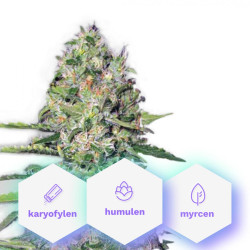


| Type | Jack Herer: sativa-dominant hybrid (55/45); Durban Poison: pure sativa landrace (100%) |
|---|---|
| THC | Jack Herer 18–24%; Durban Poison 15–21% |
| Flowering time | Jack Herer 8–10 weeks; Durban Poison 8–9 weeks |
| Indoor yield | Jack Herer 400–500 g/m²; Durban Poison 350–450 g/m² |
| Height | Jack Herer 150–200 cm; Durban Poison 120–180 cm |
| Grow difficulty | Jack Herer intermediate; Durban Poison beginner to intermediate |
Jack Herer vs Durban Poison – Detailed Variety Comparison
Jack Herer and Durban Poison represent two different approaches to sativa genetics. Jack Herer is a carefully bred hybrid named after a legendary cannabis activist, while Durban Poison is a pure African landrace that has retained its original genetic profile without hybridization. Both varieties offer an uplifting sativa effect, but their character, terpene profile, and cultivation requirements differ significantly. This comparison will help you choose the right one.
Comparison Table
| Parameter | Jack Herer | Durban Poison |
|---|---|---|
| Genetics | Haze x (Northern Lights #5 x Shiva Skunk) | South African sativa landrace |
| Type | Sativa-dominant hybrid (55/45) | Pure sativa (100%) |
| THC | 18–24% | 15–21% |
| CBD | < 0.2% | < 0.1% |
| Flowering Time | 8–10 weeks | 8–9 weeks |
| Indoor Yield | 400–500 g/m² | 350–450 g/m² |
| Outdoor Yield | 500–600 g/plant | 450–550 g/plant |
| Height | 150–200 cm | 120–180 cm |
| Difficulty | Intermediate | Beginner–Intermediate |
| Dominant Terpene | Terpinolene, pinene, myrcene | Terpinolene, myrcene, ocimene |
| Effect | Creative euphoria, mental clarity, motivation | Pure energy, focus, productivity |
| Taste/Aroma | Spicy, pine, earthy, citrus | Sweet, anise, earthy, spicy |
Jack Herer – Detailed Profile
Genetics and History
Jack Herer was created by Sensi Seeds in the Netherlands and named after the author of "The Emperor Wears No Clothes," one of the most influential texts in the cannabis activist movement. The genetics combine three legendary lines – the airy Haze, calming Northern Lights #5, and resinous Shiva Skunk – resulting in a hybrid that bridges sativa stimulation with indica stability and predictability.
The variety won numerous Cannabis Cup awards and is classified in the Netherlands as one of the few medicinal varieties available through pharmacies. Its consistent quality and balanced effect profile make it a reference point for the entire sativa-dominant hybrid category.
Growing Tips
Jack Herer requires some experience primarily due to phenotypic variability – seeds can produce plants with significantly different sativa to indica ratios. Some phenotypes will be taller and airier, while others will be more compact with denser flowers. Phenohunting, selecting the best individual for propagation, is an essential step when working with this variety.
Plants respond excellently to SCROG and topping techniques, which help control heights exceeding 200 cm without intervention. Feed nutrients at moderate levels – Jack Herer tolerates overfeeding worse than typical indica varieties, and excess nitrogen in late vegetation will result in delayed flowering. Trichome coverage is pronounced and concentrated, with the exact harvest time (8–10 weeks) depending on the dominant phenotype.
Effect and Medicinal Use
Jack Herer offers a balanced cerebral effect – creative euphoria, mental clarity, and natural motivation without overstimulation. The indica component (45%) adds subtle body relaxation that mitigates the risk of anxiety and scattered thinking, which can be a weakness of strong pure sativas. Users consistently describe the effect as "clean," "inspiring," and "functional."
In countries with medicinal programs, Jack Herer is among the most frequently prescribed varieties. Indications include depression, chronic fatigue, stress, ADHD symptoms, and lack of motivation. Due to its balanced profile, it is suitable for users sensitive to pure sativas.
Durban Poison – Detailed Profile
Genetics and History
Durban Poison is a pure sativa landrace from around the South African port city of Durban. It is one of the few genetically unmodified pure sativas available in commercial form. It was brought to the USA by breeder and publicist Ed Rosenthal in the 1970s and subsequently stabilized for regular commercial production without disturbing the original genetic base.
Durban Poison is exceptional not only for its own qualities but also for its parental contribution to the modern breeding scene. It is one of the direct parents of Girl Scout Cookies, Cherry Pie, and numerous other contemporary hits. Its pure sativa genetics brought energy and potency to dozens of hybrid lines.
Growing Tips
Durban Poison is surprisingly undemanding for a pure sativa. Landrace genetics ensure natural resistance to environmental fluctuations and good adaptability to different conditions. A characteristic feature is unusually large, round leaves – morphologically atypical for sativa – and strong, sturdy stems that don't require support sticks.
Outdoor growing is the ideal choice for this variety. Although it originates from a warm subtropical climate, it copes well with Central European conditions. A flowering time of 8–9 weeks is extraordinarily short for a pure sativa and enables October harvests before frost arrives. Densely resin-covered buds are ideal raw material for producing concentrates, hashish, or live resin.
Effect and Medicinal Use
Durban Poison provides pure sativa energy without any indica heaviness. The effect is focused, productive, and physically activating – users regularly rank it among the best morning varieties as a functional alternative to coffee. Thinking remains clear, physical energy naturally increases, and motivation for activity is pronounced.
Medicinally, it is used for depression, ADHD symptoms, chronic fatigue, and lack of mental energy. A specific bonus is the presence of THCV (tetrahydrocannabivar), a rare cannabinoid typical of African landrace varieties. THCV suppresses appetite and strengthens the energizing component of the effect, distinguishing Durban Poison from the vast majority of commercial varieties.
Direct Comparison – Who Wins?
Potency (THC): Jack Herer leads with 18–24% compared to Durban Poison's 15–21%. Durban Poison partially compensates for this difference with the presence of THCV, which adds a unique dimension to the effect unattainable by THC alone.
Ease of Cultivation: Durban Poison is more accessible due to stable landrace genetics, natural resistance, and shorter flowering time. Jack Herer requires experience with phenotype selection and a precise approach to feeding.
Yield: Jack Herer wins slightly, especially with indoor cultivation using advanced techniques like SCROG or LST.
Flowering Time: Durban Poison flowers faster (8–9 vs 8–10 weeks) and ranks among the fastest pure sativas on the market.
Outdoor Cultivation: Durban Poison wins unambiguously – shorter flowering time and high adaptability make it one of the few pure sativas manageable in Central Europe. Read more about outdoor cannabis growing.
Effect as a Daytime Variety: Durban Poison offers cleaner and more straightforward energetic onset. Jack Herer is more balanced and universal for different daytime situations.
Medicinal Range: Jack Herer covers a broader spectrum of indications due to its balanced sativa-indica profile. Durban Poison is a specialist – excels in energy, focus, and fatigue suppression.
Flavor Profile: Jack Herer is characterized by spicy and pine tones with citrus undertones. Durban Poison builds on sweet anise subtones with gentle earthiness. Both profiles are distinctive and flavorfully interesting.
Which Variety Is Right for You?
Choose Jack Herer if:
- You're looking for a balanced sativa-dominant hybrid with reliable effects
- You want creative and inspiring onset with body sensation as an anchor
- You need a variety with a broad spectrum of medicinal applications
- You prefer spicy, pine aroma with citrus accents
- You grow indoors and have experience with phenotype selection and management
- You need a variety recognized in medicinal programs
Choose Durban Poison if:
- You're looking for pure sativa energy without any indica heaviness
- You need maximum focus and productivity during physical or mental work
- You want a functional morning alternative to coffee
- You grow outdoors in Central Europe and need quick flowering
- You love sweet, anise aroma with a spicy base
- You're interested in THCV and its specific effects on energy and appetite
- You're looking for a variety with potential for quality concentrate production
For more inspiration among sativa varieties, check out our top 10 sativa varieties or comparison of Blue Dream vs Sour Diesel.
Frequently Asked Questions
What is THCV and why is Durban Poison exceptional?
THCV (tetrahydrocannabivar) is a minor cannabinoid found in higher concentrations primarily in African landrace varieties. Unlike THC, it suppresses appetite, shortens onset and effect duration, and strengthens the energy component. Durban Poison is one of the few commercially available varieties where THCV can be measured in relevant amounts by laboratory analysis.
Is Jack Herer named after a real person?
Yes, Jack Herer (1939–2010) was an American cannabis activist and author of "The Emperor Wears No Clothes," which systematically documented the history of cannabis, its industrial use, and prohibition. The book influenced generations of activists and breeders. Sensi Seeds named the variety in his honor as a lasting tribute to his contribution.
Which variety is better as a morning "wake and bake"?
Durban Poison is the more straightforward choice for morning use due to pure sativa energy, focus, and absence of relaxing effects. Jack Herer is also functional in the morning, but the indica genetics may add unwanted body relaxation for more sensitive users when they need to be active.
Can I grow Durban Poison outdoors in Central Europe?
Yes, Durban Poison is among the handful of pure sativa varieties suitable for outdoor growing in Central Europe. A flowering time of 8–9 weeks enables harvest in October, safely before the first frosts arrive. The key is ensuring maximum sun exposure and sufficiently well-draining substrate so roots don't suffer from waterlogging during rainy autumn.
How does Jack Herer differ from its autoflower version?
The autoflowering version of Jack Herer retains the characteristic flavor profile and basic effect character, but with a shorter overall cultivation time (10–12 weeks from seed to harvest). Yield is typically lower and THC content slightly weaker, but cultivation is significantly easier and suitable for beginners without experience with photoperiod varieties.