


 English (English)
 Deutsch (German)
 Čeština (Czech)
 Italiano (Italian)
 Hrvatski (Croatian)
 Română (Romanian)
 български език (Bulgarian)
 Magyar (Hungarian)
 Español (Spanish)
 Français (French)
 Nederlands (Dutch)
 Polski (Polish)
 Slovenčina (Slovak)
In short: Granddaddy Purple (Purple Urkle × Big Bud) is the stronger, higher-yielding option – up to 27% THC, 400–500 g/m² indoors, flowering 8–11 weeks. Purple Kush (100% indica) is easier and faster: 17–22% THC, 8–9 weeks, 60–100 cm tall. Pick GDP for potency and yield, Purple Kush for small spaces and beginners.
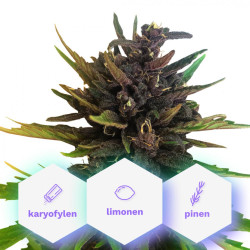

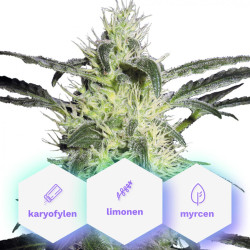
| THC content | Purple Kush 17–22 % / GDP 17–27 % |
|---|---|
| Flowering time | Purple Kush 8–9 weeks / GDP 8–11 weeks |
| Indoor yield | Purple Kush 350–450 g/m² / GDP 400–500 g/m² |
| Outdoor yield | Purple Kush 400–500 g/plant / GDP 500–700 g/plant |
| Plant height | Purple Kush 60–100 cm / GDP 100–150 cm |
| Purple coloration trigger | Night temperatures 15–18 °C in the last two weeks of flowering |
Purple Kush vs Granddaddy Purple – Comparison of Two Purple Legends
Violet cannabis varieties are among the most visually striking indica strains on the market. Purple Kush and Granddaddy Purple (GDP) are two iconic cultivars that have defined the entire "purple" genetics category. Both offer deep relaxation, striking coloration, and rich terpene profiles – yet they differ in genetic background, effect profile, and cultivation requirements. Below you'll find a detailed comparison to help you choose the right strain.
Comparison Table
| Parameter | Purple Kush | Granddaddy Purple |
|---|---|---|
| Genetics | Hindu Kush × Purple Afghani | Purple Urkle × Big Bud |
| Type | 100% Indica | 70% Indica / 30% Sativa |
| THC | 17–22 % | 17–27 % |
| CBD | < 0.5 % | < 0.1 % |
| Flowering Time | 8–9 weeks | 8–11 weeks |
| Indoor Yield | 350–450 g/m² | 400–500 g/m² |
| Outdoor Yield | 400–500 g/plant | 500–700 g/plant |
| Height | 60–100 cm | 100–150 cm |
| Growing Difficulty | Easy | Medium |
| Dominant Terpenes | Myrcene, caryophyllene | Myrcene, pinene |
| Effects | Body relaxation, sedation | Euphoria, relaxation, sleep |
| Taste | Grape, earthy, sweet | Berries, grape, sweet |
Purple Kush – Strain Profile
Genetics and History
Purple Kush originated in the Oakland area of California through crossing two purebred indica lines – Hindu Kush originating from the Hindu Kush mountain range on the Afghan-Pakistani border and Purple Afghani. Thanks to its purely indica genetics, the strain maintains a compact habit, robust resilience, and typical characteristics of mountain landraces that were refined over centuries in extreme conditions.
The strain gained fame at the turn of the millennium in California's growing scene and quickly achieved cult status – primarily due to its intense violet coloration, distinctive earthy aroma, and strong sedative effects.
Growing Tips
Purple Kush is suitable for both beginners and experienced growers. Its low height (60–100 cm) makes it ideal for indoor cannabis growing in tents, cabinets, or small rooms. It flowers in 8–9 weeks, and its Afghan genetics provide natural resistance to mold and temperature fluctuations.
For maximum purple coloration, lower nighttime temperatures to 15–18 °C during the final two weeks of flowering. This temperature stress activates anthocyanins – pigments responsible for purple and deep violet hues. The SOG (Sea of Green) technique works particularly well with this strain due to its uniform, compact growth.
Effects and Medicinal Use
Purple Kush delivers classic body-focused indica relaxation – effects begin in the extremities and gradually pervade the entire body. It's a typical "couch-lock" cultivar suitable exclusively for evening use. The terpene profile with dominant myrcene and caryophyllene further enhances the sedative component of the effects.
Medicinally, Purple Kush is used for:
- Chronic pain and muscle tension
- Insomnia and sleep disorders
- Stress and anxiety
- Loss of appetite
Granddaddy Purple – Strain Profile
Genetics and History
Granddaddy Purple, also referred to as GDP or Grand Daddy Purps, was created in 2003 by breeder Ken Estes in San Francisco. It was developed by crossing Purple Urkle – a strain prized for its deep purple coloration and sweet fruity profile – with Big Bud, which is renowned for exceptionally high yields. The result is a cultivar combining the aesthetics of purple genetics with commercially attractive production.
GDP quickly became one of the most popular indica strains in California and remains a benchmark for quality in the purple genetics category.
Growing Tips
GDP is moderately challenging to grow. Plants reach heights of 100–150 cm and form robust, dense buds with a prominent layer of trichomes. The density of buds is the greatest risk – without adequate air circulation and humidity control (ideally below 50% RH during flowering), there's a risk of botrytis. Regular defoliation and LST (Low Stress Training) are recommended for better airflow through the canopy.
The flowering period of 8–11 weeks is longer than Purple Kush, with full maturation typically bringing higher THC content and more intense purple coloration. Outdoor growing is feasible in warmer climates – harvest occurs in October.
Effects and Medicinal Use
GDP offers a two-stage effect progression: first comes a gentle cerebral euphoria and uplifted mood, which gradually transitions to deep physical relaxation. Unlike the purely sedative Purple Kush, GDP has a more pronounced psychoactive onset due to its sativa component (30%). The potentially high THC content (up to 27%) ranks it among the more potent cultivars – beginners are advised to dose cautiously.
Medicinally, GDP is used for:
- Insomnia – ranked among the most cited strains for sleep support
- Chronic pain and inflammatory conditions
- Muscle tension and cramps
- Stress, depression, and PTSD
- Loss of appetite (distinctly stimulates appetite)
Head-to-Head: Who Wins at What?
THC Content: Granddaddy Purple – the potential of up to 27% THC gives GDP a clear edge, though above-average Purple Kush phenotypes can come close.
Ease of Growing: Purple Kush – compact growth, shorter flowering time, and high resilience make it a reliable choice especially for less experienced growers.
Yields: Granddaddy Purple – Big Bud genetics ensure GDP significantly higher production, particularly with outdoor growing.
Taste and Aroma: Tie – both strains offer sweet, grape, and berry notes. GDP is terpenically more complex with pronounced pinene accents, while Purple Kush comes across earthier and heavier.
Medicinal Potential: Granddaddy Purple – broader spectrum of therapeutic applications thanks to the combination of euphoria, relaxation, and strong analgesia.
Visual Appeal: Tie – both strains rank among the most visually attractive cannabis cultivars with deep purple to burgundy calyx and leaf coloration.
Which One Is For You?
Choose Purple Kush if:
- You're a beginner grower looking for a resilient, low-maintenance strain
- You have limited indoor growing space
- You prefer pure indica relaxation without psychoactive onset
- You value shorter flowering time
Choose Granddaddy Purple if:
- You're aiming for maximum yields and don't mind longer vegetation
- You're looking for stronger effects with higher THC potential
- You appreciate two-stage effects – euphoria transitioning to relaxation
- You need a strain effective for insomnia or chronic pain
Frequently Asked Questions
Is Purple Kush stronger than Granddaddy Purple?
Generally not. Granddaddy Purple can reach up to 27% THC, while Purple Kush typically ranges from 17–22%. The resulting potency is, however, always dependent on the specific phenotype, quality of cultivation, and harvest ripeness – lab-verified values can differ across individual seeds.
Why are these strains purple?
Purple coloration is caused by anthocyanins – natural plant pigments from the flavonoid family that activate when temperatures drop. Both strains have genetically encoded predisposition to their production, but nighttime temperatures below 18 °C in the final flowering stage significantly enhance this effect. The purple coloration itself has no demonstrated effect on potency or terpene profile.
Can Purple Kush and GDP be grown outdoors in Czech climate?
Purple Kush is more suitable for Czech conditions – its compact growth and shorter flowering time make it feasible in warmer Czech regions, possibly when grown against a south-facing wall or under a plastic tent. GDP is riskier in this regard: dense buds are prone to mold in higher autumn humidity. For reliable results, we recommend a greenhouse or polycarbonate tunnel.
Which strain is better for insomnia?
Both strains are effective for sleep support, but Granddaddy Purple is generally considered one of the most effective cultivars for insomnia. The combination of high THC, dominant myrcene, and body-relaxing effects creates a synergy that shortens sleep onset time and extends deep sleep stages.
Can these strains be crossed?
Yes, and the resulting hybrids are usually interesting. Combining Purple Kush's compact growth and resilience with GDP's yields and potency creates a grower-friendly result. Some seed banks offer such crosses under names like "Purple Granddaddy" or "GDP Kush" – when selecting, focus on stabilized F2 generations or proven BX lines for consistent results.