


 English (English)
 Deutsch (German)
 Čeština (Czech)
 Italiano (Italian)
 Hrvatski (Croatian)
 Română (Romanian)
 български език (Bulgarian)
 Magyar (Hungarian)
 Español (Spanish)
 Français (French)
 Nederlands (Dutch)
 Polski (Polish)
 Slovenčina (Slovak)
Cannabinoid strains with high CBD content and minimal THC are experiencing a boom due to growing interest in medicinal cannabis use without psychoactive effects. CBD Therapy from CBD Crew and Charlotte's Angel from Dutch Passion are among the most recognized CBD strains on the market. Both offer an exceptional CBD:THC ratio, but differ in genetic background, effect profile, and cultivation requirements – and these differences determine which one will be the better choice for a specific user.


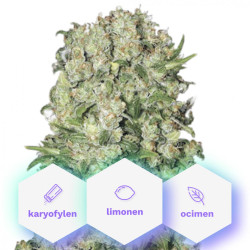
Comparison Table
| Parameter | CBD Therapy | Charlotte's Angel |
|---|---|---|
| Genetics | Special CBD selection | Dutch Charlotte × Red Angel |
| Type | Hybrid (50I/50S) | Sativa-dominant (80S/20I) |
| THC | < 1 % | < 1 % |
| CBD | 8–15 % | 10–16 % |
| CBD:THC Ratio | 20:1 to 30:1 | 15:1 to 25:1 |
| Flowering Time | 8–9 weeks | 9–11 weeks |
| Indoor Yield | 400–500 g/m² | 450–550 g/m² |
| Outdoor Yield | 500–600 g/plant | 500–700 g/plant |
| Height | 80–120 cm | 100–170 cm |
| Difficulty | Easy | Medium |
| Dominant Terpenes | Myrcene, bisabolol | Pinene, terpinolene |
| Effects | Calm, relaxation, clear mind | Brightness, focus, lightness |
| Taste | Sweet, citrus, herbal | Citrus, pine, cedar |
CBD Therapy – Strain Profile
Genetics and History
CBD Therapy was one of the first strains deliberately bred for maximum CBD content with minimal THC. It was developed by CBD Crew – a pioneering collaboration between Resin Seeds and Shantibaba from Mr. Nice Seeds. The strain underwent an extensive selection process involving several generations of backcrossing to stabilize a CBD:THC ratio of 20:1 and higher across phenotypes.
As one of the first commercially available high-CBD genetics, CBD Therapy opened the path to an entire category of medicinal strains. Today it serves as a reference point for breeding new CBD cultivars and remains one of the most popular choices for both therapeutic users and growers seeking reliable results.
Growing Tips
CBD Therapy is surprisingly undemanding – an ideal choice for beginners growing CBD strains. The plants have a balanced hybrid structure: compact but well-branched, with heights of 80–120 cm. The flowering time of 8–9 weeks is above average for a CBD strain, which will be appreciated especially by those growing in regions with shorter summers.
Practical harvest tip: for maximum CBD content, harvest 1–2 weeks earlier than is typical for THC strains. Trichomes should be predominantly milky white, not amber – in later ripening phases, enzymatic conversion of CBD to CBN occurs, which reduces the overall therapeutic potential. Regular magnification inspection using a loupe or digital microscope is key for CBD strains.
Effects and Medicinal Use
CBD Therapy delivers a gentle, calming effect without any psychoactivity. Users describe a feeling of deep calm, muscle tension relief, and a clear mind – no haziness or sedation. Due to the high CBD content and synergistic interaction with the endocannabinoid system, the strain offers a broad spectrum of medicinal applications.
Most common areas of use:
- Anxiety and panic attacks
- Chronic pain and inflammation
- Epilepsy and seizure disorders
- Arthritis and autoimmune conditions
- Daily support for overall balance and recovery
If you're taking medications, always consult the combination with CBD with your doctor – CBD interacts with cytochrome P450 and can affect the metabolism of many drugs. More information can be found in the article on CBD interactions with medications.
Charlotte's Angel – Strain Profile
Genetics and History
Charlotte's Angel from Dutch Passion bears its name as a tribute to Charlotte Figi – the girl whose story of managing severe epilepsy with high-CBD cannabis inspired a worldwide movement for access to medicinal cannabis. The strain was created by crossing Dutch Charlotte and Red Angel, with both parent lines carefully selected for maximum CBD accumulation in the flowers.
The sativa-dominant character of Charlotte's Angel is unusual among CBD strains – most high-CBD genetics are built on an indica or hybrid foundation that naturally tends toward sedative effects. Dutch Passion took the opposite path, and the result is a strain with an uplifting profile that opened CBD cannabis to an entirely new group of users.
Growing Tips
The sativa genetics manifest in plant structure: Charlotte's Angel reaches 100–170 cm, has slender stems with long internodes, and airy, lightly resinous colas. Due to its open structure, plants are naturally resistant to grey mold, which is an advantage especially when growing outdoors in climatically variable conditions.
The flowering time of 9–11 weeks is longer than CBD Therapy and requires patience. Outdoor cultivation is feasible in warmer regions with summers lasting into late October. For indoor growing, the ScrOG (Screen of Green) method is ideal – it allows control of plant height, even distribution of light, and significantly increases yield without increasing energy consumption.
Effects and Medicinal Use
Charlotte's Angel offers brightness, focus, and light energization – the exact opposite of the indica-leaning relaxation of CBD Therapy. Users describe it as the ideal "daytime CBD strain": it promotes productivity, creativity, and functional calm without a tendency toward sleepiness. Sativa terpenes pinene and terpinolene contribute to this profile in a measurable way – pinene demonstrably supports alertness and cognitive function.
Most common areas of use:
- ADHD and concentration difficulties
- Daytime anxiety management without sedation
- Migraines and tension headaches
- Inflammation and chronic pain while maintaining work capacity
- Mood disorders and mild depression
- Replacement for THC for users seeking therapeutic effect without psychoactivity
Head-to-Head: Who Wins at What?
CBD Content: Charlotte's Angel – with potential up to 16 % CBD, it has a slight edge, though both strains rank among the market's top performers.
THC Minimization: Draw – both strains reliably keep THC below 1 %, which is crucial for legal status in the Czech Republic and most European countries.
Ease of Growing: CBD Therapy – its more compact growth, shorter flowering time, and greater tolerance for grower errors make it suitable for beginners.
Yields: Charlotte's Angel – larger plants deliver 10–20 % higher yields, especially in outdoor cultivation.
Daytime Use: Charlotte's Angel – sativa effects are better suited for work, study, and an active day.
Evening Use: CBD Therapy – indica character better supports relaxation, muscle tension reduction, and sleep preparation.
CBD:THC Ratio Stability: CBD Therapy – due to a longer breeding history and repeated backcrossing, the ratio is more consistent across phenotypes and seed batches.
Which One Is for You?
Choose CBD Therapy if:
- You're looking for a CBD strain for evening relaxation, stress management, or sleep support
- You're growing in limited space and need compact plants
- You want the most stable and predictable CBD:THC ratio
- You're a beginning grower and appreciate a forgiving strain with a shorter flowering time
- You need a quick harvest – for example, when growing outdoors in cooler climates
Choose Charlotte's Angel if:
- You're looking for a CBD strain for daytime use – work, study, or creative activities
- You have adequate vertical space or are growing outdoors
- You want maximum CBD content and higher overall yield per plant
- You prefer energizing sativa effects over relaxing indica sedation
- You're willing to invest longer growing time in exchange for higher yields and a unique terpene profile
Frequently Asked Questions
Are CBD strains legal in the Czech Republic?
Cannabis with THC content below 1 % is legal in the Czech Republic for growing registered strains. CBD Therapy and Charlotte's Angel meet this limit, however specific legislative conditions – including rules for sale and processing – may change. Details can be found in the article on CBD oil comparison.
Can CBD strains cause a positive drug test?
Even with THC content below 1 %, there is a small but real risk of a positive test with intensive or long-term consumption, since standard drug tests detect THC metabolites regardless of their origin. To minimize this risk, choose a strain with the highest possible CBD:THC ratio – CBD Therapy with a ratio of 20–30:1 is a safer choice in this regard than Charlotte's Angel.
Which strain is better for making CBD oil?
Both strains are excellent for home extraction, but Charlotte's Angel offers the advantage of higher total CBD yield per plant – a combination of higher percentage CBD content and greater biomass places it slightly higher. For home extraction, the most accessible methods are alcohol tincture (ethanol) and infusion into olive or coconut oil.
Can these strains be crossed with THC strains?
Technically yes, but the result will be hybrids with highly variable CBD:THC ratios. High CBD content is governed mainly by alleles of the CBDA synthase gene – in the F1 generation of crosses with THC strains, the ratio will be approximately 1:1. To stabilize high CBD in a new line, careful phenotypic selection and backcrossing in F2 and F3 generations is necessary.
How can I tell if my CBD strain actually has low THC?
The only reliable way is laboratory analysis from an accredited laboratory. Home test kits are not sensitive or accurate enough to distinguish low THC concentrations. Reputable seed banks provide certificates of analysis (COA) with their CBD strains, which state specific values for the given cultivar – always request these documents before purchase or verify their availability on the breeder's website.