


 English (English)
 Deutsch (German)
 Čeština (Czech)
 Italiano (Italian)
 Hrvatski (Croatian)
 Română (Romanian)
 български език (Bulgarian)
 Magyar (Hungarian)
 Español (Spanish)
 Français (French)
 Nederlands (Dutch)
 Polski (Polish)
 Slovenčina (Slovak)
Why the Right Grow Tent is the Foundation of Successful Indoor Growing
A grow tent isn't just a cloth box where you put plants. It's a complete microclimate that you control – light, temperature, humidity, CO2, and sanitation. A properly chosen grow tent will save you dozens of hours troubleshooting problems, reduces the risk of pests and mold, and significantly affects your final harvest. Conversely, a cheap and poorly designed option will frustrate you from the first harvest.
In this guide, we'll look at everything you need to know before buying: how to choose the right size, what materials to look for, what to focus on in construction, and why the brand you select matters. Whether you're starting your first growing season or upgrading to a larger setup, this article will help you make an informed decision.
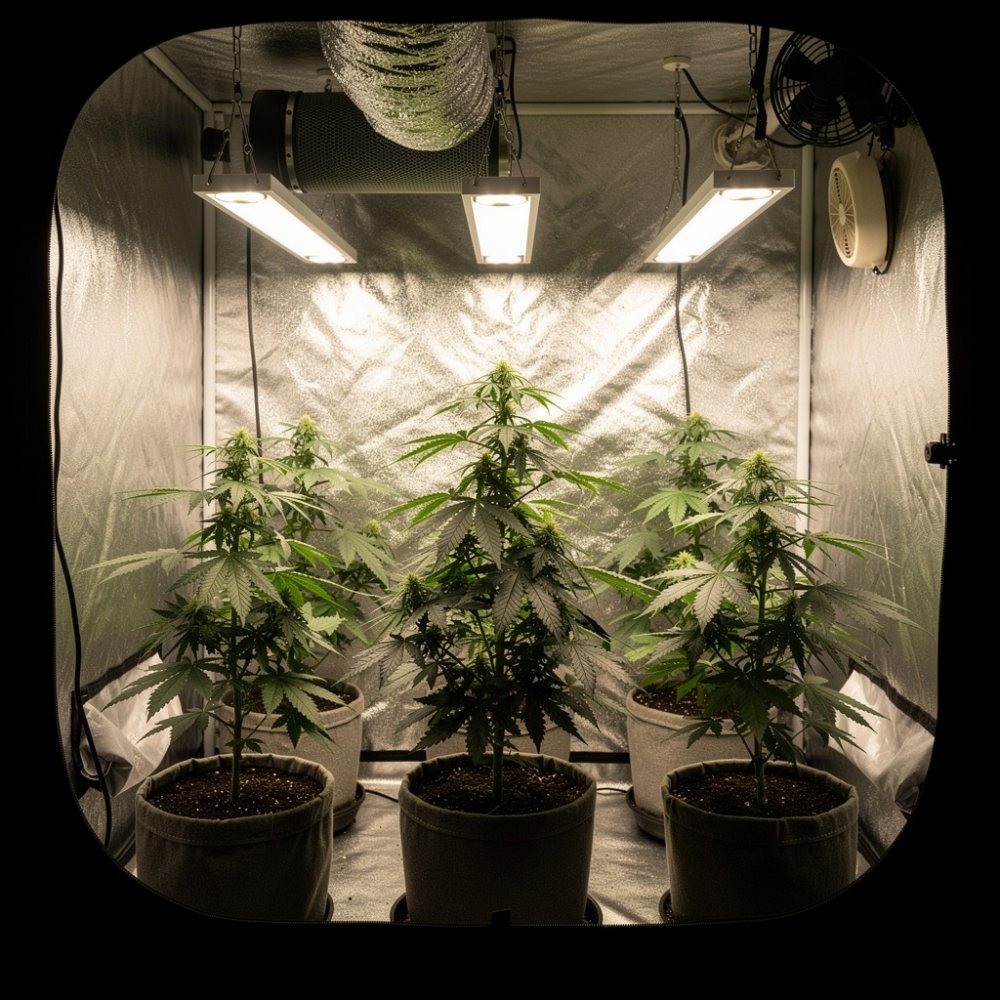
Grow Tent, Grow Box, or Grow Room – What's the Difference?
These terms are often used interchangeably in practice, but they have specific meanings.
- Grow tent – the most common term for a portable, textile or hybrid box with a metal frame. Available in many sizes, quick to assemble, and easily relocated.
- Grow box – in English, used similarly to grow tent, but sometimes refers more specifically to a compact, enclosed system with built-in lighting and ventilation designed for low-maintenance home growing.
- Indoor grow room – a whole room or part of a room set up for cultivation. A more demanding solution, but offers the greatest capacity and flexibility. We cover this topic in more detail in the article How to Set Up a Complete Indoor Grow Room.
For most home growers, a grow tent is the ideal choice – it's accessible, efficient, and requires no structural modifications.
Choosing the Right Grow Tent Size
Tent size is your first and most important decision. There's a simple rule: always buy a tent one size larger than you think you need. Plants grow faster than you expect, and cramped space is one of the most common beginner mistakes.
Standard Sizes and Their Uses
Grow tents are manufactured in a full range of sizes. Basic orientation is always width x depth x height in centimeters.
- 60 x 60 cm – the smallest practical option, suitable for 1–2 plants or for cloning and propagation. A small LED panel or compact HPS will suffice. Ideal for beginners with limited space.
- 80 x 80 cm – a favorite size for hobby growers. Accommodates 2–4 plants, a mid-range LED panel or 400W HPS lamp. Still easy to manage and competitively priced.
- 100 x 100 cm – the sweet spot for home growing. Fits 4–6 plants and is compatible with 400–600W HPS or more powerful LED systems. Sufficient space for SCROG or LST techniques.
- 120 x 120 cm – the transition to semi-professional setup. Higher yields, but higher demands on ventilation and dehumidification.
- 240 x 120 cm or larger – these sizes suit experienced growers or for separating vegetative and flowering zones. Can also be used for perpetual harvest systems.
Tent Height – Don't Overlook This
Height is the aspect beginners most often underestimate. Remember that tent height is not the height available for plants. From total height, subtract:
- height of the suspended fixture (20–40 cm or more for large reflectors),
- minimum safe distance between lamp and plant tops (15–40 cm depending on light type),
- height of the container and substrate (15–30 cm).
A tent with 200 cm height may only provide 120–150 cm of usable plant height. For autoflowering varieties, 150–160 cm height usually suffices; for photoperiodic sativas, even a 200 cm tent may be limiting.
Material and Construction: What Matters
Reflective Film and Mylar
The tent's interior lining is crucial for lighting efficiency. Any light that doesn't reflect back onto plants is wasted light – and therefore wasted energy and money.
The vast majority of quality tents use mylar reflective film as their interior lining – a silver metallized layer with high light reflectivity (typically 90–98%). Mylar reflects light diffusely, without hot spots that would result from mirror-like surfaces. The result is more even illumination across the entire canopy.
Cheap nameless tents often use low-quality white or silver PE film – with significantly worse reflectivity and shorter lifespan. You'll notice the difference in practice by the first harvest at the latest.
Exterior Material and Light-Tightness
The outer fabric must fulfill three functions: prevent light from escaping, prevent light from entering, and be durable enough to withstand repeated assembly. Quality tents use heavy-duty woven fabric (Oxford or similar) that prevents light penetration even at corners and seams.
Light-tightness is critical especially during the flowering phase, when any light leaks during the dark period can cause hermaphroditism or plant stress. Before purchasing, always check how zips, ports, and joints are sealed.
Metal Frame
The tent frame must support lighting, fans, filter, and possibly hanging bars. Cheap tents with thin 16 mm diameter tubes sag under load and oxidize over time. Quality tents use 19–22 mm diameter tubes or larger and have solid metal connectors instead of plastic ones.
Also check the maximum weight capacity stated by the manufacturer – this figure clearly indicates frame quality.
Overview of Key Brands: Homebox, Secret Jardin, and Others
Dozens of grow tent manufacturers exist on the market, but only a handful are truly proven. A detailed comparison can be found in the article Comparison of Grow Tent Brands: Homebox, Secret Jardin, Probox. Here's a brief overview.
Homebox
Homebox is a German brand with a long tradition in the European market. Tents are known for robust construction, quality mylar, and precise seam and zipper workmanship. The range covers small domestic models through professional series for demanding growers. Who is Homebox ideal for? Those who want to buy once and for all and don't want to deal with light-tightness or sagging frame issues.
Secret Jardin
Secret Jardin is a Belgian brand that has built a reputation for innovative design. Their tents are lighter than Homebox yet very sturdy, and excel with thoughtful details – such as a modular system that lets you connect tents or add side spaces for cloning. Secret Jardin is popular with advanced growers who want flexibility.
Probox and Other Brands
Probox offers reliable tents at a more favorable price – a good choice for beginners or those just testing indoor growing. You'll find other manufacturers on the market in various price ranges; when choosing an unfamiliar brand, always focus on frame thickness, reflective film type, and reviews from actual growers.
Ports, Ventilation, and Accessories
A tent alone isn't enough – it's just a shell for your growing system. Before you buy, plan how ventilation will be handled and what ports you'll need.
Number and Size of Ports
A quality tent has ports for:
- air intake and exhaust (typically 100–200 mm),
- lighting and power cables,
- irrigation hose or drain line,
- temperature and humidity sensors.
Ports should be light-tight even with a hose or cable inserted. Ports without a collar or with a simple zip without a light-tight seal are the weak point of cheap tents.
Interior Accessories
Good tents have internal hanging bars or rails for fastening lighting, filter, and fans. A floor tray catches any overflow during watering – in a decent tent it's sewn directly into the floor and made of waterproof material.
Practical Tips Before and After Purchase
Pre-Purchase Tips
- Measure your space. Do you know the dimensions of the room where the tent will stand? Don't forget space for opening the tent door and access for watering and inspection.
- Calculate your lighting power. Only then determine the minimum tent area – not the other way around. If you plan a 600W HPS or full-spectrum LED panel with 300–400W output, you need at least a 100 x 100 cm tent.
- Think about heat. A large tent in a small room with insufficient ventilation will overheat. Plan heat management before buying.
- Don't buy the cheapest option without reviews. The difference between a cheap and quality tent shows up by the first harvest – or sooner, when you discover the zips leak light.
Post-Assembly Tips
- Check light-tightness. Close the tent, turn off all room lights, and wait 5 minutes. Any light leaks must be fixed immediately – with tape, collars, or zip adjustments.
- Test frame strength. Hang the lighting and filter and check if the frame sags. If it does, add additional supports.
- Keep the tent clean. After each harvest, disinfect the tent – wipe mylar with a gentle solution, inspect the frame for rust, and repair damaged areas. A clean tent means fewer pest and mold problems.
- Log environmental parameters. From day one, record temperature, humidity, and pH. This data will help you identify problems in the future before they appear on plants.
Common Mistakes in Grow Tent Selection
Over the years, a few mistakes repeat again and again:
- Underestimating size. The most common mistake ever. A 60 x 60 cm tent for four autoflowering plants? The result is overgrown, overheated, and underlit growth.
- Ignoring height. Buying a tent based only on footprint dimensions and overlooking height is a classic mistake that catches everyone who grows sativas or high-stretch hybrids.
- Skimping on materials. A cheap tent with low-quality mylar and thin frame will cost you more – in energy, harvest, and frustration – than if you'd paid a third more upfront.
- Underestimating ventilation. A tent is an enclosed space. Without adequate airflow, you'll have temperature, humidity, and CO2 problems regardless of how expensive your lighting is.
- Forgotten disinfection. A used tent without disinfection is a reservoir of mold spores and pest eggs. Tent cleanliness is as important as tool cleanliness.
Summary: How to Choose a Grow Tent Step by Step
Selecting the right grow tent or grow box may not seem complicated, but every detail impacts your growing season results. Here's a quick checklist:
- Determine your available space and maximum tent dimensions.
- Choose your lighting and, based on its power and size, set the minimum tent area.
- Calculate the actual usable height after subtracting the fixture and containers.
- Check mylar quality, frame thickness, and zipper and port workmanship.
- Go with a proven brand – Homebox or Secret Jardin are reliable choices for those who won't compromise.
- After assembly, check light-tightness and weight capacity.
- Keep the tent clean and log climate parameters.
A good grow tent is an investment that pays for itself with every harvest. Spend as much attention on choosing it as you would on selecting lighting or substrate – and the results won't keep you waiting.