


 English (English)
 Deutsch (German)
 Čeština (Czech)
 Italiano (Italian)
 Hrvatski (Croatian)
 Română (Romanian)
 български език (Bulgarian)
 Magyar (Hungarian)
 Español (Spanish)
 Français (French)
 Nederlands (Dutch)
 Polski (Polish)
 Slovenčina (Slovak)
Why Trimming is So Important
Trimming is one of the most underestimated phases of the entire growing cycle. After harvest, when buds are full of trichomes, it matters how carefully you remove excess leaves. Properly trimmed buds look better, dry better, and maintain quality longer during storage. Conversely, poorly trimmed material can worsen the final taste, aroma, and overall impression of your harvest.


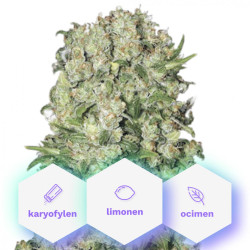
Sugar leaves do contain trichomes, but in significantly lower concentrations than the buds themselves. If you leave them on the buds, they add bitterness and impair burning. For extraction purposes, however, they're excellent–definitely don't throw them away.
When to Trim: Wet vs Dry Trimming
Before you start trimming, you need to decide whether you'll trim wet (right after harvest) or dry (after drying).
Wet Trimming
Wet trimming happens immediately after harvest, before drying. The advantage is that leaves are turgid and come off easily, and the scissors don't stick as much to the resin. The whole process is faster and more manageable. The downside is that buds dry quickly after trimming and may lose some aromatic terpenes if drying happens too fast.
Dry Trimming
Dry trimming occurs after drying, when leaves have shriveled and cling to the buds. The result is slower and more careful work, but buds retain trichomes and terpenes better because drying happens more naturally. Most experienced growers prefer this method if they have enough time and space to dry whole branches or plants.
Learn more about proper drying in the article How to Properly Harvest, Dry, and Store Your Harvest.
Hand Trimming: Tradition with Precision
Hand trimming is the method used by most home growers. You don't need expensive equipment–just good scissors, gloves, and patience.
What You'll Need
- Trimming scissors – sharp, ideally with spring action to reduce hand fatigue
- Nitrile gloves – protect your hands from resin while keeping trichomes clean
- Pad or tray – catches waste and fallen trichomes
- Isopropyl alcohol – for cleaning scissors, which clog quickly with resin
- Drying screen – for laying out trimmed buds
Hand Trimming Step by Step
- Set up a clean workspace with good ventilation but no drafts.
- Put on gloves and take your first branch or bud.
- First, remove large fan leaves without trichomes–these usually come off with a hand pull or single cut.
- Next, focus on sugar leaves sticking out from the buds. Cut as close to the leaf base as possible, but be careful not to damage the bud.
- Continuously clean your scissors with alcohol to keep the cut clean and precise.
- Place trimmed buds on a drying screen or in a bowl.
Hand trimming is slow–an experienced grower can trim about 50 to 100 grams per hour. On larger harvests, it can be physically demanding. The advantage, however, is absolute control over the result and minimal trichome loss.
Machine Trimming: Speed for Larger Volumes
If you're growing larger quantities, hand trimming can become a nightmare. Machine trimmers can process significantly more material in a fraction of the time.
How Machine Trimmers Work
Most machine trimmers operate on the principle of a rotating drum or screen that buds pass through, with rotating blades or screens cutting off the leaves. There are both electric and manual (hand-crank) models, with electric ones capable of processing kilograms of material per hour.
Advantages of Machine Trimming
- Significantly faster processing
- Less physically demanding
- Suitable for commercial or semi-commercial production
Disadvantages of Machine Trimming
- Greater trichome loss compared to hand trimming
- Less precise–buds may be over-trimmed or under-trimmed
- The machine needs regular cleaning or it clogs with resin
- Higher upfront costs
Tip: If you use a machine trimmer, it's recommended to chill or even freeze the material first. The cold makes trichomes firmer and less likely to break off during machine contact.
Hybrid Approach: The Best of Both Worlds
Experienced growers often combine both methods. They use a machine trimmer for rough trimming and removing large leaves, then hand-finish the buds to their final appearance. This way, you save time while achieving a quality result.
What to Do with Trimmings
Never throw away sugar leaves and fine trimmings rich in trichomes. They're ideal material for extraction–whether making hash, bubble hash, or other concentrates. The more trichomes the trimmings contain, the more valuable they are for further processing.
Store trimmings in a sealed container in the freezer if you're not processing them immediately. Freezing slows trichome degradation and preserves their quality for later extraction.
Drying After Trimming
After trimming comes drying. Spread trimmed buds on a drying screen in a single layer so they don't touch. Ideal drying conditions are 18–22 °C and 45–55% relative humidity. Drying should take 7 to 14 days depending on bud size and environmental conditions.
Proper humidity monitoring is absolutely crucial during drying. Learn more about this in the article Humidity Control During Drying and Storage.
Storing Trimmed Buds
Store properly dried buds in airtight glass jars or containers. The ideal relative humidity for storage is 58–62%, and Boveda humidity regulators exist for exactly this purpose. Boveda packs maintain stable humidity inside the container and prevent both over-drying and mold.
Keep containers in a dark, cool place, because light and heat are the biggest enemies of trichomes and terpenes. UV radiation breaks down cannabinoids and significantly reduces harvest quality over time.
Common Trimming Mistakes
- Over-trimming – removing too many sugar leaves that still contain trichomes
- Dull scissors – tear tissue instead of making clean cuts, damage trichomes, and slow work
- Working without gloves – resin contaminates buds and trichomes are lost on your hands
- Too warm environment – trichomes break off more easily in heat; work in a cooler room
- Rushing – especially with hand trimming, a slow and careful approach yields better results
Conclusion
Trimming is a skill that improves with every harvest. We recommend beginners start with hand trimming–you'll better understand bud structure and learn to recognize what to remove and what to keep. Advanced growers with larger productions will appreciate machine trimmers, ideally combined with hand finishing.
Whichever approach you choose, always maintain clean tools, proper environmental conditions, and careful drying and storage with Boveda humidity regulators. Harvest quality depends on the entire chain–from harvest through trimming to proper storage with humidity control. Every step counts.