


 English (English)
 Deutsch (German)
 Čeština (Czech)
 Italiano (Italian)
 Hrvatski (Croatian)
 Română (Romanian)
 български език (Bulgarian)
 Magyar (Hungarian)
 Español (Spanish)
 Français (French)
 Nederlands (Dutch)
 Polski (Polish)
 Slovenčina (Slovak)
In short: White Widow is a Dutch hybrid introduced around 1994, created by crossing a Brazilian sativa with a South Indian indica in a ratio of roughly 60 % indica to 40 % sativa. It typically contains 18–25 % THC and less than 1 % CBD. Indoors it flowers in 8–9 weeks, and thanks to its robustness even less experienced growers can handle it.

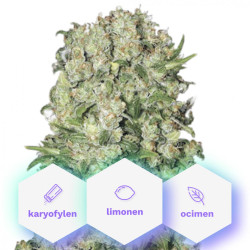
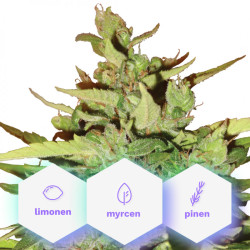
| THC | typically 18–25 % |
|---|---|
| CBD | below 1 % |
| Indica/sativa ratio | approximately 60/40 |
| Indoor flowering time | 8–9 weeks |
| Indoor yield | 400–550 g/m² |
| Indoor vegetative stage | 22–26 °C, humidity 50–60 % |
White Widow is one of the most famous cannabis strains of all time. Since the mid-1990s it has captivated growers and enthusiasts around the world with its distinctive look, potent resinous buds and balanced, energising effect. If you have ever wondered what makes this strain so exceptional, you are in the right place. In this article we take a detailed look at the history, genetics, characteristics and growing recommendations for White Widow.
The History of White Widow: Birth of a Legend
The story of White Widow begins in the Netherlands in the first half of the 1990s. It was created by the breeding team at Green House Seeds, specifically by a figure associated with the nickname “Shantibaba". The strain was first introduced to the public around 1994 and caused a stir almost immediately – it won the Best Product category at the prestigious High Times Cannabis Cup as early as 1995.
Amsterdam coffeeshops added it to their menus practically overnight, and White Widow became a byword for quality. Its reputation quickly spread beyond the Netherlands, and today the strain is available in the collections of seed banks all over the world. Few hybrid strains have stayed this popular for more than thirty years – which in itself speaks to how exceptional it is.
Genetics and Origin: Where Does the Power Come From?
White Widow is a first-generation (F1) hybrid created by crossing two geographically distinct parent lines:
- Brazilian sativa – a landrace strain from South America that brings pronounced sativa traits: mental clarity, creativity and uplifting energy.
- South Indian indica (Kerala/Tamil Nadu region) – a robust indica landrace renowned for extreme resin production and a deep, relaxing body effect.
The resulting ratio is approximately 60 % indica / 40 % sativa, although different sources and breeders quote slightly different figures. This balance is key – it ensures the strain is neither too “heavy" in the head nor too sleepy. Crossing two strong lines from different corners of the world gave rise to so-called hybrid vigour (heterosis) – increased vitality and resilience that you will not find in pure lines.
THC and CBD Content
White Widow typically falls within these ranges:
- THC: typically 18–25 % (premium selections may be even higher)
- CBD: below 1 %, so the strain is THC-dominant
- CBG and terpenes: an interesting terpene profile dominated by myrcene, limonene and beta-caryophyllene
If you are interested in how CBD and its interaction with the body's systems work independently of THC, we recommend reading our article How Does CBD Affect the Endocannabinoid System in the Body?
Appearance and Characteristic Features of the Plant
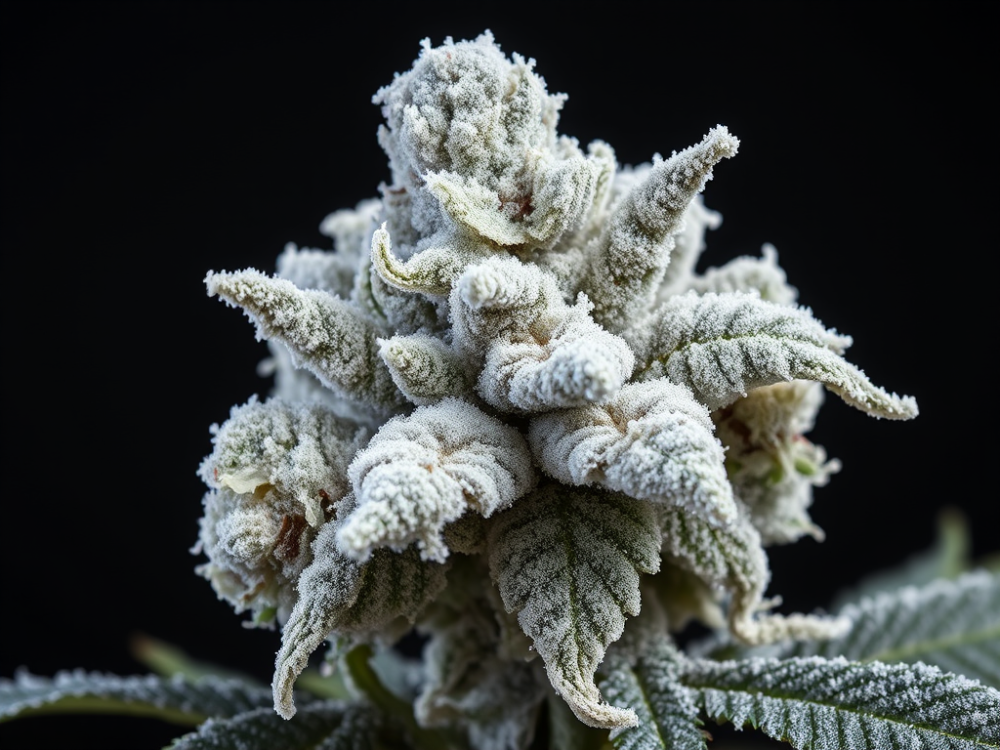
White Widow is unmistakable at first glance. The name “White Widow" is no coincidence – its dense resinous trichomes cover the entire surface of the buds to such an extent that they look as if coated with a layer of snow or frost. It is precisely this visual trait that sets it apart from many other strains.
Plant Morphology
- Height: medium, usually 60–100 cm when grown indoors; outdoors it can reach up to 150 cm
- Structure: compact, bushy habit typical of indica-dominant hybrids
- Leaves: dark green and broad – the classic indica shape
- Buds: dense, chunky, completely covered in crystal trichomes with orange to rusty pistils
- Aroma: earthy and woody, with hints of sweetness and a light chemical or hashy undertone
Terpene Profile and Aroma
The dominant terpenes in White Widow are:
- Myrcene – an earthy, musky scent that contributes to the relaxing effect
- Limonene – citrus notes, uplifting mood
- Beta-caryophyllene – a spicy, peppery note with anti-inflammatory potential
- Alpha-pinene – a fresh, pine-like undertone that supports mental clarity
Effects and User Experiences
White Widow is popular for its balanced yet intense effect. The onset tends to be relatively quick and pronounced – users describe a marked lift in mood and a surge of energy and creativity in the first phase. This sativa “rush" gradually gives way to pleasant physical relaxation.
Typical Effects
- Elevated mood and euphoria
- Increased creativity and associative thinking
- Energy and sociability – suitable for social situations
- Gradual physical relaxation without paralysing drowsiness
- Relief from restlessness and stress
What to Watch Out For
Due to its relatively high THC content, White Widow is better suited to more experienced users. Beginners should approach it with caution, as high doses can cause increased anxiety or an unpleasant feeling of overstimulation. If you are curious about how excessive THC consumption affects the body, read our article What Happens If You Overdose on 1000mg of THC? – useful reading for anyone who wants to consume responsibly.
Growing White Widow: Practical Recommendations
One of the reasons White Widow is so popular is its robustness and adaptability. Even less experienced growers can handle it, yet it pays to keep an eye on key parameters to achieve maximum yield and quality.
Indoor Growing
- Light: Powerful HPS lamps or LED panels are optimal. In the vegetative phase we recommend 18/6 (light/dark); for flowering, switch to 12/12.
- Temperature and humidity: During vegetative growth, keep the temperature at 22–26 °C and humidity at 50–60 %. During flowering, lower humidity to 40–50 % to protect against mould.
- Substrate: Classic well-draining soil or a hydroponic system – White Widow gets on well with both methods. Keep pH in the range of 6.0–7.0 (soil) or 5.5–6.5 (hydro).
- Feeding: Medium to higher nutrient requirements. During flowering, emphasise phosphorus and potassium for maximum resin production.
- Training: Thanks to its bushy habit, it responds very well to topping and LST (Low Stress Training), which increases the number of main colas and the overall yield.
You can read more about cannabis plant training techniques in the article Pruning Cannabis: The Difference Between Topping and Classic Pruning.
Outdoor Growing
- White Widow adapts well to outdoor conditions in the temperate zone
- Plant outdoors after the last frosts (in Central Europe usually after mid-May)
- The outdoor harvest falls roughly in October
- Mould resistance is above average, but in a rainy autumn preventive measures are worthwhile
- In direct sunlight it can grow to impressive dimensions, with yields of over 500 g per plant
Flowering Time and Yield
- Flowering time (indoor): 8–9 weeks
- Indoor yield: 400–550 g/m²
- Outdoor yield: 400–700 g per plant (depending on conditions)
For beginners just entering the world of home growing, we also recommend the complete guide 7 Simple Steps to Successfully Growing Cannabis, where you will find everything you need from A to Z.
White Widow and Its Place in the Cannabis World
Few strains have managed to stay at the top of popularity charts for three decades. White Widow has done it, and for good reason. It has become a reference point for an entire generation of breeders – many modern hybrids we know today (White Russian, White Rhino, Blue Widow and others) carry its genetics as their foundation.
Comparison with Related Strains
- White Rhino: a more indica-dominant variant, higher yield, stronger body effect
- White Russian: a White Widow × AK-47 cross, higher THC content, more pronounced cerebral effect
- Blue Widow: a cross with Blueberry that adds fruity notes and a softer effect
- Chronic: another classic hybrid strain of similar popularity – if you are interested in a comparison, read our detailed profile of the Chronic strain
Simply put, White Widow is a strain that should not be missing from any collection – whether as a reference point for comparison or as a reliable choice for growing.
Summary: Is White Widow the Right Choice for You?
The answer depends on what you expect from a strain. White Widow is an exceptionally versatile hybrid that can satisfy both experienced growers looking for proven genetics with high yields and enthusiasts who appreciate its balanced, complex profile. Its strengths are worth summarising:
- ✅ Proven genetics with more than 30 years of history
- ✅ Balanced indica/sativa effect with high THC content
- ✅ Robustness and relative ease of growing
- ✅ Excellent resin production – ideal for extractions
- ✅ Shorter flowering time (8–9 weeks indoors)
- ✅ Above-average resistance to mould and pests
If you are looking for White Widow seeds or other proven hybrid strains, browse the Cannapio.cz range – we offer carefully selected genetics from renowned seed banks so that your growing experience gets off to the best possible start.
Note: All information in this article is for educational purposes only. Growing cannabis is subject to legal regulation – always follow the applicable legislation of your country.