


 English (English)
 Deutsch (German)
 Čeština (Czech)
 Italiano (Italian)
 Hrvatski (Croatian)
 Română (Romanian)
 български език (Bulgarian)
 Magyar (Hungarian)
 Español (Spanish)
 Français (French)
 Nederlands (Dutch)
 Polski (Polish)
 Slovenčina (Slovak)
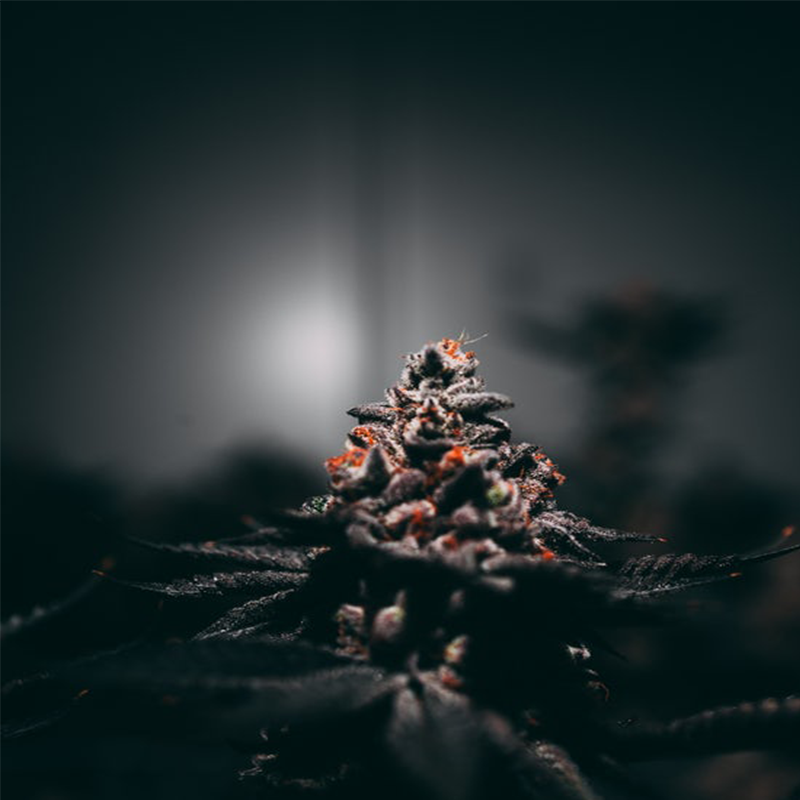
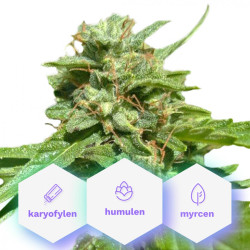
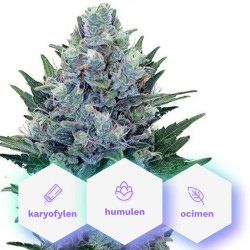
- DNA Genetics is a seed bank that is now famous literally all over the world, and rightly so
- In the cannabis industry, DNA Genetics is known both for the quality of the medical cannabis seeds it produces and for their uniqueness and originality
- The most famous creations of DNA Genetics include, for example, Holy Grail Kush, Chocolope and LA Confidental
The now legendary seed bank DNA Genetics was founded in Amsterdam in 2004. It was founded by two “cannabis masters”, Don and Aaron. Since then, DNA Genetics has turned into one of the leading players in the global cannabis industry. Throughout its existence, DNA Genetics has managed to create a whole range of first-class medical cannabis varieties, which have also won more than 180 different awards at prestigious events, competitions and exhibitions focusing on medical cannabis all over the world.
Quality, diversity and originality – this is how the main attributes of the DNA Genetics seed bank and its creations could be described. Its most famous “plant creations” include, among others:
“As DNA Genetics, we have tried from the very beginning to set and maintain the highest standard of quality in the entire cannabis industry. Our main mission is to devote all our energy to developing the very best, highest-quality, most unique and most therapeutic varieties, and to keep the whole medical cannabis market heading in the right direction overall, so that we maintain the quality of the products supplied to patients and also to recreational users.”

The LA Confidental cannabis variety for the treatment of autism
Even though medical cannabis is becoming ever more accessible and the legalisation of its medical or recreational use is present in more and more countries of today's world, information about its real medicinal effects is still limited and boycotted to a certain extent, whether by certain federal governments or by pharmaceutical corporations. Either way, medical cannabis has literally become a worldwide “folk medicine”, which increasingly makes the headlines of magazines and articles describing cases where marijuana has reversed seemingly incurable diseases.
“The best-known cases are hard-to-treat diseases occurring in children, such as epilepsy. The treatment of childhood epilepsy using CBD cannabis varieties and CBD oils became famous especially thanks to the case of a little girl, Charlotte, from Colorado, for whom all pharmaceutical medicines had failed. What finally helped was Charlotte's Web (a CBD variety of marijuana).“
However, times are moving on, and together with modern methods of breeding and growing ever better, higher-quality and overall more potent cannabis varieties, the methods of potential “cannabis therapy” are also developing. DNA Genetics, as a leading seed bank on today's market, works closely with research departments and scientific institutions under whose auspices today's research into the therapeutic effects of marijuana is taking place.
DNA Genetics have deservedly “grown” themselves a place in the hall of fame of world-famous seed banks. However, DNA Genetics took the whole project to a completely new level when, as an organisation, they joined forces with the highly respected doctor and scientist Kevin McKernan. Kevin is one of the participants in the majestic Human Genom Project. The Human Genom Project is a massive scientific effort to map the genetic code of all life on our planet.
Cannabis varieties from the DNA Genetics workshop are currently also used in extensive research in Israel, where there is a really great deal of interest in the therapeutic effects of marijuana. In their home state of California and in the USA, DNA Genetics varieties are not only literally flying off the counters of cannabis dispensaries, they are also a lifeline for people and patients such as Joey Perez, a child suffering from a severe form of autism, who had been given a maximum of 6 months to live by doctors.
Joey's mother, Meiko Hester Perez, found out on the internet that the LA Confidental variety from DNA Genetics may help against autism in certain cases. The result? Thanks to LA Confidental, Joey got rid of all ten pharmaceutical medicines he had previously been taking, is still alive today and is doing better and better. DNA Genetics continues to cooperate with an organisation for autism research and treatment (Unconventional Foundation for Autism) and strives to provide quality genetics for parents, patients and research institutions all over the world.
The LA Confidental variety has been laboratory tested and, under correctly maintained, stable growing conditions, reaches 13% THC and a very high content of the terpene humulene. In several studies, humulene has been shown to have anti-inflammatory and antibacterial effects and also to inhibit the growth of tumour tissue.
“DNA Genetics and its founders Don and Aaron are passionate cannabis enthusiasts, growers, breeders and, we can say, healers too. DNA Genetics keeps changing the whole cannabis scene and continues to raise the bar of quality higher and higher, one variety after another.“

DNA Genetics: Interview with founder Aaron
Medical cannabis seeds are a thoroughly historical topic. The first records of marijuana seeds come from ancient China, from around 6000 years BC, where the seeds were described as a rich source of protein and healthy fats. 3000 years later, we can already see descriptions of the cannabis herb as a medicine used against a whole range of diseases and illnesses. As soon as knowledge of the therapeutic and nutritional properties of this “super plant” spread further, marijuana seeds became a popular commodity among traders and travellers. Cannabis seeds thus spread further to India, Africa, Europe and eventually America.
Quality marijuana seeds are an absolutely essential component and tool for all gardeners and breeders whose aim is to develop ever new, better and higher-quality varieties and strains. Even the most elite varieties can be further improved in the skilful hands of breeders. That is also why we see varieties on the market with an ever higher content of the cannabinoids THC, CBD and others, as well as varieties with a very diverse spectrum of terpenes and aromas. However, we do not have to rely only on seed bank gardeners – anyone with the right knowledge can acquire seeds and start producing their own unique varieties.
Medical cannabis is newly legal in more and more regions and countries of today's world. Along with legalisation, the methods of growing and breeding are, of course, also becoming faster and more refined. At the top of this effort stands, among others, the DNA Genetics seed bank.
Now let us look at one of the interviews with founder Aaron, which will tell us a little more about the origins and the reasons for the success of this legendary seed bank.
So, first introduce yourself a little and tell us what your mission actually is.
My name is Aaron and I am one of the founders of DNA Genetics. As DNA Genetics, we are one of the leading players on the global cannabis scene, striving to develop the very best medical marijuana varieties. So far we have managed to develop several varieties that have taken first places at Cannabis Cups and Medicinal Cups, both in Amsterdam and in the rest of the world.
Where are you from?
I am originally from California.
When did you first start growing cannabis?
I think the very first time I started planting was when my friends and I were smoking quite poor-quality cannabis full of seeds, which we then threw straight out of the window. Then one day someone said to me, “hey, something's growing in front of your house.” That was my debut, and I can tell you that once you get into growing at such a young age, it never lets you go. It is simply in my blood. It became an integral part of my personality.
Do you remember your first intentional grow?
Shwag (laughs.). (the name shwag was used for weed of unknown origin, low quality and full of seeds). I grew shwag from anything I could get my hands on. When I started, the quality of cannabis was not even comparable to what is available today. Mostly I would go either to Pico, Fedora or Hoover and get a brick of some junk full of seeds. Before you could roll a joint, it took about 10 to 20 minutes, because you had to carefully separate the plant material from the seeds.
With that approach, before you know it, you have a load of plants planted. I think I was around 18 or 19 when I started my first grow in the garage. I have no idea what genetics they were.
So which was the first variety you grew where you knew what it was?
Hmmmm you know what, it is quite hard to remember the very first ones. What I do remember is that about the second or third variety we grew was a cross between Northern Lights and Skunk. We called it Cotton Candy. It was nothing special and above all not stable at all; at the end of the flowering phase male flowers always started to form and the whole thing went to seed. Then we moved on to classics such as Jack Herer and White Widow.
So how many years of growing experience did you have at the moment you started the DNA Genetics project?
Almost 20 years.
What year was it when you started?
2003-2004
When was the turning point for you, when you just knew you had to turn it all into a business?
You know what? We are simply some of those Californian people who were f*cking lucky. Overall, that enthusiasm for marijuana, the whole stoner community and scene – you will find that in only a few other places in the world. Together with my partner Don, we went on a trip to Amsterdam back then and were quite surprised at how little American cannabis genetics were represented there. They were totally missing what we had up our sleeve. At that time, the first cannabis dispensaries were just starting up in Los Angeles. At that moment we knew we had a choice – either open a dispensary, or move and take a chance that comes only once in a lifetime.
So we packed up, along with our Californian vibe, style and varieties, on a mission to show the world what we had in us and what cannabis specialities we could boast of.
When you came to Amsterdam, what was popular there at the time? Which varieties were grown the most?
Sage (a great variety, by the way), Power Plant, and above all various Haze varieties. Amsterdam was much more focused on Sativas back then. We in Cali were not really used to that.”
Could you tell us a little about what it is like to be a breeder?
Well, first of all – you start growing. First and foremost you have to be a grower. Once you are a grower, then you can also be a breeder. Above all you need to know how to look after a mother plant. You need to know how to take care of that beauty so that you can take clones regularly and the mother plant survives happily and stays healthy for years. Cloning is easy after that.

But what is the right breeding process? How do you know which parents are the right ones?
Breeding from seed is when we take two chosen, different varieties and try to make a new hybrid from them. We choose according to which aromas and flavours we want to combine and also according to the desired THC and CBD content. So we have male and female plants of each variety. Female plants are the ones where you see white hairs sticking out of the flowers. The ones where you see little balls dotted around all the tops – those are males. The males release pollen from the balls, which is then carried by the wind onto the females' hairs and fertilises them. That essentially completes the creation of a new hybrid. The process until a complete, fertile and healthy seed is formed takes about four weeks from fertilisation.
DNA Genetics also sells a lot of feminised seeds. Could you tell us something about these seeds?
Sure, roughly 90% of our whole business is feminised seeds. The beauty of feminised seeds is that you can be sure of getting a female plant and you do not have to worry about males and, above all, about ending up with just some Schwag instead of beautiful buds (laughs). When you grow from regular seeds and want to grow at least 50 females, you have to plant at least 100 plants. That gives you roughly a 50/50 chance, but of course it can also turn out that you end up with, for example, 75 males and only 25 females.
Using feminised seeds is therefore the obvious choice for most hobby growers who want to grow a little quality medicine for themselves or their loved ones. Some of today's “experienced” growers do not even really know what a male plant actually looks like.
Which variety was the very first to be created under DNA Genetics, and why?
I would consider the very first batch of genetics that got from us to the people to be a roughly one-kilo bag of seeds that we gave away for free to about 30,000 people. There were about 50,000 seeds in that bag and we called the variety “Who's your daddy?”. Just recently I got an email from someone and the guy was raving about how he still grows that variety today because it is just totally amazing.
“But then came the official DNA Genetics varieties. As our debut genetics, we released Chocolate Thai, Cantaloupe Haze and LA Confidental into the world.”
We officially opened the business in Amsterdam in 2004, and the very next year we won the Cannabis Cup with La Confidental. It was almost a bit of a joke between us and our colleagues in California. Back then we told them – hey, we are off to Amsterdam and we are going to make it big there, we will be winning competitions within a year. And sure enough, we started winning straight away. The irony is that we won our very first Cannabis Cup with a Sativa in the very place where Sativas were the dominant home-grown variety. Everyone expected that if we won anything, it would be with an Indica. The fact that we won with a Sativa against all the other Sativas gave us a much bigger boost.
Please tell us which varieties from your range are currently the most popular.
Chocolope, Holy Grail Kush, Kosher Kush, LA Confidential, Sleestack, Sour Diesel, OG 18. And also 24K Tangerine, whose release we are already really looking forward to.
When you are currently trying to develop a new variety for your range, what is the main aspect you look at?
I think that nowadays absolutely all varieties will get you high. Whether it is an Indica, a Sativa or a hybrid, everything today is really very potent. So the main aspects for us are the aroma – the terpene profile and the flavour of the variety. We are looking for a certain uniqueness, something that surprises. If you wanted to eat, you would not eat a steak that literally tastes like sh*t either. And if you want to treat yourself with cannabis, you probably do not want to smoke something that tastes like burnt rotten hay. So definitely the flavour and also the appearance of the plant. That is what we focus on.
Tell me something about your famous Tangerine. Where does this beauty come from and how was it created?
Tangerine, or “Tangie”, is a cross between Orange Cali and Skunk. It is a genetically dominant Sativa. Tangerine is characterised by an absolutely stunning lemony flavour and aroma. Tangerine's aroma is so enticing that even people who do not normally smoke marijuana often start trying it. The main breeder responsible for this gem is our good friend Crockett420. You can also find him under this nickname on Instagram.
We are currently working with him on several new varieties, so you have something to look forward to. Tangerine is quite an old variety; we were already smoking it back in LA, around 1995. Crockett did well to keep the mother plants healthy and alive until now. Crockett met me at one of the Cannabis Cups, I do not remember exactly which one. He came up to me and said, “hey, you have to see this.” When he handed me one of the buds and I took a sniff, I smiled straight away. I knew immediately what it was. I passed the bud to Sergio and he immediately threw his hands in the air and shouted “Tangie is back!”. And so our beloved Tangie came back to us, thanks to Crockett.
As DNA Genetics, you have travelled a good part of the world. How are Californian varieties perceived in the community, for example in Amsterdam?
I would say that people all over the world, Amsterdam included, really look up to Californian varieties. In our pursuit of the very best cannabis varieties we have travelled literally the whole world, and every time we come across something top-notch, it comes from one and the same place – the USA, California.
Sources: dnagenetics.com