


 English (English)
 Deutsch (German)
 Čeština (Czech)
 Italiano (Italian)
 Hrvatski (Croatian)
 Română (Romanian)
 български език (Bulgarian)
 Magyar (Hungarian)
 Español (Spanish)
 Français (French)
 Nederlands (Dutch)
 Polski (Polish)
 Slovenčina (Slovak)



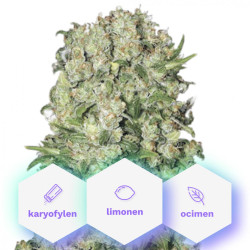
Cannabis is one of the most thoroughly researched plants from a pharmacological perspective, with over 100 identified cannabinoids that shape the chemical profile of various collectorgenetics. Scientific interest in these active compounds has led to the development of specific pharmaceuticals and a deeper understanding of the mechanisms of action at the molecular level.
The main cannabinoids and their properties
Δ9-Tetrahydrocannabinol (THC) is the most extensively studied cannabinoid due to its psychoactive properties. This compound interacts mainly with CB1 receptors in the central nervous system, thus determining the characteristic profile of genetics with high THC content. Collector strains with high concentrations of this cannabinoid are particularly valued by connoisseurs for the complexity of their genetic heritage.
Cannabidiol (CBD), on the other hand, has its own pharmacological profile, with an affinity for CB2 receptors, which are found primarily in the peripheral immune system. CBD-rich genetics have sparked the interest of collectors due to their unique properties and their therapeutic potential documented in the scientific literature.
Other minor cannabinoids such as CBG (cannabigerol), CBN (cannabinol) and CBC (cannabichromene) contribute to the so-called "entourage effect", in which the synergistic interaction of various compounds determines the specific properties of each genetic profile.
Documented pharmaceutical applications
Pharmacological research has led to the development of several cannabis-derived pharmaceuticals. In the USA and Canada, standardized preparations such as the following are available, among others:
- Dronabinol: a pharmaceutical based on synthetic THC, classified in Schedule III
- Nabilone: synthetic THC analogue (Schedule II)
- Nabiximols: standardized extract with THC and CBD in a 1:1 ratio
These pharmaceuticals were specifically developed to treat conditions such as nausea and vomiting associated with oncological chemotherapy, as well as to combat appetite loss accompanied by weight loss in patients with acquired immunodeficiency syndrome.
The antispasmodic properties documented in numerous clinical studies have shown that certain genetic profiles may be associated with significant improvements in the treatment of muscle pain and spasticity. These results have further increased interest in genetics with specific cannabinoid ratios.
Terpene and aroma profiles of the genetics
In addition to cannabinoids, collector genetics are also distinguished by their complex terpene profiles. Terpenes are volatile aromatic compounds that not only determine the characteristic olfactory traits of each strain, but can also modulate the effects of cannabinoids through molecular synergy mechanisms.
Myrcene, limonene, pinene and linalool are among the most common terpenes in cannabis genetics. Each terpene exhibits specific pharmacological properties documented in the literature: myrcene is associated with relaxing profiles, limonene with energizing properties, while linalool is known for its calming effects.
Endocannabinoid system and mechanisms of action
Understanding the endocannabinoid system has revolutionized cannabinoid research. This biological system, present in all mammals, consists of receptors (CB1 and CB2), endogenous ligands (anandamide and 2-AG) as well as degrading enzymes.
CB1 receptors are located mainly in the central nervous system and are responsible for the neurotropic effects characteristic of genetics with high THC content. CB2 receptors, on the other hand, are found predominantly in peripheral tissues and the immune system, mediating the anti-inflammatory properties attributed to many collector genetics.
Safety aspects and future research
Scientific research continues to thoroughly investigate the safety profile of cannabinoids. Clinical studies have identified some potential side effects, including dizziness (the most commonly reported side effect), temporary impairment of short-term memory, as well as possible interactions with other pharmaceuticals.
Pharmacognostic research is increasingly focusing on the identification of specific chemical markers to characterize the various genetics, enabling a more precise classification of collector strains based on their distinctive molecular profiles.
The advancement of analytical techniques such as high-performance liquid chromatography (HPLC) and mass spectrometry has made it possible to characterize the cannabinoid and terpene profiles of collector genetics with increasing precision, thereby opening new perspectives for future pharmacological research.