


 English (English)
 Deutsch (German)
 Čeština (Czech)
 Italiano (Italian)
 Hrvatski (Croatian)
 Română (Romanian)
 български език (Bulgarian)
 Magyar (Hungarian)
 Español (Spanish)
 Français (French)
 Nederlands (Dutch)
 Polski (Polish)
 Slovenčina (Slovak)
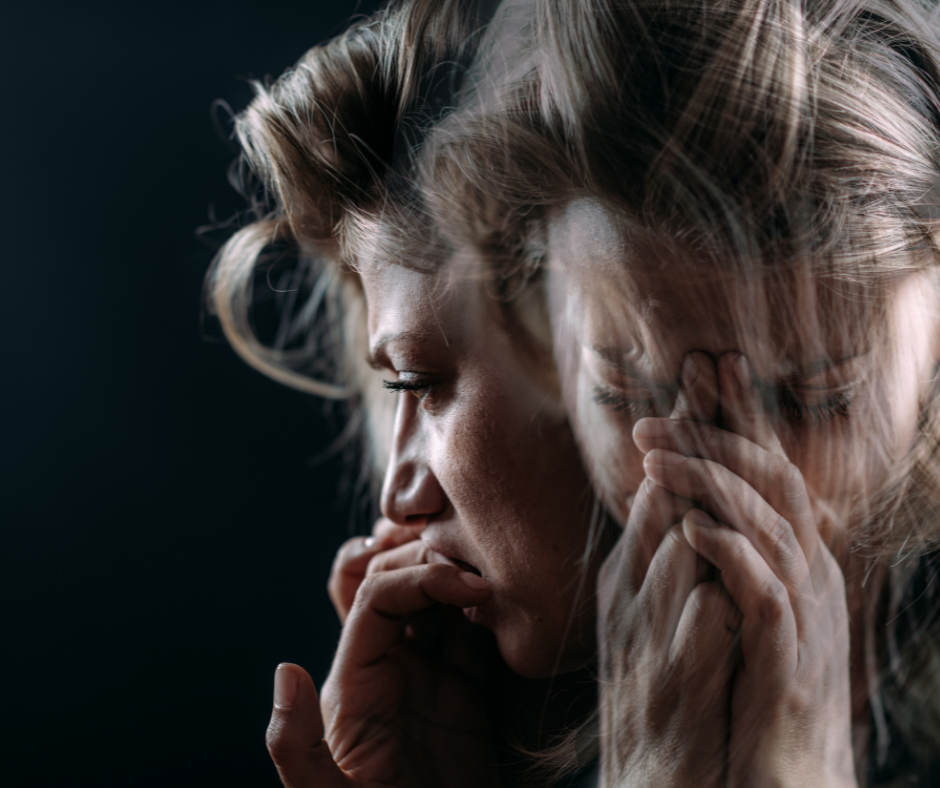

- The Multidisciplinary Association for Psychedelic Studies (MAPS) has launched new research into the treatment of PTSD with cannabis
- An interview with a patient treating her trauma with marijuana offers a closer look at this natural healing process
Even though a veritable mountain of data and statistics is available today on the therapeutic effectiveness of medical cannabis against stress, depression and, in particular, post-traumatic stress disorder, hard official data from clinical studies is still lacking. Fortunately, with the continuing recognition and demystification of cannabis, the whole matter is moving in the right direction, which now also applies to research into its connection with PTSD.
The well-known organisation Multidisciplinary Association for Psychedelic Studies (MAPS) recently received a grant of almost two and a half million from the US state of Colorado. The aim is to fund the world's first clinical research on patients suffering from PTSD - specifically war veterans, among whom this disorder occurs most frequently, second only to victims of sexual assault and abuse.
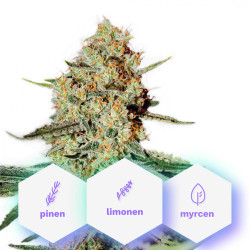
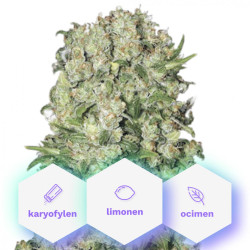
The study process will examine the varied effects of CBD and THC through the administration of cannabis preparations as well as smoking. In order to understand the function and effectiveness of different doses, the researchers will use cannabis models with different CBD:THC ratios.
“There are fundamental differences between the effects of cannabis models, which have to do both with the different CBD:THC ratios and with the aromatic substances they contain - terpenes.”

War and victims of PTSD
PTSD has been on the rise, especially since doctors have been able to diagnose it more accurately. This period coincides mainly with the beginning of the wars in Afghanistan and Iraq. Soldiers returning from these war zones are notoriously often victims of subsequent depression and PTSD, which is moreover often associated with a newly developed addiction to chemical drugs. Moreover, the drugs to which veterans are addicted do not necessarily come from the street - because of frequent war injuries and the chronic pain associated with them, soldiers often develop an addiction to opiates prescribed by a doctor.
“The rate of suicide among soldiers returning from Afghanistan and Iraq reaches absolutely shocking heights. In most cases, the suicides are linked precisely to PTSD.”
It is not only soldiers who suffer from PTSD
Post-traumatic stress disorder, however, does not affect only soldiers. Another, statistically perhaps even more frequent cause is sexual abuse. In this case, women are understandably at a considerably higher risk of PTSD than men.
“The stigma surrounding the consumption of cannabis, combined with the even worse stigma surrounding victims of sexual assault, can leave people in a confused state of mind full of feelings of isolation and of being on the margins of society,” says Melanie Nakashian, founder of “Survivors for Cannabis”, describing the situation. “Precisely because of the high number of victims and, consequently, of PTSD patients, the whole issue has been receiving an increasing amount of attention over roughly the last five years.”
It is for these very reasons that Nakashian decided to found the organisation “Survivors for Cannabis”, which any volunteer can join. In addition, a newly created Instagram page allows patients to actively share their stories, problems and possible solutions. Moreover, an environment where patients can share their problems with one another contributes to the psychological healing process.
“My friend and I bonded while smoking a blunt together,” recalls Amna Hussein in one of her Instagram stories. “Cannabis helps me open up and think about a problem from a different angle. And that feeling of sisterhood, emotional connection, love and empathy... it all contributes to healing. Simply put, cannabis has helped us.”
Hussein is another of the activists working in Washington, where she is trying to make medical cannabis accessible to the patients who need it. In one interview, Hussein describes how hard it can sometimes be for certain people to get into the cannabis-supporting community at all, and how intimidating the whole process is because of persisting stigmas. “Survivors for Cannabis allowed me to feel part of a community and not be stuck in a feeling of alienation all the time,” Hussein adds.
Cannabis and PTSD treatment first-hand
A closer look at what is happening around the medical use of marijuana for PTSD therapy is offered by an interview with the aforementioned Melanie Nakashian:
Did you only start using cannabis after you found out that it can help with trauma, or were you a user before?
Melanie: Cannabis has been part of my life for more than 10 years. However, only recently did I realise how deep my relationship with this plant actually is. I gradually came to understand that for most of that time I had unknowingly been using a natural remedy that helped relieve a whole range of psychological layers and post-traumatic symptoms that I had been holding inside me all along. Only after I started reading about all the possible symptoms of trauma, about medical cannabis and their relationship to each other, did I begin to realise what I was actually dealing with.
“The main realisation for me was that victims of sexual assault in particular are not aware of the therapeutic benefits of cannabis, simply because they pass them by and nobody has even mentioned them.”

What happened when you lost regular access to medical cannabis?
Melanie: I felt sort of ultra-tense. I was constantly on edge and kind of hyper-vigilant. When someone started picking on me, I did not hesitate and started yelling in their face, even on the street or in front of other friends. Some may think that is a sign of courage, but make no mistake, it is rather quite a dangerous approach to life. At first I started using alcohol to dampen my inner monologue and later just to be able to fall asleep at all.
In the meantime, of course, I received plenty of offers of treatment with pharmaceuticals, naturally straight from my doctors. Some people really do need pills, but in my case pharmaceuticals only prevented me from truly dealing with my problems.
While alcohol alienated me from myself and prevented me from empathising with my own soul and emotions, cannabis did the exact opposite. I began to feel like myself, truly in the moment, in the present. Cannabis is something like a daily appointment with a plant psychologist. This little plant can help with everyday symptoms such as constantly present stress and depression. But we also need to start talking about the deep spheres of our psyche, sexuality and other parts of the very core of our humanity. For me and for many other patients, cannabis is something that can positively influence even these deep processes.
Have you ever felt that cannabis affects you negatively or that treatment with this plant has any disadvantages?
Melanie: Many people who start using cannabis to treat PTSD may experience a sudden feeling of anxiety or paranoia after the first use – this needs to be anticipated and patients should be informed about it in advance. Under the influence of cannabis, many long-suppressed feelings begin to break through to the surface, which is certainly not an easy experience. However, we must realise that it is precisely this process that is the essential thing that makes cannabis such a useful therapeutic aid.
“Medical cannabis is not just about making a person feel good. The healing process is not always a nice or pleasant process. Cannabis helps a person get deeper into themselves and understand their own soul.”
Source: leafly.com maps.org