


 English (English)
 Deutsch (German)
 Čeština (Czech)
 Italiano (Italian)
 Hrvatski (Croatian)
 Română (Romanian)
 български език (Bulgarian)
 Magyar (Hungarian)
 Español (Spanish)
 Français (French)
 Nederlands (Dutch)
 Polski (Polish)
 Slovenčina (Slovak)
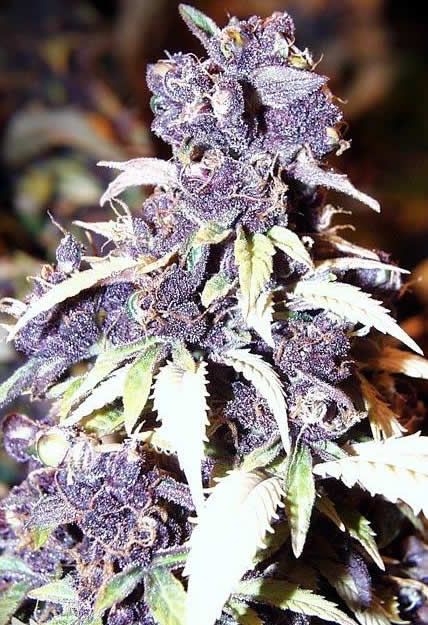

The Origins of a Cannabis Legend
The story of the Blueberry genetics begins in the 1970s on the West Coast of the USA, where a visionary breeder named DJ Short launched an ambitious hybridization project. His goal was to create something extraordinary by crossing exotic sativa strains from Colombia, Panama, Mexico, and Thailand.
This pioneer of cannabis genetics kept more than 100 different plants in his collection, both indoors and outdoors. His meticulous selection process was extremely strict: by his own account, only one plant in a hundred showed the desired traits worthy of being carried forward in the breeding program.
The complexity of the project lay in working with sativa genetics, which naturally show a higher tendency toward hermaphroditism. Nevertheless, DJ Short's persistence eventually paid off, producing some of the most recognized strains, most highly prized by collectors worldwide.
The First Masterpieces
DJ Short's first major successes were two exceptional genetics that would lay the foundation for his future work. The first was "Juicy Fruit Thai", a strain distinguished by its extremely sweet, tropical aroma profile as well as its intense and long-lasting effects.
The second success was "Purple Thai", the result of crossing the outstanding "Highland Oaxaca Gold" with the distinctive "Chocolate Thai". This genetic developed intense purple coloring at cool temperatures and showed deep purple tones during ripening. Its organoleptic profile was as juicy and fruity as its appearance promised, which made it DJ Short's own personal favorite.
These two "old school" genetics form the genetic foundation of all the master breeder's later creations. "Purple Thai" stood out for its more refined and balanced profile compared to the powerful, but sometimes overwhelming, "Juicy Fruit Thai".
The Indica Genetics Revolution
A turning point in DJ Short's work came with the introduction of indica genetics, particularly "Afghani Indica", which began circulating in California around 1979. Up to that point, sativa strains had completely dominated the global cannabis scene, but indicas represented a true revolution.
Indica genetics offered clear practical advantages: more uniform, compact, and symmetrical plants with sturdy stems and broad leaves. Their foliage showed darker green tones and formed extremely dense flower clusters. Their significantly shorter flowering cycle also allowed for greater cultivation efficiency.
This innovation marked the decline of sativa dominance of that era. Yet although indicas brought strength and practicality, they lacked the aromatic complexity and refinement of sativas. This realization gradually led to a focus on hybridizations that combined the best of both genetic types.
The Creation of Blueberry and Flo
With these new genetic tools in his arsenal, DJ Short continued perfecting his craft, creating lines that quickly gained international recognition. His two most celebrated creations of this period were "Blueberry" and "Flo".
"Flo" emerged first from these experiments, with "Oregon Purple Thai" used as the male plant crossed with indica genetics. At the same time, he developed "Blueberry" by combining his earlier strains with hybrids of Afghan origin. It's worth noting that "Original Blueberry" was designed as a sativa-dominant hybrid, even though indica genetics are present in its lineage.
European Expansion and Strategic Partnerships
Throughout the 1980s and 1990s, DJ Short continued refining his already exceptional creations. In 1993, his work crossed the Atlantic when he began collaborating with Seed Sagarmatha in Europe. Until 1995, he supplied seeds from California and actively took part in the selection processes, focusing mainly on "Blueberry", "Flo", and "Blue Velvet".
Although "Blue Velvet" is no longer commercially available, Sagarmatha continued to offer DJ Short's creations under names such as "Blueberry Bud" and "Flow". He later formed a more lasting partnership with Dutch Passion and developed new lines such as "Blue Sky", "Moonshine", and "Purple Passion".
"Blue Heaven" stood out as a consistently purple strain with sativa dominance and notable therapeutic properties. "Purple Passion", in turn, was a balanced hybrid that displayed beautiful blue and purple coloring - a trait that became the hallmark of all of DJ Short's genetics.
The Swiss Collaboration and New Horizons
Alongside his work with Dutch Passion, DJ Short formed a fruitful collaboration with a Swiss breeder named Steve, the owner of several Swiss seed companies. This partnership produced innovative genetics such as "Moonshine Rocket Fuel", "Rosebud", and the outstanding "Blue Satellite".
"Moonshine Rocket Fuel" combined the best of "Blue Moonshine" and "Blue Velvet", resulting in a hybrid of exceptional potency. "Rosebud" delighted collectors with its extraordinary aesthetic value and exquisite aroma profile. "Blue Satellite", however, established itself as the most acclaimed creation of this international collaboration.
The Final Legacy: The Perfection of Blueberry
The high point of DJ Short's work came in the early 1980s with the perfection of "Blueberry", developed in collaboration with the Swiss breeder Steve. After evaluating numerous male and female specimens, the final choice fell on "Blue Satellite" combined with the male Swiss genetic "Shishkeberry".
Steve continued working with various phenotypes of "Blueberry", creating original variants such as "Sweet Pink Grapefruit" and "Sweet Skunk". All these joint projects produced plants of exceptional beauty - a testament to the mastery of both breeders.
DJ Short's influence also extends to collaborations with other renowned breeders such as Red Legend and Chimera, who have continued developing new lines based on "Blueberry" genetics. Many of these new creations share the same paternal lineage, ensuring the continuity of the characteristic traits that have made Blueberry one of the most revered genetics in the history of collectible cannabis.
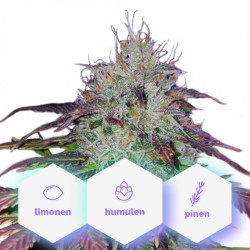
Even today, these genetics are highly prized by collectors - for their unique aroma profile reminiscent of forest berries, their characteristic purple and bluish coloring, and their complex terpene profile, which make them true masterpieces of modern cannabis genetics.