


 English (English)
 Deutsch (German)
 Čeština (Czech)
 Italiano (Italian)
 Hrvatski (Croatian)
 Română (Romanian)
 български език (Bulgarian)
 Magyar (Hungarian)
 Español (Spanish)
 Français (French)
 Nederlands (Dutch)
 Polski (Polish)
 Slovenčina (Slovak)



Cannabinoids and Parkinson's Disease: State of Scientific Research
Parkinson's disease affects millions of people worldwide, causing uncontrollable tremors, muscle stiffness, and coordination difficulties. In the face of this complex neurodegenerative condition, the scientific community has been exploring for several decades the therapeutic potential of compounds found in cannabis. This research is particularly interested in collectible seeds and their genetic heritage rich in cannabinoids.
Collectible cannabis seeds contain fascinating genetic material that naturally produces dozens of different cannabinoids. Among them, cannabidiol (CBD) and tetrahydrocannabinol (THC) are the subject of in-depth studies to understand their molecular properties and their interaction with the central nervous system.
Main Scientific Studies on Cannabinoids and Parkinson's
Research conducted by Dr. Benzi M. Kluger, professor of neurology and psychiatry at the University of Colorado, as well as other international experts, has made it possible to identify several potential mechanisms of action of the cannabinoids contained in collectible seeds.
Randomized Controlled Clinical Trials
A placebo-controlled randomized study analyzed the effects of two different CBD dosages in capsules on 21 patients with Parkinson's disease. This research documented a notable improvement in quality of life and a reduction in tremors among participants. This study is particularly significant because it uses a rigorous methodology with a control group.
The results suggest that the neuroprotective properties of CBD, naturally present in certain collectible genetics, could positively influence the motor symptoms characteristic of this condition.
Observational Research from 2014
A 2014 observational study followed 22 Parkinson's patients and documented improvements in tremors with cannabis use. This research made it possible to identify the terpene and cannabinoid profiles most interesting from a therapeutic standpoint.
The collectible seeds analyzed in this study presented specific ratios between CBD and THC, suggesting the importance of the complete genetic composition rather than isolated compounds.
Studies on Psychotic Symptoms
Research from 2009 explored the impact of CBD on psychotic symptoms associated with Parkinson's disease, including hallucinations and paranoia. Six patients showed significant improvements when administered CBD capsules.
These results highlight the complexity of the phytochemical profile of collectible cannabis seeds and the importance of interactions between different cannabinoids and terpenes.
Mechanisms of Action of Cannabinoids at the Neurological Level
Collectible seeds contain genetics capable of producing more than 100 different cannabinoids, each presenting unique molecular properties. The human endocannabinoid system, composed of CB1 and CB2 receptors, constitutes the main target of these natural compounds.
Interaction with the Dopaminergic System
Parkinson's disease is characterized by degeneration of dopaminergic neurons in the substantia nigra of the brain. Research indicates that certain cannabinoids present in collectible genetics could indirectly modulate dopaminergic transmission.
CBD, in particular, presents documented neuroprotective properties that could slow the progression of neurodegeneration. These properties are genetically encoded in collectible seeds and vary according to lineage.
Terpene Profiles and Entourage Effect
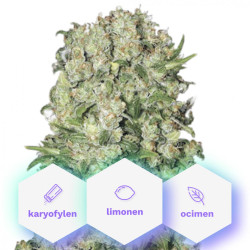
Collectible cannabis seeds also produce aromatic terpenes that contribute to the entourage effect. These volatile compounds, such as myrcene, limonene, or pinene, can potentiate the action of cannabinoids.
This molecular synergy explains why full-spectrum extracts derived from collectible seeds often show greater efficacy than isolated cannabinoids in preclinical studies.
Research Perspectives and Genetic Considerations
The future of research on cannabinoids and Parkinson's disease relies largely on in-depth analysis of the genetic material contained in collectible seeds. Each variety presents a unique cannabinoid and terpene profile, encoded in its DNA.
Genetic Selection and Profile Optimization
Collectors and researchers are particularly interested in collectible seeds presenting high CBD:THC ratios, as well as those rich in minor cannabinoids such as CBG or CBC. These compounds show promising neuroprotective properties in in vitro studies.
Preserving this genetic diversity through collectible seeds is essential to maintain a reservoir of phytochemical variability exploitable by future research.
Standardization and Reproducibility
A major challenge consists of standardizing the extracts used in clinical studies. Collectible seeds make it possible to preserve stable genetic lineages, guaranteeing the reproducibility of cannabinoid profiles from one generation to the next.
This genetic stability is crucial for the future development of standardized therapies based on natural cannabinoids. CBD-rich collectible seeds represent a precious genetic heritage for this research.
In conclusion, current scientific studies suggest significant therapeutic potential of the cannabinoids contained in collectible cannabis seeds for the management of Parkinsonian symptoms. Nevertheless, additional research remains necessary to better understand the precise mechanisms of action and optimize the phytochemical profiles of the different available genetics.