


 English (English)
 Deutsch (German)
 Čeština (Czech)
 Italiano (Italian)
 Hrvatski (Croatian)
 Română (Romanian)
 български език (Bulgarian)
 Magyar (Hungarian)
 Español (Spanish)
 Français (French)
 Nederlands (Dutch)
 Polski (Polish)
 Slovenčina (Slovak)


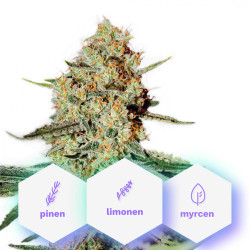
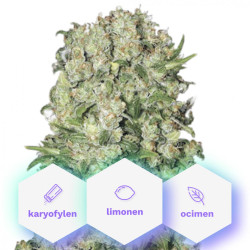
The universe of nano CBD represents a fascinating convergence between cutting-edge science and natural cannabis compounds. This innovative discipline combines the unique properties of cannabinoids with molecular technologies of nanometric precision, opening new perspectives for the development of collector's seed products and the study of exceptional genetic profiles.
Nanomedicine applied to cannabis involves manipulating genetic material and compounds at an atomic scale, working with dimensions ranging between 1 and 100 nanometers. To put this microscopic scale into context, imagine that a nanometer is roughly a thousand times thinner than a sheet of ordinary paper. This extreme precision makes it possible to develop aromatic and terpene materials with entirely new characteristics.
FUNDAMENTALS OF NANOTECHNOLOGY IN CANNABIS GENETICS
The application of nanotechnologies in the field of collectible cannabis is based on three fundamental pillars that are revolutionizing our understanding of genetic profiles:
- Nanostructured materials: These microscopic components significantly improve the diagnostic and analytical properties of cannabinoid and terpene compounds present in different collectible genetics.
- Molecular medicine: Includes disciplines such as genomics and proteomics, fundamental for understanding the unique genetic profiles of each cannabis variety.
- Automated molecular systems: Nanoscopic devices specialized in identifying and analyzing specific pathogens, as well as in the detailed study of plant chromosomal structures.
The main goal in developing these specialized molecular systems is to continuously improve our ability to analyze the physiological and genetic functions of different cannabis varieties. In simplified terms, we can define cannabis nanomedicine as a sophisticated system for controlling and monitoring biological profiles in plants, using nanometer-sized devices and structures.
The practical applications of this technology in the world of collectible cannabis include multiple specialized areas:
- Advanced genetic analysis: Precise determination of cannabinoid and terpene profiles
- Molecular imaging techniques: Advanced methods for obtaining detailed information about the morphology and function of plant tissues
- Plant tissue engineering: A discipline that combines cellular analysis with advanced materials methodologies
- Phytosanitary diagnostics: Early identification of pathological conditions in plants
NANOMETRIC TECHNOLOGIES IN DERIVED PRODUCTS
The nanotechnological techniques used in the development of cannabis-derived products include highly specialized methodologies that completely transform the properties of natural compounds:
Nanoemulsion: This revolutionary technique allows microscopic particles to enable the use of minimal amounts of natural substances, eliminating the need for large volumes of additional additives. The result is products with purer, more concentrated aromatic profiles.
Liposomal systems: Specialized structures measuring between 50 and 5000 nanometers, made from impermeable bilayers that preserve the integrity of cannabinoid and terpene compounds over extended periods.
Controlled microemulsion: Characterized by the formation of microdroplets of 100 to 5000 nanometers, representing a perfectly balanced combination of water-soluble and oil-based components, maintaining the stability of complex aromatic profiles.
ADVANTAGES AND CONSIDERATIONS OF CANNABIS NANOTECHNOLOGY
The implementation of nanotechnologies in the development of cannabis-derived products offers multiple advantages that are transforming the collectible genetics industry:
The main advantage lies in the versatility of application provided by nanotechnologies, allowing cannabis compounds to be incorporated into a wide variety of products, from specialized oils to advanced cosmetic products. This flexibility allows manufacturers and collectors to significantly expand their range of products derived from specialized CBD oils and innovative cannabis cosmetics.
A second fundamental advantage is the optimized nanoemulsion of cannabis compounds. This process works by initially incorporating large amounts of oily microdroplets, which subsequently break down into microscopic particles. These nanometric particles can integrate easily into aqueous media, which significantly enhances the efficacy of cannabinoids and terpenes.
The third advantage manifests itself in the unique properties of nanoparticles. Microscopic components exhibit superior characteristics compared to conventional materials, including better electrical conductivity, increased resistance, and specific magnetic properties. Research shows that cannabis-containing nanoparticles can generate heat more efficiently and facilitate specialized cellular processes.
A fourth revolutionary advantage allows scientists to develop nanoparticles specifically designed to selectively target specific cells, while simultaneously avoiding any damage to healthy cells. Products developed with nanotechnology can identify alterations at very early stages, delivering specific cannabinoids for cellular repair processes.
However, like any advanced technology, cannabis nanomedicine presents certain considerations. Chemical manufacturing processes require significant amounts of surfactant substances, which could cause minor side effects. Nevertheless, these drawbacks are minimal and do not represent significant concerns for users of collectible products.
The future of cannabis nanomedicine promises extraordinary developments, especially in the analysis of unique genetic profiles and in the creation of increasingly sophisticated and specialized derived products for cannabis collectors and enthusiasts.