


 English (English)
 Deutsch (German)
 Čeština (Czech)
 Italiano (Italian)
 Hrvatski (Croatian)
 Română (Romanian)
 български език (Bulgarian)
 Magyar (Hungarian)
 Español (Spanish)
 Français (French)
 Nederlands (Dutch)
 Polski (Polish)
 Slovenčina (Slovak)
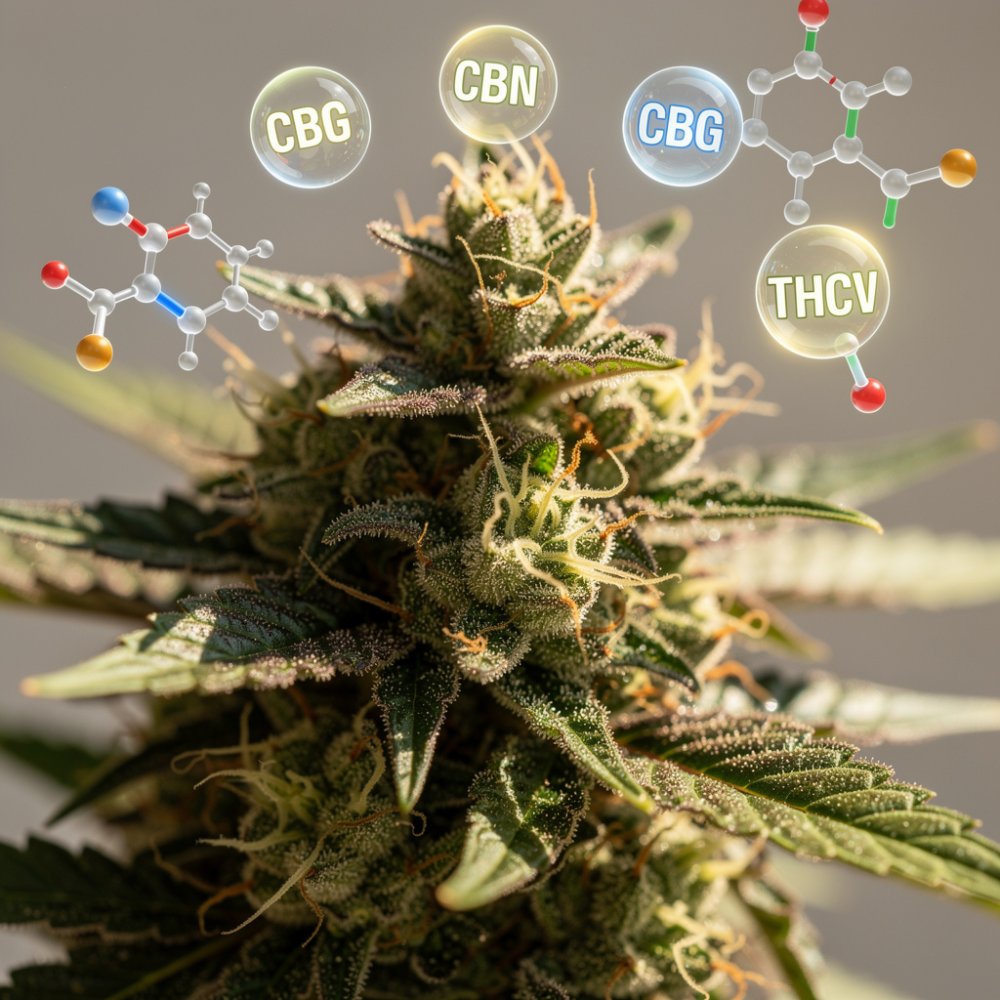
When people hear "cannabinoids," most think of CBD and THC. Yet the cannabis plant produces more than 140 different cannabinoids, each with distinct properties and potential applications. Science is gradually turning toward so-called minor cannabinoids – substances like cannabigerol (CBG), cannabinol (CBN), cannabichromene (CBC), and tetrahydrocannabivarin (THCV). Although present in small quantities in the plant, their biological activity is in many respects extraordinary.


This article summarizes the current state of research into five of the most significant minor cannabinoids, explains their mechanisms of action, and helps you navigate products available on the Czech market.
Entourage effect: why the whole spectrum matters
Before diving into individual cannabinoids, it's essential to mention a concept that provides minor cannabinoids with broader context – the so-called entourage effect. Scientists Raphael Mechoulam and Shimon Ben-Shabat formulated this hypothesis in 1998. Its essence lies in the fact that cannabinoids, terpenes, and flavonoids present in cannabis do not act in isolation but synergistically – they mutually modulate and enhance their effects.
Research from the University of Arizona demonstrated that cannabis terpenes exhibit analgesic effects comparable to cannabinoids, with their combination enhancing the pain-relieving effect without increasing adverse effects. A 2021 study published in Scientific Reports confirmed that terpenes from Cannabis sativa are cannabimimetic – they mimic the effects of cannabinoids at the cellular level and selectively enhance cannabinoid activity.
On the other hand, scientific evidence for the entourage effect is not conclusive. A 2020 review study found no reliable evidence for synergy at the level of cannabinoid receptors, and other work has produced mixed results. However, authors of a comprehensive 2023 review state: "It would be premature to deny the existence of pharmacodynamic or pharmacokinetic interactions between active compounds in cannabis."
In practice, this means that full spectrum CBD oils containing naturally present minor cannabinoids may offer advantages over pure isolates – and understanding individual cannabinoids helps explain why. Our separate article provides a detailed CBD oil comparison including full spectrum, broad spectrum, and isolate types.
CBG – Cannabigerol: The "Mother Cannabinoid"
What it is
CBG (cannabigerol) is the non-acidic form of CBGA (cannabigerolic acid), which serves as a biochemical precursor to all other cannabinoids in the plant. CBGA is enzymatically converted to THCA, CBDA, and CBCA – which is why CBG is called the "mother cannabinoid." In mature plants, CBG typically comprises less than 1% of total cannabinoid content because most is continuously converted to other cannabinoids. Targeted breeding programs, however, are developing strains with persistently higher CBG levels.
Receptor affinity and mechanism of action
CBG exhibits a complex pharmacological profile:
- CB1 receptor: Partial agonist and functional antagonist – binds to the receptor but activates it only partially, potentially modulating THC effects
- CB2 receptor: Partial agonist – activates anti-inflammatory and immunomodulatory pathways
- Alpha-2 adrenergic receptor (α2AR): Agonist – explains observed hypotensive effects
- TRPV1 and TRPV2: Agonist of vanilloid receptors involved in pain and inflammation perception
- 5-HT1A: Antagonist of serotonin receptor – potential anxiolytic effects
- PPARγ: Agonist – relevant to metabolism and insulin sensitivity
Primary research
Anxiolytic effects: A landmark clinical trial from Washington State University published in 2024 presented the first randomized, placebo-controlled study of CBG in humans. Results showed that 20 mg CBG significantly reduced subjective anxiety sensations at 20, 45, and 60 minutes post-administration compared to placebo. CBG produced no cognitive or motor disturbances – rather, it significantly improved word recall ability, which starkly contrasts with THC's negative effects on memory.
Anti-inflammatory effects: A 2025 study published in PMC demonstrated that CBG's anti-inflammatory effects in vitro and in vivo are mediated by the JAK/STAT/NFκB signaling pathway. CBG effectively mitigated atopic dermatitis-like symptoms through targeted modulation of immune response.
Cardiovascular system: A 2025 review article in Frontiers in Pharmacology describes CBG's hypotensive effects likely mediated by α2AR agonism. CBG also demonstrated the ability to improve tissue insulin sensitivity and inhibit platelet aggregation.
Antibacterial activity: CBG demonstrated strong activity against methicillin-resistant Staphylococcus aureus (MRSA), opening potential applications in developing new antibacterial agents at a time of rising antibiotic resistance.
Product forms
CBG oil is the most accessible form, typically in concentrations of 5–20%. CBG crystals (isolate) offer a pure form suitable for precise dosing. Full spectrum CBD oils naturally contain CBG in lower concentrations.
Safety note: There are reports of adverse effects from high doses of CBG on hepatic architecture and function, pointing to the need for further safety research before routine high-dose use.
CBN – Cannabinol: A Cannabinoid for Sleep?
What it is
CBN (cannabinol) is an oxidative degradation product of THC. It forms naturally from cannabis aging and exposure to air and light – which is why its content tends to be higher in older or poorly stored material. CBN was historically the first isolated cannabinoid (1896) and was originally mistakenly thought to be the main psychoactive component of cannabis.
Receptor affinity
- CB1 receptor: Weak partial agonist – approximately 10% of THC's affinity, thus mildly psychoactive at higher doses
- CB2 receptor: Stronger agonist than at CB1, with immunomodulatory effects
- TRPV2: Agonist – involvement in pain and inflammation regulation
Primary research
Sleep: CBN is most commonly presented as a "sleep cannabinoid," with scientific evidence gradually accumulating and quality improving.
A 2024 rat study (University of Sydney, published in Neuropsychopharmacology) provided the first objective measurement of CBN's influence on sleep architecture. CBN increased total sleep time with biphasic effect – initial mild sleep suppression was followed by marked increase. CBN enhanced both NREM and REM sleep, with effects comparable to zolpidem (commonly prescribed sleep medication).
A randomized, double-blind, placebo-controlled human trial demonstrated that 20 mg CBN reduced nighttime awakening frequency and overall sleep disturbance compared to placebo without affecting daytime fatigue. Notably, adding CBD did not further enhance CBN's sleep effects.
A larger clinical trial showed that 50 mg CBN led to significant improvement in subjective sleep quality compared to placebo, with slightly better results than 4 mg melatonin.
A 2025 meta-analysis confirmed that cannabinoid preparations containing THC and/or CBN are associated with improved subjective sleep quality ratings, whereas CBD-only preparations did not demonstrate this effect.
Anti-inflammatory and immunomodulatory effects: CBN exhibits anti-inflammatory activity, though less researched than CBD or CBG.
Availability and forms
CBN is currently offered primarily as a component of broad spectrum and full spectrum products. Standalone CBN preparations – oils, capsules, or gummies designed to improve sleep – are available mainly on the American market; European availability is significantly more limited.
Important note: Safety data for long-term CBN use in humans remain limited, including knowledge of potential drug interactions. This is particularly important for individuals taking medications metabolized by the liver.
CBC – Cannabichromene: The Quiet Anti-Inflammatory Player
What it is
CBC (cannabichromene) ranks among the six major cannabinoids in terms of medical research. It forms in the plant through enzymatic conversion from CBGA – the same precursor as CBD and THC. CBC is non-psychoactive because it exhibits no CB1 receptor affinity in a manner that would produce psychotropic effects.
Receptor affinity
- CB1 receptor: Very low affinity – basis of non-psychoactive profile
- CB2 receptor: Mild affinity – anti-inflammatory and immunomodulatory effects
- TRPV1 and TRPA1: Agonist of vanilloid and ankyrin receptors – pain, inflammation, and body temperature regulation
- 5-HT1A: Interaction with serotonin receptors – potential antidepressant mechanism
Primary research
Anti-inflammatory effects: A 2023 study demonstrated that CBC significantly inhibits key pro-inflammatory mediators – inducible nitric oxide synthase (iNOS), interleukin-1β (IL-1β), IL-6, and tumor necrosis factor alpha (TNF-α) – both at gene expression and protein levels.
CBC suppresses inflammatory response through inhibition of NF-κB and MAPK signaling pathways. One study found that CBC may be comparably effective to commonly used nonsteroidal anti-inflammatory drugs (NSAIDs) in reducing inflammation, without their typical gastrointestinal adverse effects.
Anti-tumor activity: A 2025 study published in Cell Death & Discovery (Nature) examined CBC in the context of pancreatic cancer therapy. CBC demonstrated the ability to integratively modulate apoptosis, ferroptosis, and endocannabinoid signaling in pancreatic tumor cells – representing one of the most interesting minor cannabinoid research findings in recent years.
Antibacterial effects: CBC exhibits antimicrobial activity, though less pronounced than CBG.
Antidepressant potential: Animal studies suggest potential antidepressant effects of CBC, likely mediated by interaction with TRPV1 receptors and the endocannabinoid system.
Availability
CBC is commercially the least available of the major minor cannabinoids. It most often appears as a natural component of full spectrum cannabis products. Standalone CBC preparations are rare on the market, and if you encounter them, pay heightened attention to composition certificates.
THCV – Tetrahydrocannabivarin: The "Diet Cannabinoid"?
What it is
THCV (tetrahydrocannabivarin) is a structural analog of THC with a propyl (three-carbon) rather than pentyl (five-carbon) side chain. This seemingly minor structural change leads to a fundamentally different pharmacological profile. THCV naturally occurs in higher concentrations in certain African cannabis cultivars – for example, in strains originating from South Africa or Malawi.
Receptor affinity
- CB1 receptor: At low doses, inverse agonist/selective antagonist (blocks the receptor); at high doses, partial agonist
- CB2 receptor: Agonist – anti-inflammatory effects
- 5-HT1A: Serotonin receptor agonist
- GPR55: Antagonist of the "orphan" cannabinoid receptor
This unique dual nature of CB1 activity is key to understanding THCV: at low doses it blocks the CB1 receptor (analogously to rimonabant – a drug withdrawn from market due to serious psychiatric adverse effects), while at higher doses it may activate the CB1 receptor and produce mild psychoactive effects.
Primary research
Metabolism and obesity: In animal models, THCV reduces food intake, increases satiety, and accelerates energy metabolism. Results in humans are conflicting and require cautious interpretation.
A clinical trial with purified THCV (5 mg twice daily for 13 weeks) in patients with type 2 diabetes demonstrated reduced fasting glucose levels and improved pancreatic beta-cell function, adiponectin, and apolipoprotein A. However, no effect on appetite or body weight was recorded.
As experts state: "Published scientific evidence does not yet support claims that THCV is an appetite suppressant."
Newer studies with THCV/CBD mucoadhesive strips, however, showed statistically significant weight loss, reduced waist circumference, reduced systolic blood pressure, and reduced total and LDL cholesterol – results that have revived THCV research.
Diabetes: THCV is being researched as a potential adjunctive agent in managing type 2 diabetes, particularly due to demonstrated improvements in insulin sensitivity and pancreatic beta-cell function.
Psychoactivity: THCV is not the same as THC. A 2024 article in Cannabis and Cannabinoid Research emphasizes: "Tetrahydrocannabivarin is not tetrahydrocannabinol." At higher doses, however, THCV may produce mild psychoactive effects – users describe them as "cleaner" and "more functional" than THC, with less tendency to induce anxiety.
Availability
THCV remains rare and above-average priced. It appears on the market primarily as a natural component of full spectrum products from strains with higher THCV content. Standalone THCV preparations are minimally available.
Delta-8-THC: A Controversial Analog
What it is
Delta-8-THC (Δ8-THC) is a positional isomer of Delta-9-THC – differing only in the location of the double bond on the hydrocarbon chain. In natural cannabis, it occurs only in trace amounts. Commercial Delta-8-THC products are therefore almost exclusively semi-synthetic – manufactured through chemical conversion from CBD, which carries specific risks.
Effects
Delta-8-THC effects are typically described by users as milder, cleaner, and more functional versions of Delta-9-THC – with lower tendency to induce anxiety or paranoia. Reported effects include relaxation, mild euphoria, and improved mood.
However, EFSA assessment states that from a biological effects perspective, both isomers are approximately equipotent – equally effective. This finding fundamentally undermines marketing claims about Delta-8-THC as a "lighter" or safer alternative to conventional THC.
Safety concerns
The greatest risk with Delta-8-THC is not the molecule itself, but product quality on an insufficiently regulated market:
- Lower actual active ingredient content than declared
- Contamination with heavy metals from the chemical process
- Unlabeled additives and fillers
- Unidentified byproducts of CBD chemical synthesis
Legal status in Europe and the Czech Republic
Delta-8-THC exists in a legal gray zone in Europe. Most European countries regulate it the same as Delta-9-THC – as a psychoactive substance. In the Czech Republic, it falls under comparable regulation as other THC isomers. Current regulatory trends in the EU point toward stricter oversight, and it is likely that the gray zone will gradually close.
Comparative Table of Minor Cannabinoids
| Cannabinoid | Main Receptors | Key Effects (Research) | Psychoactivity | Commercial Availability | Legal Status CZ |
|---|---|---|---|---|---|
| CBG | CB2 (partial agonist), α2AR, TRPV1/2, 5-HT1A | Anti-inflammatory, anxiolytic, antibacterial, neuroprotective | No | Good (CBG oil, crystals) | Legal |
| CBN | CB1 (weak), CB2, TRPV2 | Sedative, sleep support, anti-inflammatory | Mild (at higher doses) | Limited (mainly in FS products) | Legal (under THC limit) |
| CBC | TRPV1, TRPA1, CB2, 5-HT1A | Anti-inflammatory, antibacterial, antidepressant | No | Low (only in FS products) | Legal |
| THCV | CB1 (dual – antagonist/agonist), CB2, GPR55, 5-HT1A | Metabolic, potentially anorexigenic, antidiabetic | Mild (at higher doses) | Very low | Regulated (as THC analog) |
| Delta-8-THC | CB1 (agonist), CB2 | Relaxing, mildly euphoric | Yes | Gray zone | Regulated (as THC) |
FS = full spectrum
The Future of Minor Cannabinoids
Research into minor cannabinoids is still in its early stages. Most existing evidence comes from preclinical studies on cell cultures and animal models; clinical trials in humans are significantly less numerous. This particularly applies to CBC, THCV, and Delta-8-THC, where translating results from laboratory to clinical practice remains uncertain.
Key trends for 2026 and beyond:
1. Targeted strain breeding: Cannabis breeders are developing strains with high content of specific minor cannabinoids – particularly CBG-dominant cultivars, which enable commercially viable production without expensive chemical synthesis. The result is more accessible pricing and greater market availability.
2. Combined products: A growing trend in formulations combining multiple cannabinoids (CBD + CBG, CBD + CBN for sleep support) signals a shift from single-cannabinoid products to purposefully designed cannabinoid profiles optimized for specific applications.
3. EU-level regulation: With CBD's advancing Novel Food approval process, regulators are expected to systematically address other cannabinoids. EFSA has already assessed Delta-8-THC as equipotent to Delta-9-THC. A similar approach will likely expand to other psychoactive minor cannabinoids. Read more about EFSA's current stance on cannabinoids in food in the article EFSA and Cannabinoid Regulation in the EU.
4. Precision medicine: The future of research may lie in personalized cannabinoid profiles – combinations tailored to an individual's endocannabinoid system genetic profile and specific health goals.
FAQ – Frequently Asked Questions
What is the difference between CBD and CBG?
CBD and CBG are both non-psychoactive cannabinoids but differ in receptor profile and research base. CBG is the "mother cannabinoid" – the biochemical precursor to CBD and other cannabinoids in the plant. CBG shows stronger antibacterial activity and more direct CB2 receptor interaction, while CBD has more extensive clinical evidence from human studies. For practical purposes, both cannabinoids may complement each other's effects in full spectrum products.
Does CBN help with sleep?
Current research is promising but still ongoing. Animal studies demonstrated that CBN increases total sleep time with effects comparable to zolpidem. Clinical trials in humans show reduced nighttime awakening frequency and improved subjective sleep quality. However, research is still in early stages and larger clinical trials are necessary to confirm long-term safety and efficacy.
Is THCV really a "diet cannabinoid"?
Animal studies suggest THCV may reduce food intake and increase metabolism. Human studies have not conclusively confirmed this effect – in a key 13-week trial, no effect on appetite or body weight was recorded. The label "diet cannabinoid" is therefore a marketing simplification not supported by current scientific evidence.
Are minor cannabinoids safe?
CBG, CBN, and CBC are generally considered well-tolerated; however, long-term safety studies in humans are limited. CBG has reports of adverse liver effects at high doses. CBN's drug interactions are insufficiently researched – this is particularly important for users on chronic medication. Always consult your doctor before beginning any cannabinoid preparation.
Where can I find minor cannabinoids in products?
Most easily in full spectrum CBD oils, which naturally contain the entire cannabinoid spectrum including CBG, CBN, and CBC in natural ratios. Specific CBG oils and CBG crystals are available as standalone products with higher CBG concentration. CBN and CBC preparations are still limited in Europe – when purchasing them, request third-party certificates (COA) confirming composition and purity.
This article is exclusively informational and educational in nature. It does not constitute medical advice or a call to use any substances. Cannabinoids are not medicines and are not intended for diagnosis, treatment, mitigation, or prevention of any disease. Consult your doctor before using any cannabinoid preparation. Information in this article is based on currently available scientific research, which continues to evolve.
Sources
- Cannabigerol (CBG): A Comprehensive Review of Its Molecular Mechanisms and Therapeutic Potential. PMC, 2024. pmc.ncbi.nlm.nih.gov/articles/PMC11597810
- Anti-Inflammatory Effects of Cannabigerol In Vitro and In Vivo Are Mediated Through the JAK/STAT/NFκB Signaling Pathway. PMC, 2025. pmc.ncbi.nlm.nih.gov/articles/PMC11764157
- Cannabinoid CBG reduces anxiety and stress in first human clinical trial. Washington State University, 2024. news.wsu.edu
- A sleepy cannabis constituent: cannabinol and its active metabolite influence sleep architecture in rats. Neuropsychopharmacology, 2024. nature.com
- A double-blind, randomized, placebo-controlled study of the safety and effects of CBN with and without CBD on sleep quality. PubMed, 2023. pubmed.ncbi.nlm.nih.gov/37796540
- THC and CBN Associated With Improved Sleep Quality. NORML, 2025. norml.org