


 English (English)
 Deutsch (German)
 Čeština (Czech)
 Italiano (Italian)
 Hrvatski (Croatian)
 Română (Romanian)
 български език (Bulgarian)
 Magyar (Hungarian)
 Español (Spanish)
 Français (French)
 Nederlands (Dutch)
 Polski (Polish)
 Slovenčina (Slovak)
Harvest timing is one of the most critical decisions throughout the entire growing cycle. Too-early harvest means loss of potency, lower yield, and underdeveloped terpene profile. Too-late harvest brings THC degradation to CBN, heavier sedative effect, and wasted strain potential. The difference can be just a few days. This guide will teach you to recognize the optimal moment precisely – based on real visual indicators, not just calendar dates.



Two Main Ripeness Indicators
Growers rely on two reliable visual indicators: trichomes and pistils. Trichomes are more precise and provide concrete information about the plant's biochemical state. Pistils serve as a complementary indicator that signals when to begin monitoring trichomes more intensively.
Why Not to Rely on Flowering Time from Seed Banks
Seed banks list flowering time as a rough estimate under ideal conditions – for example, 8–9 weeks. In reality, this value varies significantly depending on:
- The phenotype of the specific plant.
- Light intensity and spectrum.
- Temperature, humidity, and air circulation.
- Fertilizer and substrate composition.
- Plant stress (overwatering, pests, overfeeding, sudden condition changes).
Precise determination of harvest time requires visual inspection – the calendar is only a rough estimate.
Trichomes – The Most Accurate Indicator
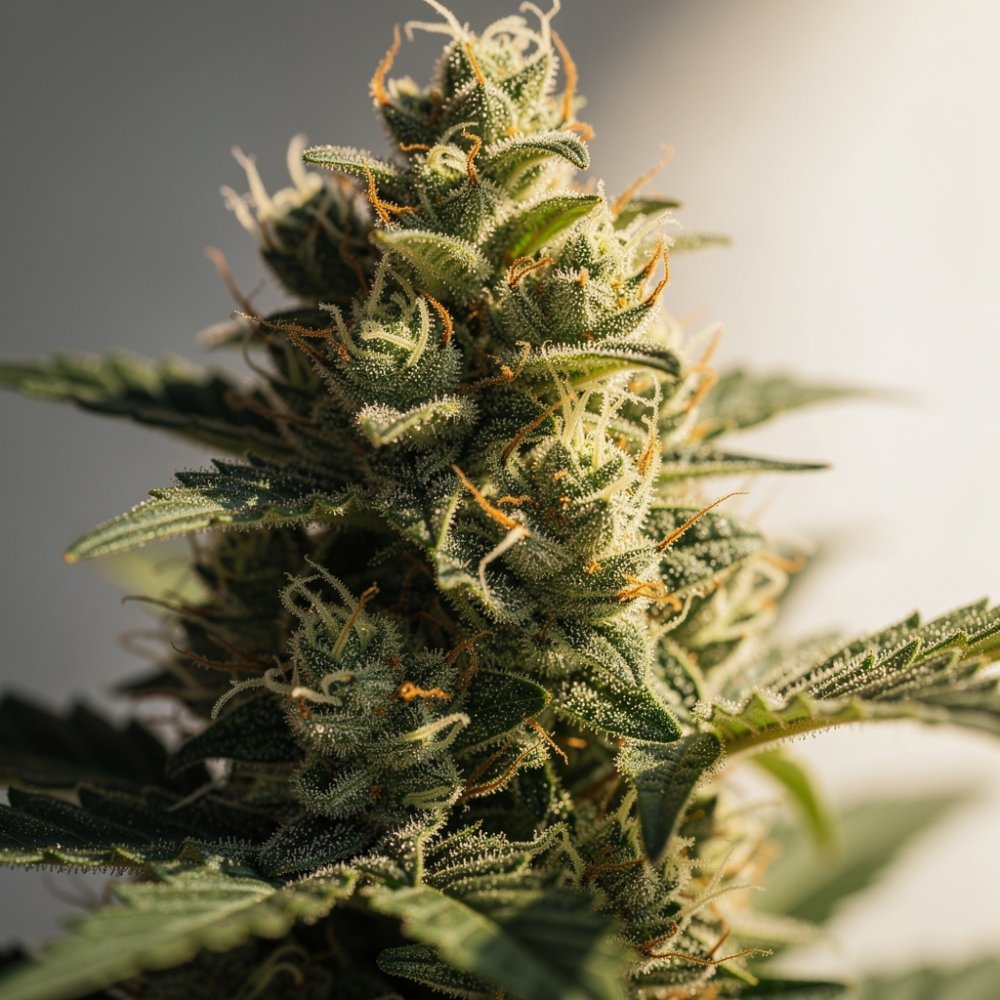
Trichomes are microscopic glandular outgrowths covering flowers and adjacent leaves. They produce cannabinoids (THC, CBD, CBN), terpenes, and flavonoids – all the biologically active compounds in the plant. Their color systematically changes throughout ripening, and this color progression is the most reliable indicator of proper harvest timing.
What You Need to Observe Trichomes
- Pocket microscope (60–100× magnification) – best choice for accurate assessment, available for 200–400 CZK.
- Jeweler's loupe (30–60×) – sufficient for basic orientation.
- Digital USB microscope – connects to phone or computer, allows convenient recording sharing.
Photographs taken through a loupe using a phone camera may serve as an emergency solution, but results are less reliable due to color distortion and low depth of field. A pocket microscope is the unbeatable choice for anyone growing regularly.
Trichome Stages
| Stage | Color | Appearance | THC Content | Effect |
|---|---|---|---|---|
| Clear | Transparent | Glassy stalks with round heads | Low (cannabinoid precursors) | Too early – weak, "grassy," unpleasant effect |
| Milky/Cloudy | White, opaque | Opaque, milky-white heads | Maximum THC | Euphoric, energetic, distinctly psychoactive |
| Amber | Yellow to reddish-brown | Amber-colored heads | THC degrades to CBN | Sedative, body-relaxing, typical "couchlock" |
Optimal Harvest Window
| Milky:Amber Ratio | Effect | For Whom |
|---|---|---|
| 90% milky, 10% amber | Maximum THC, energetic, cerebral high | Sativa enthusiasts, daytime use, creativity |
| 70% milky, 30% amber | Balanced – euphoria plus physical relaxation | Most growers, the golden mean for recreational and medicinal use |
| 50% milky, 50% amber | Strongly relaxing, pronounced sedative effect | Indica enthusiasts, evening use, pain management |
| Amber dominant (60%+) | Dominant sedation, minimal euphoria, high CBN content | Medicinal use – sleep, chronic pain, anxiety |
Key rule: Never harvest while clear trichomes are present. Transparent heads signal incomplete cannabinoid biosynthesis – the result would be weak, grassy product with underdeveloped terpene profile.
Where on the Plant to Check Trichomes
- On calyx buds – only this location provides relevant information about ripeness.
- Not on sugar leaves – adjacent leaves ripen earlier than the buds themselves and can skew results.
- On multiple plant locations – upper buds receive more light and ripen faster than lower ones.
- Daily in the final two weeks – trichome stage change can happen surprisingly quickly, especially at higher temperatures.
Pistils – Supplementary Indicator
Pistils are hair-like stigmas growing from calyxes. Biologically they serve to capture pollen during pollination; growers use them as a visual indicator of ripening progress. They are clearly visible to the naked eye without optical aids.
Changes in Pistil Color During Ripening
| Phase | Pistil Color | What It Means |
|---|---|---|
| Early flower | White, upright | Buds are developing, harvest is not yet an option |
| Mid flower | Mix of white and orange | Buds are gaining weight and volume |
| 70–80% orange/brown | Most pistils have darkened and curled inward | Signal to begin daily trichome monitoring |
| 90%+ brown | Almost all pistils have darkened | Risk of late harvest – immediately verify trichomes |
Why Pistils Alone Are Insufficient as an Indicator
Pistils can be misleading for three main reasons:
- Physical contact, rain, or strong wind can cause premature darkening without relation to actual ripeness.
- Some strains – particularly certain skunk and kush genotypes – have pistils that darken early while buds are still developing.
- Conversely, many sativa-dominant strains retain white pistils until very late ripening stages.
Use pistils as a rough signal to increase attention. Once 70% of pistils have darkened, switch to daily microscopic trichome checks.
Flushing Before Harvest
Flushing is a standard final step in mineral growing. It is performed 1–2 weeks before the planned harvest and aims to deplete mineral salt reserves in the substrate and plant tissues.
Why Flush
Accumulated mineral salts negatively affect taste and purity of the final product. Properly executed flushing leads to smoother burning, finer flavor, and cleaner aroma after drying and curing. A natural accompanying phenomenon is leaf yellowing – the plant draws remaining nutrients from older leaves and this is a desired state, not a problem.
How to Flush Properly
- Water with plain water at adjusted pH (6.0–6.5 for soil, 5.8–6.2 for coco) in volumes 2–3× larger than the pot volume.
- Allow water to drain freely – do not reuse it.
- Repeat with each watering until harvest day.
- Measure EC of runoff water – gradual decline to values below 0.5 mS/cm confirms proper flushing progress.
When to Start Flushing
- Mineral fertilizers in soil substrate: 10–14 days before harvest.
- Mineral fertilizers in coco or hydroponics: 7–10 days before harvest.
- Organic growing: Flushing is unnecessary – organic fertilizers do not produce mineral salts that accumulate.
Details about proper cannabis nutrition in individual phases can be found in our specialized article.
Harvest Procedure Step by Step
What You Will Need
- Sharp scissors or pruning shears (disinfected with isopropyl alcohol).
- Single-use latex or nitrile gloves – cannabis resin is extremely sticky and nearly impossible to wash off skin.
- String or specialized drying hangers.
- Paper trays or multi-level drying screens.
- Paper or fabric bags for labeling strains with larger harvests.
- 91%+ isopropyl alcohol for ongoing scissor cleaning.
Step by Step
- Stop watering 1–2 days before harvest – mild substrate drying accelerates subsequent drying and reduces water content in tissues.
- Harvest in the morning before lights turn on with indoor growing – at this moment the plant has the lowest starch content in leaves and highest terpene concentration.
- Cut the entire plant at the base, or proceed branch by branch with staged harvest.
- Remove large fan leaves without trichomes – they have no aromatic or active value.
- Decide on wet trim or dry trim (see below) and proceed consistently.
- Hang branches for drying heads down, or spread buds on screens – depending on chosen trimming method.
Wet Trim vs. Dry Trim
Your choice of trimming method affects drying speed, terpene preservation, and working comfort. Neither method is objectively better – it depends on drying room conditions and grower priorities.
Wet Trim
Procedure: Remove sugar leaves immediately after harvest while they are still upright and easily accessible.
Advantages:
- Easier and faster work – leaves are not yet clinging to buds.
- Faster drying due to lower leaf mass.
- Lower mold risk (Botrytis) in humid climates.
- Aesthetically cleaner appearance of final product.
Disadvantages:
- Faster drying increases risk of over-drying and terpene loss.
- All work is concentrated immediately after harvest.
- Trichomes are less protected during drying.
Dry Trim
Procedure: Hang entire branches with sugar leaves and trim only after complete drying.
Advantages:
- Slower, more even drying – ideal for preserving terpene profile.
- Sugar leaves naturally protect trichomes from rubbing and damage.
- Work can be spread over several days.
Disadvantages:
- Dried leaves cling to buds and trimming is more difficult and time-consuming.
- Longer drying time complicates conditions in higher humidity.
- Higher mold development risk with insufficient ventilation.
Our Recommendations by Situation
| Situation | Recommendation |
|---|---|
| Humidity in drying room above 60% | Wet trim – faster moisture removal, lower mold risk |
| Humidity in drying room 45–55% | Dry trim – optimal conditions for slow, even drying |
| Large harvest, limited time | Wet trim – efficient all-at-once processing |
| Small harvest, premium quality | Dry trim – maximum preserved terpenes and aroma profile |
Staged Harvest
Upper buds and main colas are exposed to more intense light and ripen 5–14 days earlier than lower, shaded branches. Staged harvest exploits this difference to the grower's advantage.
How to Perform Staged Harvest
- Check trichomes on upper and lower buds separately – document differences.
- Once upper buds reach optimal trichome ratio, harvest them.
- Leave remaining lower branches on the plant for 5–7 more days – their freedom from upper competition allows faster ripening.
- Harvest the rest once trichomes reach desired stage.
Staged harvest is not a complication – it is standard practice among experienced growers that maximizes total yield and quality consistency across the entire plant.
Special Situations
Autoflower Strains
Autoflower strains do not flower based on light cycle but autonomously based on age. You cannot simply control vegetative or flowering time. Trichomes and pistils are the only reliable guide to harvest. Typical time from seed to harvest is 8–12 weeks, but specific values vary significantly by strain. Always follow trichomes, not the manufacturer's stated timeframe. More information can be found in the article on types of cannabis seeds.
Outdoor – Weather and Frost Hazard
With outdoor growing, climate conditions can force compromise harvest. Prolonged rain combined with cooler nights dramatically increases botrytis (gray mold) risk, which can destroy buds within 48–72 hours. Harvest a week early is always a better choice than losing the entire crop to mold or frost. Monitor the weekly weather forecast and have a backup plan including a drying location.
Amber Trichomes and CBD Strains
With strains bred for high CBD content, different rules apply. CBD as a compound does not degrade as quickly as THC, so waiting for a higher amber trichome ratio does not present the same potency loss risk. Longer ripening naturally increases the CBD:THC ratio, typically a desirable outcome for CBD strains.
Hermaphroditism and Seed Formation
If you notice bananas (male stamens growing directly from calyxes) or already-formed seeds on the plant, proceed to harvest as soon as possible. Plant energy redirects to seed formation at the expense of cannabinoids and terpenes. Seeds from a hermaphroditic plant are genetically unstable and unsuitable for future growing.
Frequently Asked Questions (FAQ)
How do I know if it's too early to harvest?
If trichomes are predominantly clear (transparent) and pistils are mostly white, definitely postpone harvest. Unripe buds will be sparse, taste grassy, and effects will be weak and unpleasant. Wait until at least 80% of trichomes are milky white with no clear ones remaining.
Can I harvest when all trichomes are milky and none are amber?
Yes – this is the moment of absolute THC maximum in the plant. Effect will be distinctly cerebral, euphoric, and energetic. If this is your preferred effect type, there's no reason to wait for amber trichomes. Just ensure no clear trichomes remain.
How long does the transition from milky to amber trichomes take?
Usually 5–14 days depending on strain, temperature, and light intensity. At higher temperatures (above 28 °C) the transition can be significantly faster. Check daily in the final two weeks – change can be surprising.
What if upper buds are ripe but lower ones are not?
That's exactly what staged harvest is for. Harvest the ripe upper buds and leave the lower ones on the plant to ripen for another 5–10 days. This is completely standard practice that maximizes total yield and quality.
How do I recognize mold in a ripe bud?
Botrytis symptoms differ from normal yellowing during flush. Look for individual leaves in the middle of a bud that suddenly wilt or yellow while surrounding leaves are fine. After carefully opening the bud you'll see gray or brown mycelium and smell a characteristic musty, moldy odor. Immediately remove affected parts and isolate. Detailed instructions can be found in the article on cannabis pests and diseases.
Must I harvest the entire plant at once?
Absolutely not – staged harvest is recommended practice, not an exception. When cutting individual branches, use disinfected shears and monitor cut wounds to prevent infection. Harvest the rest of the plant gradually according to trichome development.
What Comes After Harvest
After harvest and trimming comes the drying and curing phase, which is equally important as harvest timing itself regarding final quality. Even perfectly grown and properly timed buds won't help if drying occurs too quickly, at wrong temperature, or without controlled humidity. Detailed instructions can be found in the article drying and curing cannabis.
Conclusion
Correct harvest timing is a skill that develops with each cycle. Investing in a pocket microscope, consistent daily trichome checks in the final two weeks, and knowledge of your specific strain's characteristics will allow you to consistently harvest at the right moment. The optimal harvest window is usually short – 3–7 days – and preparation is your only guarantee of not missing it.
Summary of Key Rules:
- No clear trichomes = minimum harvest conditions.
- 70–80% milky + 20–30% amber = golden mean for most growers.
- 70%+ brown pistils = signal to begin daily trichome microscope checks.
- Flush mineral nutrients 10–14 days before harvest (soil), 7–10 days (coco, hydro).
- Staged harvest maximizes yield and quality consistency across the entire plant.
Choose quality cannabis seeds on Cannapio.cz, grow with care, and harvest at the right time.
Sources: Royal Queen Seeds, Grow Weed Easy, Svět Semínek, Happy Seeds, GrowMart.cz, WeedShop.cz, Soft Secrets, Cannapio.cz