


 English (English)
 Deutsch (German)
 Čeština (Czech)
 Italiano (Italian)
 Hrvatski (Croatian)
 Română (Romanian)
 български език (Bulgarian)
 Magyar (Hungarian)
 Español (Spanish)
 Français (French)
 Nederlands (Dutch)
 Polski (Polish)
 Slovenčina (Slovak)
Hindu Kush vs Afghani – Detailed Strain Comparison
Hindu Kush and Afghani rank among the purest indica landrace strains in the world and form the genetic foundation of most modern indica hybrids. Both originate from the Hindu Kush mountain range on the border between Afghanistan and Pakistan, but centuries of isolation in different valleys have shaped them into two genetically distinct lines with different effect profiles, aromas, and growing characteristics. For anyone interested in pure indica strains or the history of cannabis breeding, this comparison is essential.
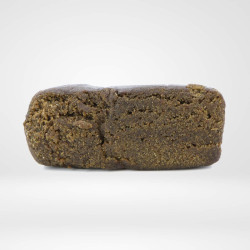

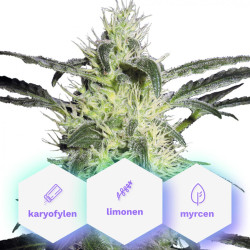
Comparison Table
| Parameter | Hindu Kush | Afghani |
|---|---|---|
| Genetics | Landrace from Hindu Kush mountains (Pakistan) | Landrace from Afghanistan |
| Type | Pure indica (100 %) | Pure indica (100 %) |
| THC | 15–20 % | 15–20 % |
| CBD | 0.3–1 % | 0.1–0.5 % |
| Flowering time | 7–8 weeks | 7–8 weeks |
| Indoor yield | 350–450 g/m² | 400–500 g/m² |
| Outdoor yield | 400–500 g/plant | 450–550 g/plant |
| Height | 60–120 cm | 80–140 cm |
| Difficulty | Beginner | Beginner |
| Dominant terpene | Myrcene, caryophyllene, linalool | Myrcene, pinene, caryophyllene |
| Effect | Deep meditative relaxation, calm, sleep | Strong body relaxation, couch-lock, sedation |
| Taste/aroma | Sandalwood, earthy, sweet, incense | Sweet, hashish, earthy, spicy |
Hindu Kush – Detailed Profile
Genetics and History
Hindu Kush is a pure indica landrace from the Hindu Kush mountain range, which stretches from central Afghanistan through northwestern Pakistan. This region is among the oldest documented centers of cannabis domestication – plants have been cultivated here for provably more than three thousand years. Survival in harsh high-mountain conditions at elevations of 2,000–3,500 meters above sea level gave Hindu Kush its compact structure, exceptionally dense resin, and natural resistance to cold, drought, fungal pathogens, and pests.
The strain reached Europe and North America through travelers on the "Hippie Trail" in the 1960s and 1970s. In the Netherlands, the genetics were stabilized and became the starting material for several legends – OG Kush, Master Kush, and Purple Kush all bear its clear genetic signature.
Growing Tips
Hindu Kush is one of the most accessible strains for beginning growers. Compact plants reaching 60–120 cm are ideal for smaller spaces and discreet indoor grow rooms. Natural resistance to cold, humidity fluctuations, mold, and pests is a direct result of thousands of years of selection in extreme conditions.
Growing does not require advanced techniques or special nutrient solutions – Hindu Kush will manage even in a less-than-ideally set-up environment. Plants produce extremely resinous flowers that are particularly suitable for traditional hashish production using the hand-harvested trichome method. If you plan to process into charas or dry sift, you'll hardly find better starting material.
Effect and Medicinal Use
The effect of Hindu Kush is deep, meditative, and calming. Unlike the heavy couch-lock characteristic of some modern indica hybrids, this strain emphasizes inner composure rather than physical immobility – a relaxed mind, loosened muscles, sense of balance. The slightly higher CBD content (0.3–1 %) contributes to a more balanced and smoother onset.
From a medicinal perspective, Hindu Kush is suitable for insomnia, anxiety, chronic pain, stress, and muscle cramps. The linalool in the terpene profile enhances anxiolytic and sedative effects. In its region of origin, the plant has been used in traditional medicine for centuries precisely for these properties.
Afghani – Detailed Profile
Genetics and History
Afghani (also referred to as Afghan or Afghani #1) is a pure indica landrace from Afghan river valleys. Unlike Hindu Kush, domesticated in the high-mountain zone on the Pakistani side of the Hindu Kush range, Afghani grew in lower elevations with a milder climate and longer growing season. This is reflected in its slightly greater height and above-average yields.
From a breeding history perspective, Afghani is arguably the most influential parent strain ever. Northern Lights, Skunk #1, AK-47, and Blueberry – all these legends carry Afghan genetics. Without Afghani, today's cannabis breeding landscape would look fundamentally different.
Growing Tips
Afghani is at least as easy to manage as Hindu Kush, while its more robust constitution gives growers even greater tolerance for mistakes. Plants are vigorous, well-branched, and produce large, dense deposits of resinous calyces. A flowering period of 7–8 weeks ensures quick crop turnover.
The SOG (Sea of Green) method is tailor-made for Afghani – compact plants in dense arrangement produce uniform, well-developed flowers with minimal phenotypic variability. Afghani tolerates higher mineral nutrient doses than most strains and demonstrably responds to more aggressive feeding programs with significantly higher yields. Outdoor cultivation is trouble-free in practically any temperate climate.
Effect and Medicinal Use
Afghani delivers a strong, physically dominant effect. Body relaxation is intense and comprehensive – heavy limbs, pronounced couch-lock, gradual sedation. The cerebral component remains intentionally subdued – no thought spirals or mental stimulation. The result is pure, uncomplicated physical relaxation.
Medicinally, Afghani ranks among the most effective strains for severe pain, muscle spasms, insomnia, and loss of appetite. Its strong sedative character places it exclusively in the evening and nighttime use category. The pinene represented in the terpene profile adds an anti-inflammatory component that increases the strain's clinical potential.
Direct Comparison – Who Wins?
Potency (THC): Tie – both strains range from 15–20 % THC. Hindu Kush has slightly higher CBD, which may create a subjectively smoother and less intense effect onset.
Ease of growing: Tie – both rank among the most reliable strains for beginning growers. Afghani is slightly more robust, Hindu Kush slightly more compact and cold-resistant.
Yield: Afghani wins slightly with consistently higher yields both indoors and outdoors.
Compactness: Hindu Kush wins with heights of 60–120 cm compared to 80–140 cm for Afghani. For very limited growing spaces, Hindu Kush is clearly the better choice.
Resin production: Hindu Kush leads slightly due to high-altitude adaptation – dense resin originally served as protection against intense UV radiation. Both strains are excellent starting material for hashish production.
Effect character: Hindu Kush is more refined and meditative, Afghani stronger and physically straightforward. For quiet spiritual relaxation, reach for Hindu Kush; for pronounced body knockout, choose Afghani.
CBD content: Hindu Kush leads slightly with up to 1 % CBD, which contributes to a more balanced overall effect profile.
Flavor profile: Hindu Kush is aromatically more complex with sandalwood and incense notes, Afghani offers more classic hashish and earthy aroma. Both are authentic representatives of their region.
Which Strain Is Right for You?
Choose Hindu Kush if:
- You seek meditative, inwardly calm relaxation without strong physical knockout
- You have very limited growing space
- You want higher CBD content for a more balanced effect
- You appreciate exotic, oriental aroma with incense and sandalwood notes
- You plan hashish production using traditional methods
- You prefer gentler indica effects without complete immobilization
- You're interested in a strain with deep historical and cultural context
Choose Afghani if:
- You need strong physical knockout for chronic pain or insomnia
- You want to maximize yield while maintaining ease of growing
- You're looking for a reliable parent strain for your own breeding projects
- You prefer classic hashish, earthy aroma
- You want more robust plants capable of handling aggressive feeding programs
- You need maximum sedation without cerebral side effects
Both strains are living history of cannabis – you cannot go wrong with either. To explore more indica strains, check out our top 10 indica strains or read our comparison of OG Kush vs Northern Lights.
Frequently Asked Questions
What is the difference between a landrace and a modern strain?
Landrace strains like Hindu Kush and Afghani were shaped over centuries through natural selection in a specific geographic environment. Modern strains, by contrast, are the result of targeted breeding programs optimizing specific traits – yield, potency, flowering time. Landrace strains show lower phenotypic variability and a more authentic, genetically undiluted effect.
Are Hindu Kush and Afghani the same strain?
No. Although both originate from the same geographic region, their evolution proceeded separately. Hindu Kush developed in the high-mountain zone on the Pakistani side of the Hindu Kush range, Afghani in lower Afghan valleys with a different climate. Hundreds of years of geographic isolation created genetically distinct lines, evident in different growth habits, terpenoid profiles, and effect characteristics.
Which strain is better for hashish production?
Both strains are excellent starting material, though Hindu Kush is traditionally considered slightly superior due to its extremely dense trichome coverage – a direct result of adaptation to high-altitude UV radiation. Traditional charas, or hand-harvested hashish, historically comes from the Hindu Kush region and Hindu Kush remains the reference strain for this method.
Can I grow these strains on a balcony?
Yes, both strains are suitable for balcony growing thanks to their compact structure. Hindu Kush is the better choice for very limited spaces – at 60–120 cm tall, it easily fits in a smaller pot. Both strains tolerate mild cooling and natural temperature fluctuations typical of Central European balconies in late summer.
What is the history of cannabis in the Hindu Kush region?
The Hindu Kush region ranks among the oldest documented centers of cannabis cultivation worldwide, with continuous cultural tradition extending at least 3,000 years into the past. Cannabis is deeply rooted in local medicine, religious rituals, and economy. Traditional hashish production using the charas method remains in many mountain communities to this day a primary or significant livelihood source and represents an inseparable part of local cultural heritage.