


 English (English)
 Deutsch (German)
 Čeština (Czech)
 Italiano (Italian)
 Hrvatski (Croatian)
 Română (Romanian)
 български език (Bulgarian)
 Magyar (Hungarian)
 Español (Spanish)
 Français (French)
 Nederlands (Dutch)
 Polski (Polish)
 Slovenčina (Slovak)
In short: Grind the material with a grinder, place the filter at the edge of the paper, spread the filling evenly and roll the paper from the filter towards the tip, where you lightly lick the gum strip and seal it. Beginners find the 1¼ or King Size Slim format easiest to roll, and a 1¼ joint needs roughly 0.5–0.75 g of filling.



| Single Wide paper | approx. 68 × 34 mm |
|---|---|
| Thin joint (1¼) | roughly 0.5–0.75 g |
| Standard joint (King Size) | roughly 1–1.5 g |
| Joint for sharing | 1.5 g or more |
| Grinding | 5–10 turns in each direction |
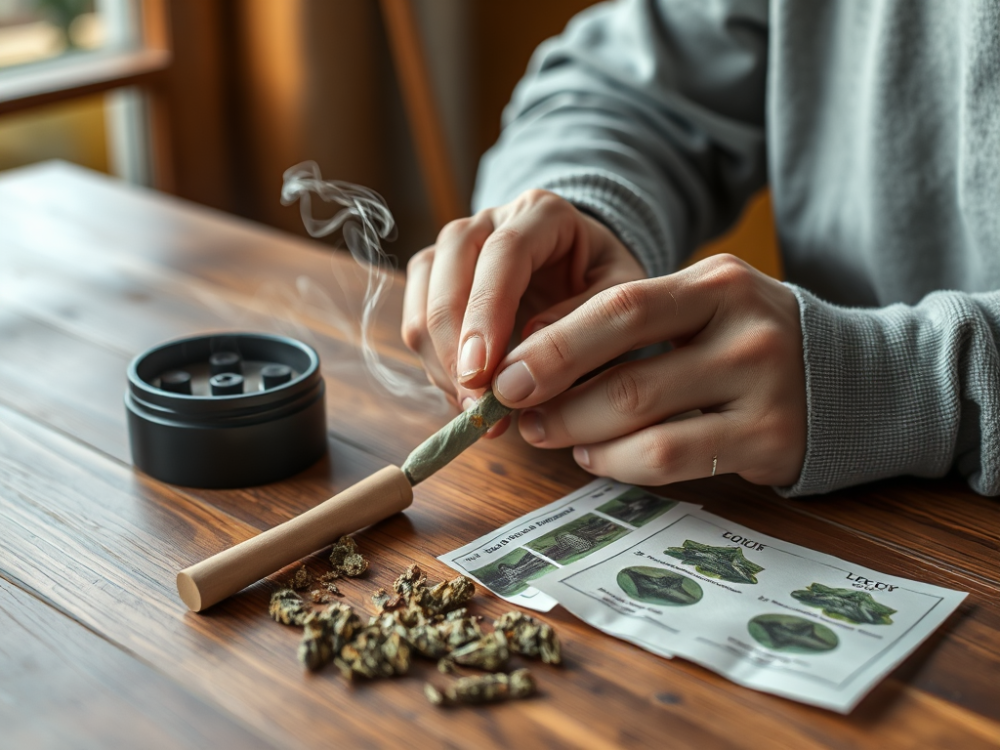
Joints are one of the most classic ways to enjoy hemp flowers or CBD herbs. Even so, rolling them properly is a challenge for many beginners – the paper tears, the shape comes out uneven, or the draw doesn't work the way it should. In this guide we'll take you through the whole process from A to Z: from choosing the right paper and filter, through preparing the material, to proven rolling techniques that even a complete novice can master.
What you'll need before you start
Before you get down to the rolling itself, have all your tools within easy reach. A tidy workspace is the foundation of success – and it will save you half the frustration.
- Rolling papers – several types are described below
- Filter (tip/roach) – cardboard or glass
- Hemp flowers or CBD herbs, well dried
- Grinder – for an even grind
- Mat or tray – so the material doesn't spill all over the table
- Optional: a rolling machine for beginners
Types of rolling papers – how to choose the right one
The market offers dozens of kinds of papers, and picking the right one affects not only the taste but also the rolling process itself. Here are the most important categories:
By material
- Cellulose (classic white) – the most common, easy to find, stick easily. Suitable for beginners.
- Rice papers – thinner, less taste, burn more slowly. Popular with more experienced users.
- Hemp papers – natural, slightly brownish, sturdier material. Less prone to tearing.
- Transparent (clear cellulose) – a stylish choice that burns very cleanly, but they tend to be stiffer to work with.
By size
- Single Wide (SW) – the smallest format, approx. 68 × 34 mm. Better suited to thin joints and more experienced hands.
- 1¼ – the most popular compromise between size and ease of handling. Ideal for beginners.
- King Size – for bigger joints or sharing in a group. More room to work with.
- King Size Slim – combines length with a narrower width, a clean shape and a popular format.
Tip for beginners: Start with the 1¼ or King Size Slim format in hemp paper – they are the most forgiving while you learn.
Filters (tips) – why you shouldn't skip them
The filter, also known as a tip or roach, isn't just an aesthetic extra. It serves several important functions:
- Stops bits of material from being drawn into your mouth
- Keeps the mouth end of the joint in shape
- Lets you smoke the joint right to the end without burning your fingers
- Improves airflow (the draw)
Types of filters
- Cardboard tips – the most common, included in most packs of papers. You roll them yourself from the supplied card.
- Pre-shaped cardboard tips – come with a ready-made pattern (W, M or spiral) for better airflow.
- Glass filters – reusable, hygienic, cool the smoke. A higher upfront cost, but worthwhile in the long run.
- Activated carbon filters – filter out some of the impurities, suitable for those who care about a cleaner draw.
If you make the filter yourself from card, roll it into a tight spiral or into a “W” inside an “O”. Its diameter should match the width of your paper.
Preparing the material: grinding and filling
Preparation accounts for 50 % of the result. Poorly ground material causes uneven burning, clogging or a draw that is too loose.
Grinding properly
- Use a grinder – material cut with scissors or broken up by hand will never reach an even consistency.
- Turn the grinder 5–10× in each direction until the material falls through the screen.
- The resulting texture should be loose but not powdery – like coarsely ground coffee.
- Remove any stems or seeds – they cause crackling as the joint burns.
How much material to use?
- Thin joint (1¼) – roughly 0.5–0.75 g
- Standard joint (King Size) – roughly 1–1.5 g
- Shared / bigger joint – 1.5 g or more
If you're just starting out with CBD herbs, we recommend beginning with a smaller amount and experimenting. An overfilled joint is hard to roll and draws poorly.
How to roll a joint – step-by-step guide
Now comes the very core of the guide. The technique described here is known as hand rolling – the most versatile method, which after a little practice will become literally second nature.
- Prepare the filter. Roll the card into a spiral and set it aside at the edge of your work surface.
- Hold the paper correctly. Hold it lengthwise between the thumb and index finger of both hands, with the gum strip at the top and facing you (front side down – this is key).
- Make a channel. Gently bend the paper into a “U” shape – this creates a channel to fill with material.
- Insert the filter. Place it at one end of the paper (the left if you're right-handed). The filter is the anchor that sets the shape of the whole joint.
- Add the material. Spread the ground material evenly along the channel – more in the middle, slightly less towards the end (to make closing the tip easier).
- Shape it. Using both thumbs and index fingers, start rolling the material back and forth. The aim is to pack it down and form a cylindrical shape. Don't press too hard – just gently “massage” it.
- Start rolling from the filter. Tuck the lower edge of the paper over the material and begin rolling from the filter towards the open end. The paper should wrap the material firmly without squeezing it.
- Lick and seal. Once the lower edge of the paper is wrapped around the material, lightly lick the gum strip and press it down. Work from the filter to the tip – this way you avoid air pockets.
- Close the tip. Twist the excess paper at the open end into a small “tuft”, or simply fold it inwards using a pencil or toothpick.
- Check the draw. Gently draw through the filter – the air should pass smoothly, without excessive resistance. If there's no draw, the joint is packed too tightly; if it's too loose, the material may fall out.
The most common beginner mistakes
- A gum strip that's too wet – the paper tears or won't hold. A light lick is enough.
- Uneven filling – a cone-shaped joint or one with empty spots. The fix is more careful distribution of material in step 5.
- Rolling too fast – the material falls apart or drops out. Slow down and take your time shaping it.
- Forgetting the filter – without a filter the joint gets deformed at the end. Always start with the filter.
- Paper facing the wrong way – the gum strip has to be on the correct side, otherwise you won't be able to seal the joint.
Advanced tips and techniques
Rolling machine – a lifesaver for beginners
If hand rolling still isn't working for you, a rolling machine (roller) is a great aid. You simply put in the filter and material, close the machine, roll it through and seal the paper. The result is consistent and quick. An ideal solution until you've mastered the hand-rolling technique.
Crutch-first technique
Instead of filling the paper, fill the material into the cavity that forms around the filter – start rolling right from the filter and “load” the rest of the paper. The technique is especially popular with hemp papers, which are sturdier.
Choosing the right environment
Wind is enemy number one when rolling. If you're rolling outdoors, find a sheltered spot or use the tray as an improvised shield. Humidity also affects how the paper behaves – in a very dry environment it dries out faster, while in a humid one it sticks less well.
Storing pre-rolled joints
If you prepare joints in advance, keep them in an airtight container or case. A dry, dark environment is essential for keeping the material fresh and at the right consistency. At Cannapio.cz you'll find storage accessories as well as all the tools you need for rolling.
Summary: the keys to the perfect joint
Rolling joints is a skill that comes with practice. Everyone who rolls with ease today has dozens of crooked, overly loose or torn attempts behind them. The important thing is not to lose patience and to remember a few key principles:
- Start with 1¼ or King Size Slim papers made of hemp or rice
- Always use a filter – it saves material and your fingers
- Ground herbs must have the right consistency – loose, not powdery
- Roll slowly and patiently, and shape the joint before sealing it
- Lick the gum strip as little as possible and seal from the filter to the tip
- A rolling machine is a great helper until you've developed your own technique
All the tools you need – from papers and grinders to filters – are neatly laid out on Cannapio.cz in the Rolling and accessories category. And if you're still looking for quality CBD herbs to roll, take a look at our range of CBD flowers – carefully selected strains with certified CBD content.